

This piece, written in response to a recent article by Daily Maverick writer Stephen Grootes, was offered to, but declined by, the Daily Maverick.*
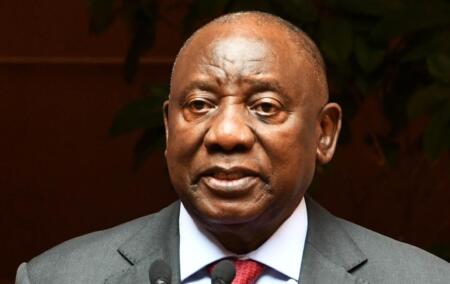
Stephen Grootes is right that economic growth is the test of President Cyril Ramaphosa’s legacy. But the early returns are already in, and they point the other way.
Grootes ends his recent assessment of President Ramaphosa’s reforms in the right place. The real measure of a leader, he writes, is whether he changes a country’s trajectory, and for South Africa that means whether the reforms of his presidency produce economic growth. On that, he and I agree.
Where we part company is on timing. Grootes treats the verdict as something we must wait for, to be delivered by future growth that may or may not arrive. But we don’t have to wait: Ramaphosa has been president for eight years. The numbers that matter are already available, and they do not flatter him.
Grootes is right, too, about the reforms he praises. The end of load-shedding is a genuine achievement. For years it was the single largest brake on the economy; the Reserve Bank reckoned power cuts took about 1.5 percentage points off growth in 2023 alone. Breaking Eskom’s monopoly on electricity generation is an important and positive change.
So is opening the freight network to private trains, and handing a slice of Durban harbour to an operator that can run it. Leon Schreiber has made Home Affairs work well enough that renewing a passport no longer costs a day of your life. These are real gains, and a future government would be foolish to undo them.
But notice what they have in common. Each of these reforms removes an obstacle the state itself created. Clearing obstacles is not the same as driving forward, and it counts for little if the driver has one foot on the accelerator and the other on the brake.
That is the Ramaphosa record. The reforms Grootes admires are a small part of what determines whether South Africa grows, and they sit alongside a far larger body of policy that has made the country a worse place to invest.
Consider the Expropriation Act, signed last year, which allows the state to take property and in some cases pay nothing for it. Add to it the Employment Equity Amendment Act, which lets the minister set race-based numerical targets sector by sector, and the new Public Procurement Act, with its set-asides and its thicket of rules for anyone wanting to sell to the state. The National Health Insurance Act threatens to fold private medicine into a single state scheme. The Communal Property Associations Amendment Act, signed in October 2024, now forces some 470,000 rural landowners, most of them poor and black, to obtain a state official’s consent before they may sell or lease their own land. That is the governing party’s notion of speaking for the poor.
Most of these laws are not yet in force, and several are tied up in court. They are doing damage anyway. A bad law starts working the moment the government announces its intention to pass it.
An investor weighing whether to build a private hospital reads the NHI Act, looks at the litigation, and decides to wait, or to build in Nairobi instead. A farmer or a financier reads the Expropriation Act and hears one thing: property rights in South Africa are negotiable. The capital simply goes elsewhere.
The results show up in numbers Grootes does not cite. Fixed investment, the clearest sign of whether businesses believe in a country’s future, has fallen from 17.5% of GDP in 2016 to 13.7% last year, less than half the 30% the government’s own National Development Plan calls for.
Unemployment stood at 26.9% when Ramaphosa took office in 2018; it is 32.7% today, and on the expanded measure that counts those who have given up looking, 43.7%. The economy grew by about 1% last year. Eight years into the presidency, South Africans are poorer and fewer of them have work.
There is more, and Grootes touches some of it. Ramaphosa has defended cadre deployment with conviction, though it is the very practice the Zondo commission identified as a root cause of state capture. Few of those the commission named have been brought to trial.
And the Phala Phala affair – the cash concealed in the furniture at the President’s game farm – refuses to die, with Parliament now weighing impeachment. None of this is incidental to growth. Investors do not commit to countries where the rule of law bends around the powerful.
Inside the President’s own party the picture is no better. Ramaphosa’s lodestar has always been the unity and renewal of the ANC. Yet under his leadership the party’s share of the national vote collapsed, from 57.5% in 2019 to 40.2% in 2024, its first fall below a majority since 1994. The party also split, with Jacob Zuma’s MK – an ANC breakaway in all but name – taking almost 15% of the vote at its first attempt. Polls since suggest the slide has not stopped. A man who set out to save his movement has presided over its decline and fall.
None of this had to happen. The reforms that worked, at Eskom and on the railways, show that the state can get out of the way when it chooses to. Our Blueprint for Growth papers at the Institute of Race Relations set out how to do the rest: secure property rights, non-racial economic policy, an end to cadre deployment. The roadmap exists. All South Africa needs is a government willing to follow it.
So Grootes is right that growth is the measure of Ramaphosa’s legacy. He is wrong that we must wait to apply it. The test is already running, and by his own measure the President is failing it.
*The unsigned and evidently automated response from the Daily Maverick reads: “After editorial review, we’ve decided not to publish the piece at this time. This decision reflects our current editorial priorities and does not imply a judgment on your broader work.”
[Image: https://www.flickr.com/photos/governmentza/53723953282]
If you like what you have just read, support the Daily Friend