

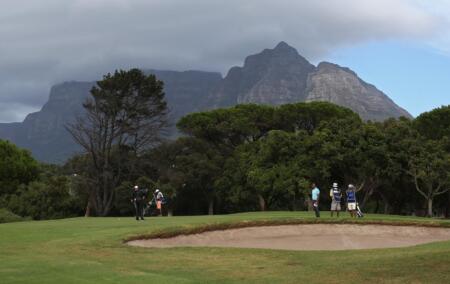
There is a growing refrain emerging in the debate around the proposed development of the King David Mowbray Golf Club precinct in Cape Town: that opposition to the development is an attempt by a privileged few to preserve an elite enclave. It is a convenient narrative for some, but it is a fundamentally misleading one.
To reduce the current issues to a clash between exclusivity and inclusion is not only factually incorrect, it also misses the bigger issue. The question before Cape Town is a very fundamental one. Will the City be using its valuable public assets in the best possible way?
The answer in this case is no.
The site under consideration is not an underutilised parcel of land. It is a 74-hectare precinct that includes the King David Mowbray Golf Club, the Clyde Pinelands Football Club, and surrounding open spaces. These are assets that are functional, well-used, and embedded in the social and environmental fabric of the city.
Fundamentally though, far from being an exclusionary space, the 116-year-old golf club has built a history over many decades as an inclusive golf community, with one of the most diverse memberships in the country, servicing communities from the city centre, the western parts of the Cape Flats, and the southern suburbs. It is also home to the South African Disabled Golf Association and fosters a number of youth development programs. Its value extends far beyond recreation.
Furthermore, it is a significant economic contributor through golf tourism, a community gathering point, and a vital green lung in an increasingly dense city.
As a crucial flood-barrier, the course sits between two rivers. There are much more appropriate pieces of land that can be developed – land that does not require billions of rands spent on civil works just to ensure that flooding and other environmental issues are managed.
Social cohesion
This debate is also about the likely end of the Clyde Pinelands Football Club, with roots also stretching back more than a century. It is about the disappearance of accessible sporting fields that serve communities well beyond Pinelands. It is about the significant ways in which shared spaces create social cohesion – something that is difficult to quantify in a “feasibility study”, but impossible to replace once lost.
Importantly, the City’s development vision proposes approximately 6700 residential units, with substantial commercial spaces and light industrial areas. For context, 6700 units is more than half the residential units already existing in Pinelands.
The proposed development therefore introduces a density that would fundamentally alter the character and functionality of the area. With thousands of additional housing units, there will be severe traffic congestion; additional pressure on sewerage, water, and electricity infrastructure; and an increased burden on local schools, with only one highly limited provision in the plan for school expansion.
Even if one accepts the deeply flawed argument that all well-located land should be leveraged to address housing needs, the proposal does not, in its current form, withstand much scrutiny. The promise of affordable housing is repeatedly invoked by many, but a development that delivers only 30% affordable housing while the majority of the site is opened to market-priced, private development, risks achieving the worst of all worlds: insufficient social return and the permanent loss of high-functioning public assets with enormous social value to the surrounding communities.
None of this is to argue that development should not take place. Or that affordable housing isn’t a priority. On the contrary, cities must evolve and grow inclusively. But how they do so matters a great deal.
Unlocking land value
Good urban planning is not simply about unlocking land value. It is about making rational decisions that consider trade-offs honestly. In this case, the gains have not been demonstrated.
When the debate is framed as about an “elite golf enclave”, it should be challenged, loudly. Because that framing does not capture the reality of what is at stake. This is about whether decisions of this magnitude are subjected to the kind of scrutiny they deserve.
The current phase of consultation on the development is a genuine opportunity for residents and the broader public to interrogate the proposal and to insist on answers. But that only has meaning if people engage.
The future of Pinelands will be shaped by submissions before the 6 July deadline, and by the willingness of people to move beyond simple narratives and grapple with the real complexities of the proposal. That is why people should engage. Not in defence of a golf course, but in defence of thoughtful, evidence-based decision-making on the future of our City.
[Image: The King David Mowbray Golf Club. Supplied]
The views of the writer are not necessarily the views of the Daily Friend or the IRR.If you like what you have just read, support the Daily Friend