

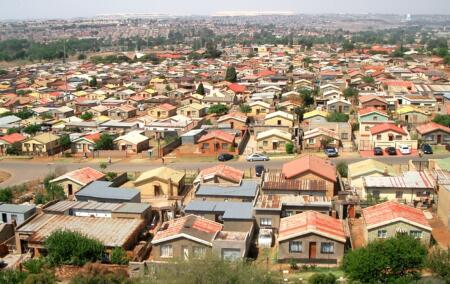
They may have paid for, occupied, and maintained properties for years, but many of the country’s poorest and most vulnerable women remain exposed to the administrative failure that is the government’s longstanding and unaddressed title-deed backlog.
So says Anlu Keeve, Research Coordinator and Economic Policy Analyst at the Institute of Race Relations (IRR) in a statement marking the organisation’s Women’s Month project to focus attention on “one of the foundations of genuine women’s empowerment in South Africa: secure property rights”.
This forms part of the IRR’s #WhatSACanBe initiative.
Keeve points out that “no one can credibly claim to support women’s empowerment if they fail to support the right of women to own, control, inherit, and defend what is theirs”.
Secure ownership, she says, gives women greater independence, while strengthening their ability to provide for their families.
Over the coming days, the IRR will engage directly with the government, particularly the Department of Human Settlements, to demand clear action to strengthen the property rights of vulnerable women.
Says Keeve: “A woman who owns her home has something that is legally hers, something she can protect, build on and pass to her children.
“But thousands of South African women still live in homes the ownership of which is uncertain because the state has failed to provide proper title. If the government is serious about improving the position of women, it should start by making sure that the property they own is actually recognised and protected.”
The IRR will call on the government to explain what it is doing to provide secure title, and to remove the administrative barriers that prevent women from fully benefiting from their property rights.
[Image: https://www.flickr.com/photos/sea-turtle/260871619]