

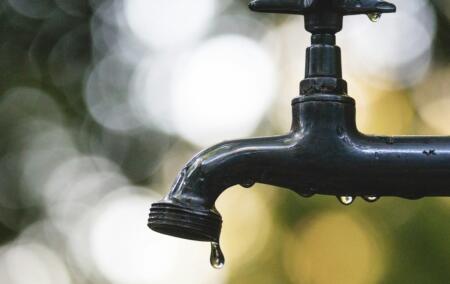
Democratic Alliance (DA) leader Geordin Hill-Lewis’s proposed plan that private companies should help buy electricity and fix water systems elicited the usual predictable backlash on social media.
Critics called it a sellout of public assets. Some called it privatisation by stealth. It all misses what is happening to South Africa’s towns and cities, and it misses what Hill-Lewis actually proposed.
He did not propose selling municipal water systems or electricity networks to private owners. He proposed using private companies to help municipalities that cannot do the work themselves, while keeping revenue ring-fenced for the service it was collected for.
Fixing a burst pipe is not the same as owning the pipe. Yet in the current mood, any mention of the private sector near a municipality gets treated as theft of the commons.
The reality on the ground does not leave much room for that mood.
On 23 July, President Cyril Ramaphosa published South Africa’s National Water Action Plan, backed by a promised R156 billion over three years. The plan exists because 74% of municipal water providers are now rated poor or critical on drinking water and wastewater standards. That figure came from government’s own assessment, not from private capital.
In July, the National Treasury withheld equitable share payments from 69 municipalities over failure to manage their finances. Within a month, most of the money was released, whether or not municipalities had met the conditions. Johannesburg – the metro that ought to be the country’s economic engine – needed a Section 216 constitutional intervention this year after its finances and basic services collapsed to the point where refuse trucks and municipal vehicles could not run.
South Africa’s municipalities are short of money, short of skilled engineers, and short of working equipment. Spending on new buildings, machinery and equipment across the economy fell to 13.1% of GDP in the first quarter of 2026, down from 13.6% the quarter before. Manufacturing output fell by 4.3% year-on-year in May. There is less capital available across the whole economy, and municipalities are competing for a shrinking pool against every other pressing need.
Language of human rights
Much of the backlash also hides behind the language of human rights. Water is a constitutional right in South Africa. Electricity supply is a duty the Constitution places on municipalities, backed by law, even though it is not written into the Bill of Rights as its own right.
Critics argue that bringing in a private company to help deliver either one puts a right up for sale. But rights do not fall from the sky.
A right to water means nothing without pipes that hold pressure, treatment plants that function, and a technician who can reach a burst main before a reservoir runs dry. Realising any second-order rights takes capital, infrastructure, skills, time and expertise.
None of that appears simply because a right is written down in the Constitution. Someone still has to pay for it, build it, and keep the providing infrastructure running. The data show the state increasingly cannot do all that on its own.
Refusing private help in the name of protecting a right then ends up denying that right to the people who most need it.
Transnet offers a useful comparison. Its ports moved more than 300 million tons of cargo in the 2025/26 financial year: the best result in 15 years. That recovery happened almost entirely without private companies investing in or running parts of ports and rail. Freight rail volumes, at roughly 168 million tonnes, are still far below the 226 million tonnes carried in 2016. But a recovery from a low base is not the same as a real fix.
If Transnet had let private operators invest directly in track maintenance and rolling stock years ago, the freight numbers would probably look very different today. Municipalities are heading toward the same choice. They can either open the door to private capital and private engineering skill, under contracts with clear performance targets and ring-fenced revenue, or they can keep doing what has not worked for fifteen years and hope for a different result.
Well-designed contract
A private company brought in under a vague, unaccountable contract could simply become the next mechanism for extracting money without fixing anything. That is a real risk. But the answer to that risk is a well-designed contract with published performance targets, independent monitoring, and money that stays ring-fenced for the service it was raised to pay for. The answer isn’t to leave municipal engineers and billing systems in a state that has already failed the majority of South Africans for over a decade.
Every rand that goes missing from a water account, every substation that stays broken because there is no budget for a technician, and every business that shuts down because the lights are off is a cost that falls hardest on the people who can least absorb it. Wealthy suburbs can afford solar panels, boreholes and generators. Poor townships cannot.
If private capital and private skill can get water flowing and lights working faster than the state can on its own, the argument against it needs to be stronger than “Who’s paying for it”.
South Africa does not have the luxury of choosing between state-run services and outside help. The state has had the field to itself in most municipalities for years, and the results are collapsing infrastructure, empty taps, and a capital city under formal intervention.
Bringing in private capital, under proper oversight, is not abandoning the public interest. Given where things stand, this may be the only way left to protect it.
[Image: Luis Tosta on Unsplash]
If you like what you have just read, support the Daily Friend