

The high costs of “free” university education include dismal student completion and drop-out rates, a steady rise in student debt, and major inefficiency and corruption at the National Student Financial Aid Scheme (NSFAS) charged with paying tuition fees and allowances to more than 550,000 university students in 2026.
What can be done to overcome these daunting challenges?
Scrapping NSFAS
One possible solution is to scrap NSFAS. In June 2026 the then deputy minister of higher education and training, the DA’s Dr Mimmy Gondwe, urged the Government of National Unity (GNU) simply to disband NSFAS. The Treasury could then pay universities directly, “doing away with the middleman”.
The Department of Home Affairs and South African Revenue Service (SARS) would continue to verify eligibility (based on identity, citizenship and household income), but the payment mechanism would become cheaper and more effective.
Gondwe pointed out that Finance Minister Enoch Godongwana had earlier made the same suggestion. In doing so, he had stated that “pivoting to a direct funding model could save R700-million in NSFAS costs,” which would help fund another 9,000 students.
However, the CEO of Universities South Africa (USAf), Dr Phethiwe Matutu, warns that universities “don’t have that kind of capacity right now.” If funding and verification duties were to be “dumped…on to universities in a rushed, chaotic manner,” she says, that would “merely decentralise the crisis.” In addition, universities are “already being forced into roles they were never built for, such as acting as debt-collection agencies hunting down student arrears.”
Moreover, if universities were to be tasked with paying student allowances instead of NSFAS, this would not necessarily improve efficiency or prevent corruption. Take, for example, the accommodation payments for which more than 115,600 university students applied in 2026. NSFAS pays most of these costs, but some universities, it says, “historically remain responsible” for payments of this kind.
A recent case involving the University of Johannesburg (UJ) illustrates the risks. Here, Andries Helani, head of student affairs from 2017 until his dismissal in 2024, oversaw the accreditation of privately owned student accommodation funded by NSFAS. As a recent Johannesburg Labour Court judgment has shown, he also “received more than R3.2-million from [various] private accommodation service providers” over a three-year period from 2021 to 2024.
Some of these payments to Helani (R68,000 in total) came from a company called Mahlatsi Properties, to which UJ (via a payment merchant) paid “just more than R17-million for 1,441 beds” in two Braamfontein buildings over eight months. However, these buildings had only 300 beds to offer and in fact housed only a single UJ student. Other UJ students were paid to pretend that they were living in the buildings. One student testified that, though she was living at home, “she was paid R1,700 a month and a lump sum of R8,500” to register at a Mahlatsi building.
According to Judge Reynaud Daniels, “many students and several other employees also received monies for their role in defrauding the university” through “a complex, coordinated scheme.”
Together with other instances of malfeasance at several universities, the Helani case shows that university personnel, like NSFAS bureaucrats, can readily find ways to profit illegally from large and opaque administrative schemes.
Introduce income-contingent loans
Closing NSFAS and making universities responsible for paying student allowances is not a sufficient solution. NSFAS should nevertheless be scrapped – but other essential reforms must also be introduced.
One of the most crucial changes is to end “free” university education and introduce a new funding model based on the recommendations of the Heher commission. This commission, chaired by Judge Arthur Heher, was appointed by President Jacob Zuma in 2016 to investigate the funding of tertiary education.
The commission’s report, released in 2017, warned that “free” education for all university students was unaffordable. It recommended that all university students should instead be funded via income-contingent loans (ICLs), to be repaid by them when their earnings reached specified levels. These loans would be obtained from commercial banks – with the backing of credible state guarantees – and would cover the full costs of study, from tuition and accommodation costs to subsistence and other allowances.
Similar ICLs have been introduced in various other countries, the commission went on. This reflects the reality that university education is both a public and a private good. Sound university education increases productivity and helps expand the economy, which is a public good. But graduates with scarce skills benefit from increased earnings throughout their careers, which is a private advantage.
The ICL approach is thus widely seen as fair. It expects those who can afford to pay to do just that: either immediately or in the future. It also increases access as “no one is refused loans on grounds other than normal university admission criteria,” Judge Heher wrote.
An ICL system would remove the need for a major bureaucracy responsible for making hundreds of thousands of payments each year to universities, landlords, and other suppliers. Instead, it would put the responsibility for paying tuition fees, accommodation costs and other expenses squarely where it belongs: on the students to whom banks have granted state-backed loans for the studies of their choice.
To guard against wastage, banks could pay tuition and residence fees directly to universities. Other stipends could be paid out incrementally, rather than as upfront lump sums. Payments could also be provided via (loan-funded) vouchers, redeemable only for such external accommodation as might still be needed for a smaller student body, as well as for subsistence, travel, books and similar expenses.
Wastage could also be reduced, as the Heher commission recommended, by introducing “strict academic requirements for continued access to an ICL”. Towards this end, student performance “should be monitored from as early as the first module or semester of the first year,” as Heher recommended.
Stricter academic admission criteria
Current requirements for admission to universities – for “a bachelor’s pass”, as the government calls it – should be tightened up. At present, admission to a bachelor’s degree requires a National Senior Certificate in six subjects, with 30% in the language of instruction, 40% in the relevant home language, and 50% in four other subjects. These limited requirements raise false hopes of academic success and contribute to high drop-out rates.
In tightening up admission criteria, useful ideas can be drawn from the state’s loan scheme for “missing middle” students: those from households with annual incomes between R350,000 and R600,000. Under this scheme, introduced in January 2024, 70% of loan funding is allocated to science, technology, engineering and mathematics (STEM) disciplines. Applicants must achieve a 60% average to obtain a loan and maintain that average to keep receiving it.
In addition, students who achieve average marks of 70% or more – and who complete their degrees in regulation time – “qualify for a 50% reduction of their loan on request,” as former minister of higher education and training Dr Blade Nzimande has explained. Similar criteria should apply to the ICL system too. A 50% reduction for stellar students could also be provided if the state stepped in to pay off half the relevant loans. This would be a far better use of scarce tax revenues than the wasteful system now in place.
Ending racial targets in admissions
In keeping with the Constitution’s founding value of non-racialism, student admissions should be based on academic merit rather than race. Yet the Higher Education Act of 1997 states that “the admission policy of a public higher education institution must provide appropriate measures for the redress of past inequalities,” though it “may not unfairly discriminate in any way.”
In practice, admission policies vary considerably across institutions, with some universities taking account not only of race but also of socio-economic status and other pointers to disadvantage. Racial identity nevertheless remains a key factor. It underpins the differing admission point scores often applied to different racial groups and the effective setting aside of a proportion of university places for black applicants.
However, the admission of poorly prepared black students unable to cope with the demands of university study provides little redress for past injustices. It also puts great pressure on universities to lower their standards.
As Professor Jonathan Jansen of the University of Stellenbosch warned in 2018, over-burdened academic staff often use multiple-choice questions rather than asking for analytical essays. Some disclose too much about the scope of examinations, allowing students to focus on only portions of their curricula. In these circumstances, students do not need the ability to analyse or even to write coherently, while universities frequently push them through in any event.
Practices of this kind are difficult to avoid under current policies. They also undermine the value of university education, while doing little to put poorly equipped graduates on the path to employment and prosperity.
Bringing private universities into the funding net
As the Financial Mail reported in 2025, the country’s 26 public universities are “underfunded, over-enrolled and often affected by student protests and administrative instability.” However, South Africa also has “137 registered private higher education institutions (HEIs),” some of which are owned by listed companies, such as AdvTech and Studio.
At present, private universities are at a major disadvantage. All public universities are funded via student fees as well as by state subsidies that generally cover around 40% of their costs. In addition, the best of them commonly receive significant alumni donations. By contrast, private universities have only student fees to draw on. Yet private universities are playing an increasingly important role in providing tertiary education. They cater for the needs of hundreds of thousands of young South Africans unable to gain access to public universities or concerned about their declining quality.
Further reforms are thus needed. The GNU should increase the state’s subsidy for universities, which the shift to an ICL system would facilitate. It should also make this subsidy available to private universities as well as public ones. In addition, the ICL system should be extended to students at private universities too. This would increase competition, give failing public universities greater incentives to improve their performance, and enhance overall efficiency.
In combination, these reforms would end fruitless university massification, put a stop to an unaffordable and wasteful drain on the fiscus, and stop setting hundreds of thousands of young people up for failure. Alternative options must, of course, be provided. The over-selling of university education must end, while the persistent shortage of technical skills across the economy must be acknowledged. In addition, every effort must be made to improve the vocational and technical education that offers a more tangible path to upward mobility.
This material is mostly drawn from the recently released paper, The IRR’s Blueprint for Growth: Generating Jobs and Skills, launched with a webinar on 18 August.
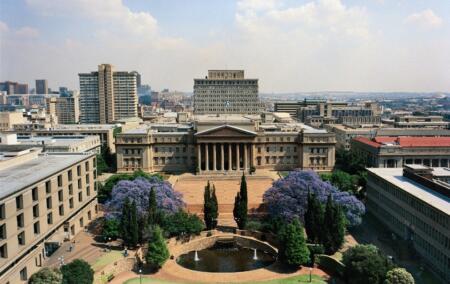
[Image: By Samuella99 – http://en.wikipedia.org/wiki/File:The_Wits_University_East_Campus_(archived).jpg, Copyrighted free use, https://commons.wikimedia.org/w/index.php?curid=10570789]
If you like what you have just read, support the Daily Friend