

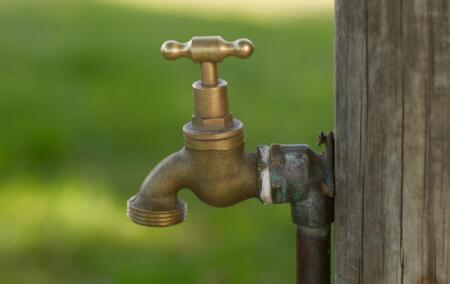
For the past two decades, South Africa has made significant progress in improving access to water. Data from the recently published Living Conditions chapter of the Socio-Economic Survey of South Africa from the Centre for Risk Analysis indicates that in year 2002, about 8.9 million households in South Africa had access to piped water. That number has since increased to 17.6 million.
At a glance, these figures make it look like a success story. However, having a water connection is different from having water itself. While access has improved, the reality on the ground is that South Africa is facing a water crisis that requires urgent attention.
The data shows that water interruptions are widespread. Over a quarter (27.9%) of South Africa’s 20.11 million households experienced water interruptions lasting 48 hours or more, while 20.4% experienced cumulative interruptions of more than 15 days during 2025. The severity of interruptions differed significantly across provinces, exposing the uneven reliability of water supply across the country. The Department of Water and Sanitation’s definition of success in providing water services needs to move beyond simply counting how many households have been connected to the network. It should also consider how many of those connected households actually have water every day.
Recent events across the country expose this catastrophe. In August 2026, Melville residents in Johannesburg protested against water supply cuts, as reported by SABC. A Melville resident who was interviewed said they had gone months without reliable water access. In the Eastern Cape, residents of Mjikelweni, Ward 22, near KwaBhaca had to contribute money from their own pockets to cover the cost of harvesting water from a nearby forest because they had gone for a long time without water. These are not isolated incidents; there are several more.
Without access to clean, running water, households are often forced to rely on unsafe or expensive alternatives. South Africa should not wait for another public health crisis like the Cholera outbreak from the early 2000s before recognising the seriousness of prolonged water interruptions.
When water supplies fail, many people are forced to buy bottled water, placing additional pressure on already strained household incomes. A 5-litre bottle of water in major retailers like Makro costs between R25 and R30. For an average household of three, meeting a basic daily water requirement of 50 litres per person would require about 150 litres a day. If that water had to be bought in 5-litre bottles, the household could spend approximately R750 and R900 a day.
A 17-year-old from Johannesburg, Thandani Masangu, recently told a major news outlet that they spend at least three hours wheeling empty containers on a trolley in search of water in neighbouring areas of Hillbrow. Surely this cannot be normalised in this day and age. The department of water and sanitation website page has a message written in bold letters which reads “WATER IS LIFE-SANITATION IS DIGNITY”, but where is the dignity in all this?
The economic consequences are equally serious. Dickon Hall Foods, a Johannesburg sauce manufacturer, relied on about 240 000 litres of water a day. Persistent outages forced the company to truck in water and eventually move production to the Western Cape, contributing to a reported R17 million shortfall in expected profits during the first five months of 2026.Numerous businesses across the country are facing the same situation.
The causes include ageing infrastructure, poor maintenance, leaks, municipal capacity constraints and inadequate planning. Whatever the combination of causes, reliable water supply must become a policy priority.
Government must urgently expand and maintain water infrastructure. Lessons on maintenance and infrastructure management can be learnt from countries such as Singapore and Israel who are doing it very well.
Municipalities should also provide clear, accessible information on planned interruptions, expected restoration times and prolonged outages, allowing households and businesses to plan accordingly just like during the peak of loadshedding around 2024, we had an application linked to Eskom loadshedding schedule and if one enters their location it would indicate when there would be loadshedding and for how long. Further, during prolonged water interruptions, contingency plans should ensure access to safe water through tankers and emergency collection points.
Government should also establish a measurable standard for municipal water reliability, tracking the maximum acceptable duration and frequency of interruptions. Municipalities could then be assessed against that standard. Where interruptions become persistent rather than occasional, there should be clear accountability.
Water infrastructure also requires engineers, technicians, plumbers, maintenance teams and people capable of managing complex water systems. Strengthening municipal technical capacity should therefore be treated as an infrastructure investment.
South Africa’s water challenge should not be measured only by how many households have a tap, but by whether that tap can be trusted to deliver water. Access without reliability leaves households vulnerable. Water is too fundamental to be treated as a service that is acceptable when it works and tolerable when it doesn’t.
[Image: Tap]

The views of the writer are not necessarily the views of the Daily Friend or the IRR.
If you like what you have just read, support the Daily Friend