
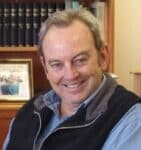
Paul Hoffman
Paul Hoffman SC, a native of Johannesburg and a Wits graduate, practised law at the side bar from 1975 to 1980 and at the Cape Bar from 1980 to 2006. He took silk in 1995 and acted on the Cape Bench at the invitation of three successive judges president. After retiring from the Bar, he was founding director of the Centre for Constitutional Rights and co-founder, in 2009, of Accountability Now, both NGOs that promote constitutionalism. He is best known for his work on the irregularities in the arms deals, on the unconstitutionality of the Hawks and on the bread cartel case in which a general class action was developed by the courts. Yoga and long dog-walks on the beaches and mountains around his home in Noordhoek help keep him inspired to seek that elusive better life for all. He is the author of many articles and two books, Confronting the Corrupt, and Countering the Corrupt.
Articles By This Author
Ducking, diving, deflecting and deferring on the Glenister rules will not do
The law in SA on countering the corrupt and dealing with organised crime is quite plain. It has been spelt out in successive appeals to the Constitutional Court in the Glenister litigation, a saga waged between 2008 and 2014 that culminated in three appeals to our apex court, a feat not yet emulated by any public interest litigant. Its findings are binding on the respondents in the cases being the relevant elements of the executive, parliament, the prosecuting authority, and the police.
Let vigilance be your watchword
Demosthenes was an Athenian statesman and orator. He lived from 380 to 322 BC and his bust is preserved in the Louvre in Paris. The following is attributed to him and may have inspired St Paul in penning his letter to the Ephesians:
Rake back loot first
Martin Schonteich is a consultant with the Institute for Security Studies, a former SA prosecutor and a well-respected expert on countering the corrupt. He has opined for Polity on this thorny topic and Legalbrief Today has conveniently summarised his views which are certainly worthy of consideration.

Business confidence and rampant corruption
Busy seasoned readers of the Daily Friend will know that they may need to be enticed into a “long read”. This offering is a long
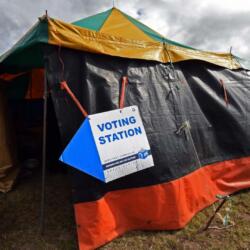
Voters will get the municipal councillors they deserve on 4 November
The prospects for a free and fair election being held peacefully in South Africa on 4 November seem good. Preparations are in hand; the IEC
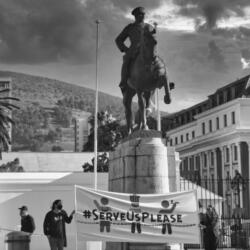
Preserving the IDAC in any way would be a mistake
Many admirable sentiments are expressed in the DM opinion piece penned by Xola Nqola, an ANC MP, who is chair of the justice portfolio committee in the National Assembly. However, he misses the mark by a country mile; here’s why.
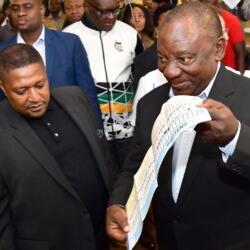
Elections are a matter of perspective
That self-effacing “humble newspaperman”, Mondli Makhanya, has outdone himself by penning a couple of choice phrases in his predictions for the ANC’s fortunes in the upcoming municipal elections.
Really, professors?
Professor Pierre de Vos is a professor of constitutional law at UCT. He occupies the Claude Leon chair at that august institution. Jonny Steinberg was a professor of African Studies at Oxford for nine years.
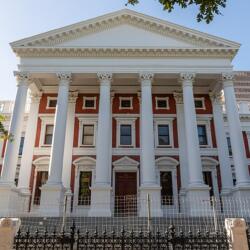
Is the repeal of the IDAC legislation really feasible?
The Chief Whip of the DA, Glynnis Breytenbach has let it be know that she intends to pilot a private member’s bill, what she calls a “PMB” through parliament aimed at achieving the repeal of the IDAC legislation which was brought onto the statute book after the president signed it into law in May 2024, shortly before the general elections held in that month.
It is time to scrap IDAC because it is a constitutional abomination
The good reason for closing down IDAC is not the resignation of its leader and her underwhelming showing at the Madlanga Commission. It is that IDAC is not a constitutionally compliant body and has none of the qualities required of it by the rulings of the Constitutional Court. Our anti-corruption machinery of state will not function properly unless and until parliament passes legislation that gives effect to what it was ordered to do in the Glenister litigation.