

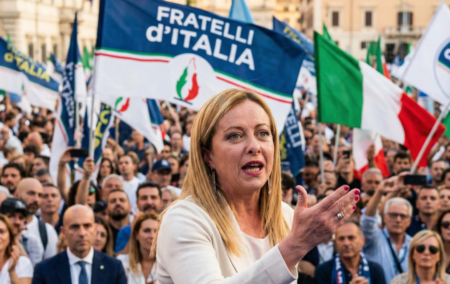
As Giorgia Meloni’s party gathered for a rally in Bari on 4 September, her government marked 1,413 consecutive days in office, one day longer than Silvio Berlusconi’s second government between 2001 and 2005.
It is a milestone in a republic that has run through 68 governments in 80 years, not one of which completed a full five-year term without interruption. South African politicians should take note considering many municipal councils will again produce no outright winner after the 4 November elections.
Configuration is destiny
The lazy reading of Italy is that coalitions cause instability and Meloni beat the odds through sheer willpower. That reading is wrong and is the same misdiagnosis that has kept Johannesburg ungovernable. Coalitions do not inherently cause instability, but rather it is configuration that determines the future of governance. Whether a coalition lasts a full term or collapses in a season turns on three things: whether it has a dominant anchor party, whether its partners are ideologically compatible, and whether a rival majority sits permanently available to replace it. Get those right, and a coalition endures, but get them wrong, and no amount of goodwill will save it. Meloni got all three things right.
How Rome made it last
Meloni’s coalition has a senior partner, her own Brothers of Italy, large enough that its junior partners, the League and Forza Italia, cannot credibly threaten to walk. At the 2022 general election that brought her to power, Brothers of Italy took 26% of the vote, roughly three times the 8% managed by each of the League and Forza Italia parties, and well ahead of the main opposition Democratic Party on 19%. Together the centre-right coalition won 43.8% of the vote and majorities in both houses of Parliament: 237 of the 400 seats in the Chamber of Deputies and 115 of the 200 in the Senate. A plurality became a majority because Italy elects roughly a third of its seats in single-member districts on a first-past-the-post basis, and the right contested them as one bloc while the opposition split, so the coalition swept those districts without ever needing half the national vote. Because an Italian government survives only as long as it holds a majority in both chambers, command of each is what keeps it standing. Meloni has become the glue for the right, with no alternative leader inside the coalition.
Its members occupy a continuous stretch of the right rather than being flung across the spectrum. A nationalist-conservative senior party, a populist, Euro-sceptic League and a centre-right Forza Italia sit close enough to govern together, whatever their quarrels over Europe. And the opposition offers no government in waiting. The Democratic Party, the Five Star Movement and the Greens and Left Alliance managed joint lists in some regional contests but failed in others over ideological differences and leadership disputes, while the Five Star Movement stayed outside any national coalition altogether. A fractured centre-left that cannot agree on a joint candidate is no alternative majority. Defection by the governing parties leads nowhere and no alternative majority in the opposition is standing ready. For the parties inside the coalition, staying in the tent is the only rational move.
The configuration is not guaranteed to hold. A new far-right force under former general Roberto Vannacci is drawing disaffected voters away from the coalition, and a divided left could yet become competitive if it settles on a common programme and candidate. But those are threats to a future majority, not the present one.
Johannesburg: the mirror image
Johannesburg is the mirror image on all three counts. The council has 270 seats and needs 136 for a majority. After the 2021 election the largest party, the ANC, held only 91 seats. There was no anchor, and the governing blocs since then have been assembled from a dozen or more parties spanning the DA, the EFF, the PA and Al Jama-ah, formations with nothing in common but the arithmetic of the moment. Because no bloc has been cohesive or dominant, a counter-majority could always be stitched together. That is why the mayoral chain of office changed hands five times between 2021 and 2024.
The latest polling from the Social Research Foundation shows the ANC’s Johannesburg support collapsing from 34% at the 2021 election to 18% by the second quarter of 2026, while the DA has climbed from 26% to 42%. For the first time since 2016 the metro has a party approaching anchor status, though at 42% the DA would still fall short of the 136 seats a majority requires, and a coalition would still be needed. When a council is fragmented, small parties become kingmakers. Every mayor sits one motion of no confidence from removal, and every decision is hostage to the next patronage demand.
Cohesion beats arithmetic, but durability is not delivery
The lesson from Rome is not moderation for its own sake, and it is not a licence for one party to swallow the rest. A smaller coalition of larger, compatible parties, with fewer hands out for patronage, will outlast a sprawling alliance of rivals every time. Cohesion beats raw seat totals, and a steady minority can govern better than an incoherent majority.
One caveat does matter, which is that Italy’s economic record is thinner, with forecasters expecting it to slip into recession before the end of the year and its public debt on track to overtake Greece’s as the heaviest in the eurozone. As the Democratic Party’s Laura Boldrini put it, the results have been “very modest and very disappointing.”
Durability has not guaranteed delivery, even for the government that mastered it. That is the trap South Africa’s coalition builders should avoid. The prize on 4 November is not a council that merely survives, but one built to survive and deliver. Johannesburg, on present form, has managed neither.
The choice on 4 November
The DA has named Helen Zille as its Johannesburg mayoral candidate, a reminder that an anchor rests on a party’s standing, not a personality: Zille herself is rated favourably by only 24% of voters against 42% unfavourable. The ANC’s vote is being pulled apart from several directions, MK among them.
Whoever assembles the numbers after 4 November will face the temptation to reach for the broadest tent available and call it stability, the configuration that has been wrecking Johannesburg coalitions since 2016. The city that has cycled through mayor after mayor does not need another marriage of convenience; it needs an anchor, ideological coherence, and the discipline to deny its rivals a standing alternative.
Voters have already drawn that lesson. Roughly two-thirds support an ANC-DA coalition in municipalities where neither wins a majority, and a clear majority nationally say the country would be worse off if the EFF and MK replaced the DA in national government.
This is the counter-intuitive part because the EFF and the MK are both ANC breakaways, so an ANC-led bloc with them would, on paper, be the ideologically seamless option. A continuous stretch on the left that Meloni enjoys on the right. But shared lineage is not governing compatibility, considering the three are divided. A reflection of the power feuds that kept the Italian left out of office. So the ANC-EFF-MK cohesion is more apparent than real, and even if it were solid enough to endure, on the polling, voters expect it to govern badly.
Durability without delivery is exactly what voters are refusing. Rome has shown that a durable coalition can be done, and shown, in the same breath, that it still does not buy you delivery.
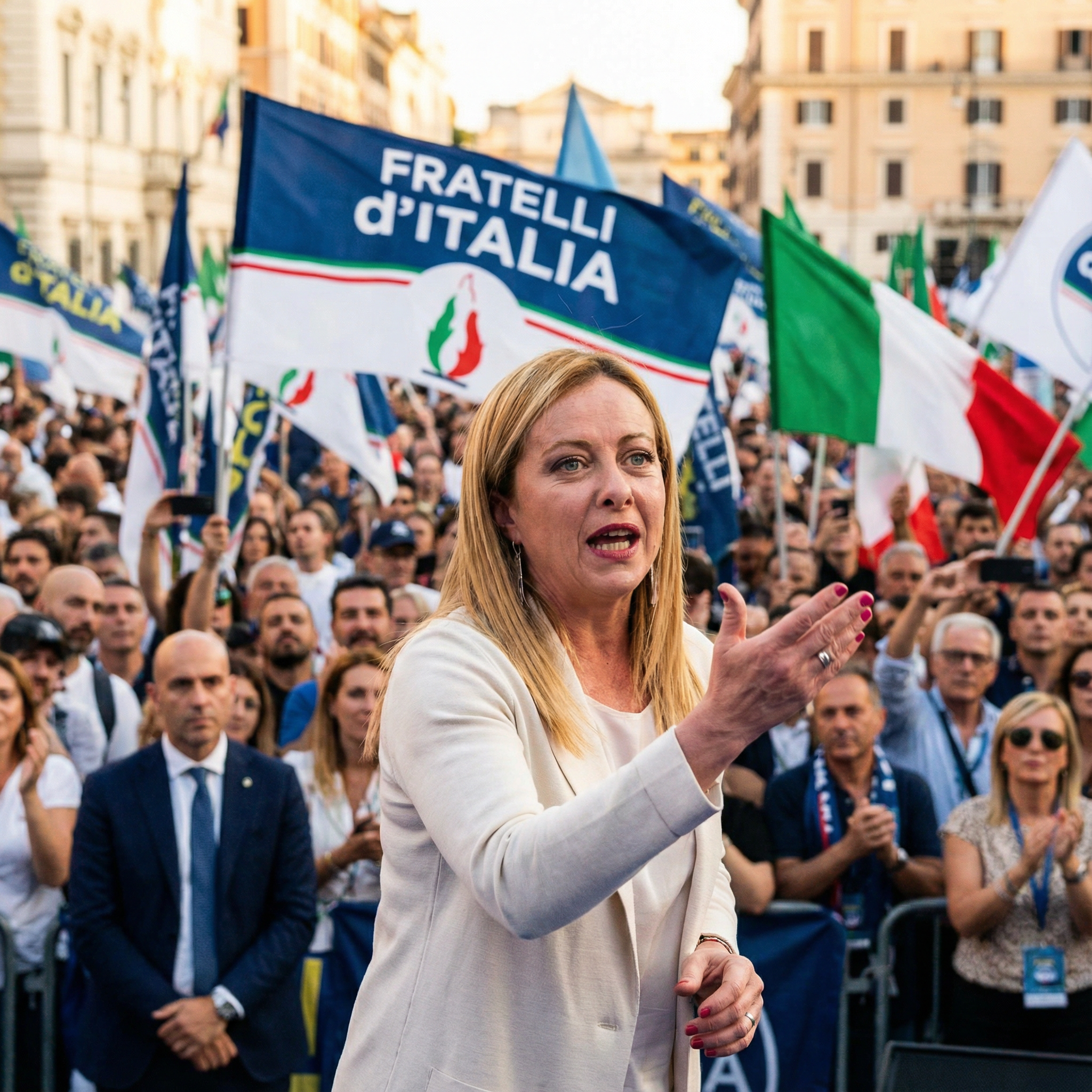
[Image: Giorgia Meloni]
The views of the writer are not necessarily the views of the Daily Friend or the IRR.
If you like what you have just read, support the Daily Friend