

This second of a two-part essay on South Africa’s potential as an economic powerhouse explores what policies are needed for the country to achieve this. The first part, SA’s economic ascent – part one: Sleeping Beauty, was published yesterday.
It is June 2029. South Africa’s politics has been transformed. The once-dominant African National Congress (ANC) is reduced to 10% and is out of government.
The parties which take office believe in constitutionalism, the rule of law, the market economy and the competent state.
What policies should such a centrist coalition pursue?
Let us assume that the DA pursues liberalisation of the economy while RescueSA fills the developmentalist gap in SA’s politics.
The former is straightforward – scrap race-based legislation and attempts to expropriate property. That would see an uplift in fixed investment towards the emerging market average of 30% of GDP. The same would swiftly bring down the world’s highest unemployment rate of 33%.
The latter is more complex. Improving SA’s state capacities and edging towards a capable state is burdened with baggage. The ANC adopted the ‘developmentalist state’ principle around 2007. Yet I do not think that the party’s incompetence and inability to achieve that should discount centre leftism from having a role in a future South Africa.
This also comes at a time where we can look around at what has worked or failed elsewhere.
Anyone who advocates ‘flat tax rates’ because ‘wealthy people would come and spend money in restaurants’ has probably never had to work in a restaurant. South Korean and Singaporean success is not built on restaurants.
Indeed, Singapore is the new President Mashele’s favourite country. Much of his thinking is based on that country’s highly successful statist model.
Without mindful efforts to produce high-quality economic activity, the majority population risks not making the full transition to high-paying jobs.
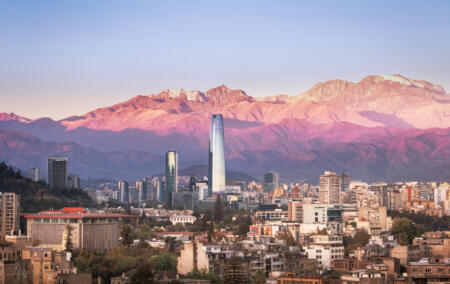
I assert that if SA pursues only economic liberalisation, South Africa may turn out like Chile – much richer but still deeply unequal – with ongoing flare-ups of political violence.
Empowerment alternative
Mashele has spoken of an empowerment system for those from disadvantaged backgrounds.
Successful economic enclaves within South Africa will not dent the two-tier economy. Cape Town offers a live image of this, where commuting times to places of economic activity are long, arduous and expensive.
Mashele’s system proposes commuting vouchers. The DA has also offered this to job seekers, from which it claims 24,000 people have benefited. Its proposed ‘Economic Inclusion for All’ may be technically sound in recognising that empowerment can come from procurement.
It is nonetheless academic and aloof. Talk of sustainable development goals means nothing to those working long hours cleaning kitchens by day and protecting their children from gang violence by night.
A far-reaching empowerment programme is both necessary and a vote-winner. Recipients would receive vouchers for low-cost schooling, healthcare and housing. The system would not be obligatory and companies could trade the credits. The Institute of Race Relations has devised such a system in its Economic Empowerment for the Disadvantaged (EED) proposal.
Beyond that, it should include state-backed company shares purchases for EED-eligible employees.
Most importantly, it should seek to create a start-up incubator. While standard practice to varying degree across the world, this is scorned in South Africa.
The commercial state
While liberalisation of the economy is vital, it must be coupled with concerted efforts to replicate East-Asian productive businesses.
Everyone would indeed benefit from a liberalised economy, but it may also entrench the position of SA’s incumbent businesses. Having functioned within what is already a highly concentrated economy, these have enjoyed decades of ‘moats’. Small businesses are crowded out of the market under the burden of complying with hundreds of race laws.
Lasting economic health also comes from ecosystems of profitable, indigenous businesses being around over the long term, profiting from continuity, institutional memory and retention. This Japanese-Norwegian-Israeli model of modern prosperity contrasts to the UK-US-Australian model of businesses bought and sold – mostly by financial institutions – on short time horizons. Such activity often prioritises ‘financial engineering’ over a focus on the quality of the product or service offered.
This in large part explains the dearth of large-scale successful companies emanating from modern Britain. Jobs and growth are at the mercy of the private equity cycle.
In this area, the Chinese have been much more prudent. The Economist reports on the Chinese government’s “Hefei model” of becoming one of the country’s biggest venture-capital investors, with state-backed funds taking early equity stakes in strategic technologies such as semiconductors and batteries. Its most striking success is CXMT, a memory-chipmaker co-founded with government backing in Hefei in 2016, whose IPO in July 2026 raised CNY 57.9bn (USD 8.6bn), a cash cow for the government. That sounds like ‘picking winners’ done correctly.
A capable SA state should identify 500 businesses owned by EED-eligible founders and support them generously in funding and access to mentors.
Business could come from SA’s many sectors, from biotech to construction.
Much industry in SA has for years been protected but that has not created a vibrant, skilled industrial base. Wholesale trade and investment deals with other countries would likely also spike that.
Beyond assisting EED recipients, SA should nurture swathes of already-existing homegrown talent.
SA’s banks show flashes of this East-Asian-style-high-performance-company: innovative, internationalised, and with deep pockets of savings. SA is rich with other low-fanfare ‘submarines’.
For SA
I do not think that these ideas are alien to SA. Great pride has been taken in the country’s past engineering marvels, and the swathes of black engineers produced post 1994.
Highly statist periods of the country’s past created the Eskom utility among other parastatals. The company won the Financial Times’s Power Company of the year in 2001.
Embattled and recovering of late, the utility is currently under the chairmanship of the highly capable growth-developmentalist thinker Mteto Nyati. The utility is on course to return to its former glory and should consider one day expanding abroad.
Eskom’s turnaround has largely come from the appointment of competent people, rather than privatisation. Ownership structure is secondary to institutional competence.
I have written extensively on the UK’s failed experiment in privatising water utilities: Privatising systems which lend themselves to monopolisation lead to perverse outcomes. I have been surprised how little SA’s political commentariat know of this issue and continue to parrot privatisation as a silver bullet to SA’s state-owned enterprises sclerosis, when these Eskom-UK stories sit side-by-side.
Housing, land, rent
Another error a new South Africa must not make is treating land as though it were productive capital.
Much of the stagnation and unhappiness across the English-speaking world is tied directly to a failure on the issue of housing, land and rent. That is the view not of a Marxist but of Silicon Valley tech billionaire Peter Thiel.
Martin Wolf of the FT wrote in 2023 on the case for a Land Value Tax in the UK.
“The idea of taxing the rental value of land is most closely associated with the 19th-century American Henry George. But Adam Smith, David Ricardo … all shared the same view. Thereafter, foolishly, economists began to incorporate land … into produced capital. This then led to the neoclassical ‘two factor’ models of the economy, which are grossly misleading.”
Indeed, high house prices are in fact more tied to the value of the land. SA’s establishment needs to think seriously about property and land ownership.
People from across the globe will want a piece of the most beautiful country in the world (and well-run places within that most beautiful country). This been happening in the DA-run Cape Town, among other places.
Tax expert Lance Collop told the Daily Maverick in June 2026, “A non-resident who owns a property and Airbnbs it out for part of the year … is certainly not expanding or growing our economy, not creating any jobs, etc, in the way that is envisaged under the international tax treaty position.”
I concur with Collop and many others that there should be an additional form of taxation on foreign property purchases in a city limited by the sea and mountains like Cape Town.
Other countries have realised this and responded accordingly. Canada restricts non-resident buyers, Australia has banned foreign purchases of existing homes, and Singapore has whacked a 60% tax on foreign buyers.
To the DA’s great credit, it is mulling by-laws in Cape Town forcing commercial rates on owners treating the asset as a commercial operation.
Perhaps such measures and an ‘absentee tax’ should be ringfenced to fund social housing in other zoned areas (for people who actually live there).
These things cannot be neglected in a country in the global top spot for inequality.
I would assert that the Cape Town story of property purchase sprees by foreigners cannot be repeated across the country without political cost to the incumbent administrations of those councils. Will the Cape Town story eventually cover all of SA’s sought-after coast?
Such thinking must not be dismissed as anti-market: land is not a productive economic asset.
Other policy areas … devolution, new economics, corruption
Other policy areas will have enormous benefits to SA’s prospects. Full devolution of policing to capable provinces and municipalities would allow for the emergence of new business zones and finally tackling apartheid-era spatial planning.
Tourist taxes should be considered and are well under way in many cities around the world facing overcrowding. Tourism is not a high-value economic activity, for the most part, and small sums of foreign currency go a long way in ZAR.
SA should pursue an investment-friendly policy for hydrocarbon exploitation. Few countries in the world are wealthy and energy poor. Oil majors could with ease build new infrastructure and funds skills programmes as their EED programme, developing the skills base. Revenue from royalties and profits should pay down the national debt and in time create a Sovereign Wealth Fund (SWF) for true, multi-generational prosperity. Sources for a SWF in SA are many and deep, as is the expertise to run it.
Looking ahead
SA was at its best economically in the 2000s. Then, there were both fewer brakes on private sector-led growth and an active government rolling out extensive housing and welfare programmes.
I understand the assertion that the ‘DA is not equipped to govern the country’, even if I do not fully agree with it. The party has shown flashes of developmentalism beyond good administration. Some DA-led councils run collaboration initiatives with private security companies and are edging towards their own police forces.
But the party may stagnate if it does not champion a compelling empowerment policy.
A new party that comes from nowhere and does so, may threaten both the DA and the ANC existentially. The irony would be that the developmentalist state the ANC always wanted to create would be created once the ANC gave way to someone else.
* * *
The year is 2040. One pictures large delegations of SA’s new business titans and politicians assembling in the lounges of OR Tambo Airport. There are daily flights to Taiwan, Singapore and China for business and policy-exchange trips.
Among the crowd I spot the great thinkers who are Prince Mashele, Mzukisi Qobo, William Gumede, Moeletsi Mbeki, Mteto Nyati, among many others.
They smile and laugh as they talk of the latest new company. One senses a confidence and happiness in the air when a nation embraces its fortunes and looks to the future.
[Image: by diegograndi]
The views of the writer are not necessarily the views of the Daily Friend or the IRR.
If you like what you have just read, support the Daily Friend