


The export quota associated with elephants, black rhinos, and leopards was just gazetted by Minister Maynier. This could be the first export quota of these species since 2020. Some may argue that it’s not needed or is even unethical. However, the reality on the ground for these species is that export quotas provide significant value for these three species, that currently have little value beyond photo-tourism in very limited areas in South Africa.
Minister David Maynier of the Department of Forestry, Fisheries and the Environment (DFFE) has formally released and set South Africa’s CITES export quotas for elephant, black rhinoceros and leopard hunting trophies for 2026 and 2027. The quota permits the international export of elephants (150), male black rhinos (11), and adult male leopards (11) for 2026. In 2027, the quota remains identical except for leopards, where the number drops by 1.
Predictably, there will be an outcry. There has already been an op-ed published by Dr Adam Cruise citing that civil society was against this. But before we decide that killing an animal must automatically be contrary to conserving its species, perhaps we should ask the more important question: what makes people want to invest in keeping wildlife? Or better yet, keeping elephant, black rhino, and leopards? That question practically for the majority comes simply down to a value answer. If they have value, they stay. If they don’t, they do not exist on that specific property.
How did we get here?
If you haven’t been following this intimately, it’s easy to form an opinion without understanding the history of what led us to this point. Context in this regard is incredibly important.
In October 2021, then-environment minister Barbara Creecy initiated consultation on quotas for elephant, black rhino and leopard. Because the process ran beyond the hunting season, the resulting 2021 allocation was deferred until 2022. In January 2022, the minister approved quotas of 150 elephants, 10 black rhinos and 10 leopards. DFFE publicly announced the quotas the following month. Then came litigation. Humane Society International-Africa approached the Western Cape High Court, and in April 2022 Judge Patrick Gamble interdicted implementation of the quotas pending determination of the main review application. Litigation was based on the deferring component of the quota – i.e., procedural, not the scientific basis for deriving the quota. In September 2025, quota setting was further delayed through additional litigation brought by Wildlife Ranching South Africa over aspects of the quota-setting process.
It’s important to understand that the reason South Africa has not had export quotas since 2021 is not because there wasn’t science to demonstrate that sustainable off-take was viable, but rather because the system became entangled in legal processes.
Let’s start with elephants
Currently, there are an estimated 44,326 elephants in South Africa, with nearly 78% of those elephants living on state protected areas. Only 13% of elephants exist on private reserves. With a published 150 elephants on export quota, that is 0.3% of the total elephant population in South Africa. As a reminder, a quota is a ceiling not a target, so the maximum number of elephants that could be taken would be 150, not a mandatory number.
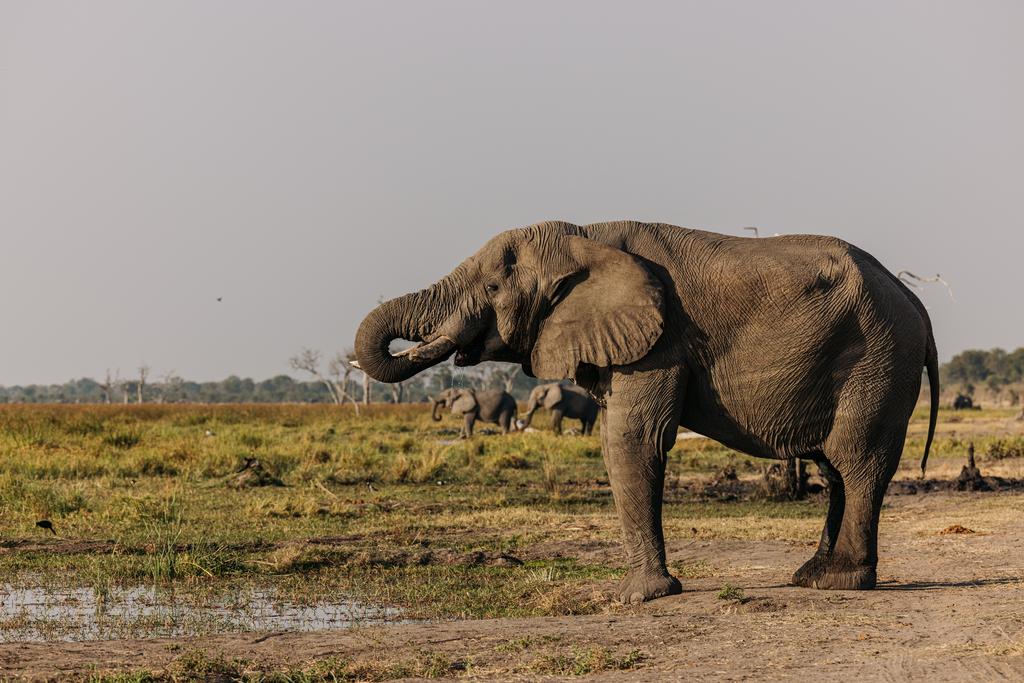
There are estimated to be over 44,000 elephants in South Africa, with only 13% of those elephants living on privately owned areas. [Supplied]
Given these statistics, export quotas do not threaten the national elephant population, but rather provide an added incentive to prolonging their existence. Some will read that and disagree with putting a financial figure on an elephant. That isn’t something that is new. Private properties own elephants because they bring some sort of value to that property owner, whether it’s aesthetics, eco-tourism, or sustainable use. We have already pointed out that only 13% of the elephants in South Africa are on private property, and one must ask the question: ‘Why do we not have more elephants on private holdings, even when the habitat is suitable for them?’
The answer is quite straightforward. Owning elephants carries costs: they break fences, damage crops, compete for water, alter vegetation and carry significant liability. The reality on the ground is that if the landowner or community living with elephants receives no economic benefit from them while absorbing all their costs, we shouldn’t be surprised when nobody wants elephants today.
However, with new export quotas being published, and international users bringing significant value to elephants through hunting (upwards of $30,000 USD per elephant), that value may incentivize new private landowners to decide to open up their properties to holding and owning elephants. That is the epitome of the economic valuation of wildlife.
The counterintuitive case for black rhinos
Of the three wildlife species that give export quota, black rhinos may be the most important. South Africa holds an estimated 2,307 black rhinos according to the State of the Rhino report from the International Rhino Foundation. DFFE’s rhino management documentation also notes that more than 95% of South Africa’s black rhinos occur under free-ranging conditions. Across Africa, black rhino numbers subsequently increased to an estimated 6,788 by the end of 2024, according to IUCN and the African Rhino Specialist Group.
The 2026 and 2027 black rhino quota is 11 adult males. No females. No calves. How did CITES determine this quota? The black rhino trophy-export provision is based on an annual quota, not to exceed 0.5% of the country’s population. The rationale was very specific: carefully selected surplus males that would benefit the population will be permitted for removal.
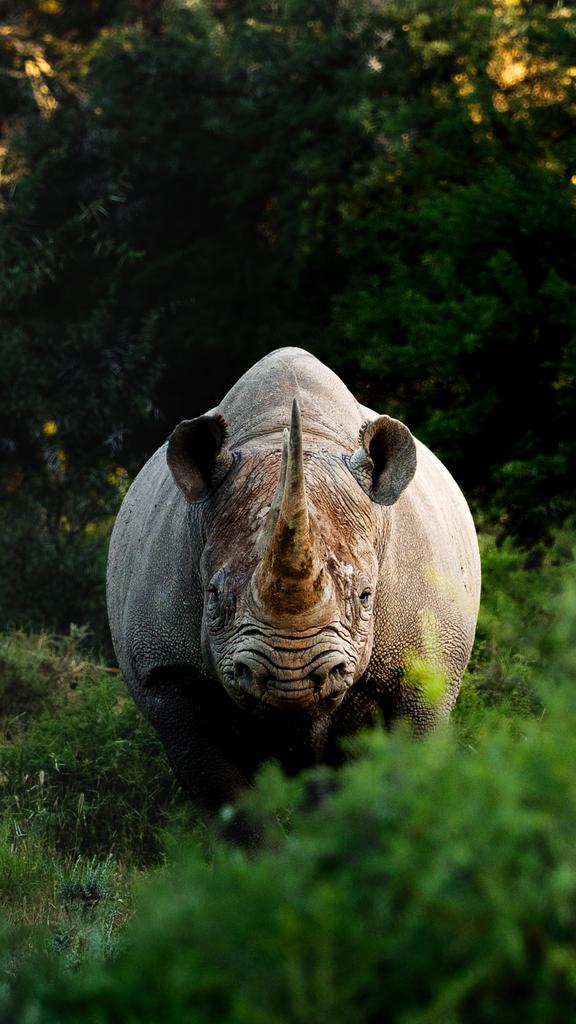
Black Rhinos require significantly more habitat and areas than white rhinos, often resulting in density-dependent mortalities due to too many Black Rhinos in one area. [Supplied]
How can killing a black rhino benefit the population? Black rhinos, unlike white rhinos, require significant space and habitat for their territories (especially males). Currently, those surplus males without quotas are killing young calves and young bulls, to bring females into estrous. I know of at least two properties that have lost multiple black rhino bulls and young calves over the last four years due to the lack of export quotas to move those specific older surplus males. So, under the current ‘no quota’ model, the black rhino population is in a net subtraction space, and not in a population expansion space.
Lastly, owning rhinos is expensive and comes with significant security and liability challenges. The current rhino ownership landscape is shrinking in South Africa, not expanding. Why is this the case? Because live rhinos don’t hold enough value in today’s market for their population to expand. Providing export quota significantly increases that value, specifically for Black Rhinos, that can fetch upwards of $200,000 per animal.
And then there is the leopard
Leopard export quotas have a deep scientific basis. For leopards, South Africa set the trophy-hunting quotas at zero in both 2016 and 2017, following concerns from the Scientific Authority about population trends and the adequacy of monitoring. Hunting was reopened cautiously in 2018, with a quota of just seven males, all subject to increasingly stringent management criteria.
Increased monitoring and modelling from Panthera as well as the DFFE cite a national estimate ranging between 2,813 and 11,632 leopards. The current export quota of 11 leopards (10 in 2027) is limited to males over 7 years of age, with no more than one trophy coming from each eligible hunting zone, confirmed through the national leopard-monitoring framework and provincial processes. This results in a very conservative offtake of between 0.3 and 0.09% of the estimated population.
Due to expansion of the rural-urban interface, increased human populations, and intensification of agriculture, the leopard is in constant conflict, and likely one of the least valued wildlife species in South Africa. Its only real value on the landscape is in limited ecotourism areas. Unfortunately, leopards are rarely tolerated, whether with livestock or with the game breeder, due to economic losses. However, with an export quota, and increased investment in monitoring of leopards to provide more reliable estimates of their population, there is now suddenly a reason not to poison them, a reason not to kill them, a reason to tolerate occasional livestock losses, because the value of that leopard is now so much greater. It is not just a nuisance predator.
You may be solidly against the CITES export quotas, and that’s okay. However, it’s important to ask the following questions.
Without the export quota, did elephants, black rhinos, and leopards become more valued in South Africa? The answer is no. Was additional habitat protected for these three wildlife species because there was no export quota allocated? The answer is likely no.
Which leaves us with one final question: why wasn’t it?
In today’s wildlife landscape, increasing value for wildlife is a good thing, and often that value comes through sustainable use of wildlife. In a world where there is increased pressure put on every square inch of habitat for it to survive, wildlife must show that it can pay for itself.
[Image: by MatHayward]
The views of the writer are not necessarily the views of the Daily Friend or the IRR.
If you like what you have just read, support the Daily Friend