

The series of Russian maximalist demands in the recent Abu Dhabi talks is a reminder of the antics of Andriy Gromyko, the veteran Belarussian Soviet foreign minister, known as ‘Mr Nyet’ and ‘Grim Grom’ because of his consistent obduracy.
Demanding the maximum impossible concessions at the outset was his standard ploy, making it seem that anything less was reasonable. Threat of escalation or war and rigid posturing, along with stalling as a tactic to produce fatigue in your opponent, usually followed. Talks were employed to buy time, not a means to find compromise, engineering a lull to enable military preparedness.
Could negotiations bring about an end to Russia’s war in Ukraine?
Conflicts usually end through negotiations when three conditions are present.
First, the belligerents must conclude that there is more to be gained, or less to be lost, by ending the fighting than by continuing it. Second, the international community must exert sustained and determined pressure to bring the parties to the negotiating table. Finally, there must be a combination of strategic leadership, political timing and diplomatic method capable of picking the moment and then maintaining momentum towards an agreement.
Russia is clearly not yet at that point in its calculations over Ukraine. The estimated 1.6 million Russian casualties since 2022 are not apparently sufficient to change the Kremlin’s assessment of the costs of war. Perhaps the economic consequences have not yet become sufficiently painful, despite defence expenditure reportedly accounting for around half of government spending.
Equally, the absence of a coherent negotiating strategy may be contributing to the impasse. President Trump’s approach, with its emphasis on a transactional ‘deal’ involving territorial concessions, institutional guarantees and additional commercial arrangements for the United States, risks prioritising the appearance of a settlement over the conditions necessary to secure a sustainable peace.
If Russia is not hurting enough, and Putin is merely dangling the prospect of peace negotiations to buy time and weaken European resolve, what options remain?
Cost-benefit calculations
One possibility is to pursue ‘escalation as a path to peace’: changing Russia’s cost-benefit calculations sufficiently to persuade Moscow, and potentially its external supporters, that continuing the war is no longer a viable strategy. The objective would not be escalation for its own sake, but the creation of credible leverage that makes serious negotiations more attractive than continued aggression.
One element of this approach would be expanding Ukraine’s ability to hold Russian military, logistical and economic infrastructure at risk through the provision of advanced long-range capabilities.
These include systems such as ATACMS (Army Tactical Missile System), a ground-launched tactical ballistic missile, and JASSM (Joint Air-to-Surface Standoff Missile), an air-launched stealth cruise missile designed to engage heavily defended targets at long range.
Such capabilities, alongside joint Allied production of long-range drones, would increase Ukraine’s capacity to challenge Russia’s assumption that its military and economic infrastructure can operate beyond the reach of the conflict.
This would need to go hand in hand with abandoning the Western policy of incrementalism in military assistance.
Lend-lease
Rather than repeatedly negotiating individual weapons packages and debating each new capability in isolation, Western governments could establish a substantial, coordinated, multi-year programme of military support, potentially under a lend-lease or equivalent financing framework.
The message to Moscow would be unmistakable: Ukraine will have the resources to resist, and Western political and material support will not simply disappear with the passage of time.
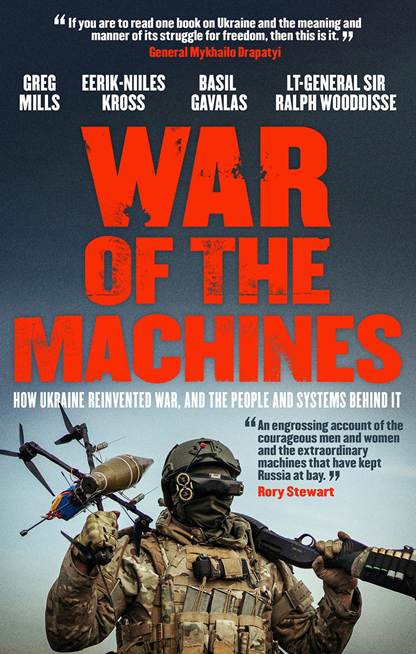
Mills is a co-author of the forthcoming War of the Machines (Hurst Publishers)
There are, however, other ways to increase pressure without relying exclusively on military means.
Sanctions could be expanded and more rigorously enforced, particularly against Russia’s shadow oil fleet, the financial and commercial intermediaries facilitating sanctions busting, and entities in third countries that help sustain the Russian war economy, including those in China, Iran and North Korea. Greater willingness is also needed to use the approximately €210 billion ($236 billion) in Russian central bank assets frozen within the European Union to support Ukrainian defence, reconstruction and energy security.
The legal and financial arrangements for doing so require careful consideration, but the principle should be clear: Russia should not be able to escape the economic consequences of its aggression while Ukraine bears the costs of rebuilding.
Aviation
Another potential source of leverage lies in restricting Russia’s international connectivity, particularly through aviation. This is an area that has received less attention than conventional sanctions, despite its potential economic and political significance.
Russian citizens make tens of millions of outbound tourist trips annually. Outbound travel reached 29.5 million people in 2025, up from 27.4 million in 2024 and 25.3 million in 2023, with Turkey the leading destination, receiving more than 4.6 million Russian visitors annually. China and Egypt each receive approximately 1.6 million, while Dubai, Thailand and several Central Asian countries are also important destinations. Outbound tourism has continued to grow during the first nine months of 2026.
A more coordinated approach to restricting Russian aviation access could therefore increase the costs of international isolation. This would require engagement with countries that continue to receive substantial Russian tourist traffic, as well as tighter restrictions on aviation services, aircraft maintenance, insurance, leasing and other commercial arrangements that facilitate international connectivity.
A blanket closure of Russian airspace would be a much more ambitious and politically difficult proposition. Russia has extensive air-defence coverage around major population centres and strategic infrastructure. Moscow alone is protected by a particularly dense network of air-defence installations. Any attempt to impose an airspace restriction through military means would carry escalation risks and could have consequences well beyond the intended economic pressure.
Such a campaign would have to be carefully evaluated in terms of the risk and what we see as its likely return on investment. For instance, the same drones that would be used to attack on-the-ground control stations may be potentially critical to ongoing ‘mid-strike’ ops against Russian logistics.
The change of priorities may have an impact in the front. The reaction of European partners, some already skitzy from Russian threats and drone incursions, may well be tested further.
Unambiguous action
Streaming drones into commercial air space in Russia or directly attacking Russian control towers, would be an unambiguous action to curb air-travel, not open to arguments, caveats or exceptions, presumably exactly why it has not been encouraged by the beneficiaries of tourism traffic. But this is precisely what has been in place in Ukraine since February 2022.
The alternative – non-military sanctions – would depend on third parties. To be effective, such measures would have to be carefully co-ordinated, enforceable and linked to clearly defined diplomatic objectives, rather than simply adding another layer of sanctions without changing Kremlin calculations. So far, such co-ordination has been lacking.
Ultimately, the objective of ratcheting up pressure on Russia should not be to pursue escalation indefinitely. It should be to create the conditions in which Putin concludes that the continuation of the war offers fewer advantages than a negotiated settlement.
That requires a fundamental change in the Western approach. Military assistance must become more predictable and substantial; economic sanctions must become harder to evade; Russia’s external support networks must face greater scrutiny; and frozen Russian assets must be put to work in support of Ukraine, subject to a defensible legal framework.
Equally important, European governments must demonstrate that their commitment to Ukraine is strategic and long-term, rather than contingent on the political mood in Washington or the next diplomatic initiative.
There is an important distinction between offering Russia an opportunity to negotiate and allowing it to exploit negotiations as an instrument of strategic delay. A settlement that rewards aggression, leaves Ukraine vulnerable to renewed attack and allows Russia to reconstitute its military capabilities would not constitute a durable peace. It would simply postpone the next conflict.
Realities of power
The central lesson is that peace cannot be secured through diplomatic gestures alone. It requires leverage, credible deterrence and a negotiating strategy that recognises the realities of power.
Russia must come to understand that it cannot achieve through prolonged warfare what it has failed to secure through military force. While the West sweats over possible Russian responses, from this war it is clear that Russia retreats and agrees to negotiate when on the receiving end of sufficient military pressure, as proven in Kherson, Kharkiv and Kyiv.
The purpose of ratcheting up pressure is therefore not to make continued war inevitable, but the contrary: to make peace the more attractive option. Until Moscow reaches that conclusion, calls for negotiations are unlikely to achieve more than buy Russia additional time.
Increasing pressure including an air embargo through strikes creates the opportunity for trading in targets – along the lines of ‘We won’t attack your aircraft if you don’t hit our energy supplies’, for instance – to build the confidence for an overall peace agreement.
In his inaugural address, President John F. Kennedy said: “Let us never negotiate out of fear. But let us never fear to negotiate.” But fear can have its avenue when the aim of such escalatory measures is to fundamentally make the cost of war greater than the cost of peace.
[Image: Jade Koroliuk on Unsplash]
The views of the writers are not necessarily the views of the Daily Friend or the IRR.
If you like what you have just read, support the Daily Friend