

It’s so easy, in ignorance, to get the wrong end of the stick, isn’t it? One reads something or listens to something, with one’s opinions on the subject front of mind, and quite often reaches a conclusion that is wide of reality.
I was reminded of this recently after Carte Blanche aired a programme about the Hackers in Pringle Bay, Betty’s Bay and Rooi Els of the Kogelberg area in the Western Cape. The Hackers, for the sake of those who didn’t see the programme, are not nefarious IT thieves but volunteers who wage a dogged war to protect our unique fynbos in the sixth and smallest Floral Kingdom in the world, from being killed off by alien vegetation.
The aliens are trees, for the most part, and one might well wonder how they came to be growing all over the Cape Province. They didn’t take root by accident. They were introduced – by well-meaning botanists who thought they would do a fine job stabilising the soil of the Cape Flats.
What a frightful mistake they made, for they didn’t realise how thoroughly at home the imported trees would be, so much so that they would grow much larger and much faster than the indigenous flora and, by consuming vast amounts of water and crowding it out, bring it to where it is now, endangered and even in some parts of the Western Cape, facing extinction.
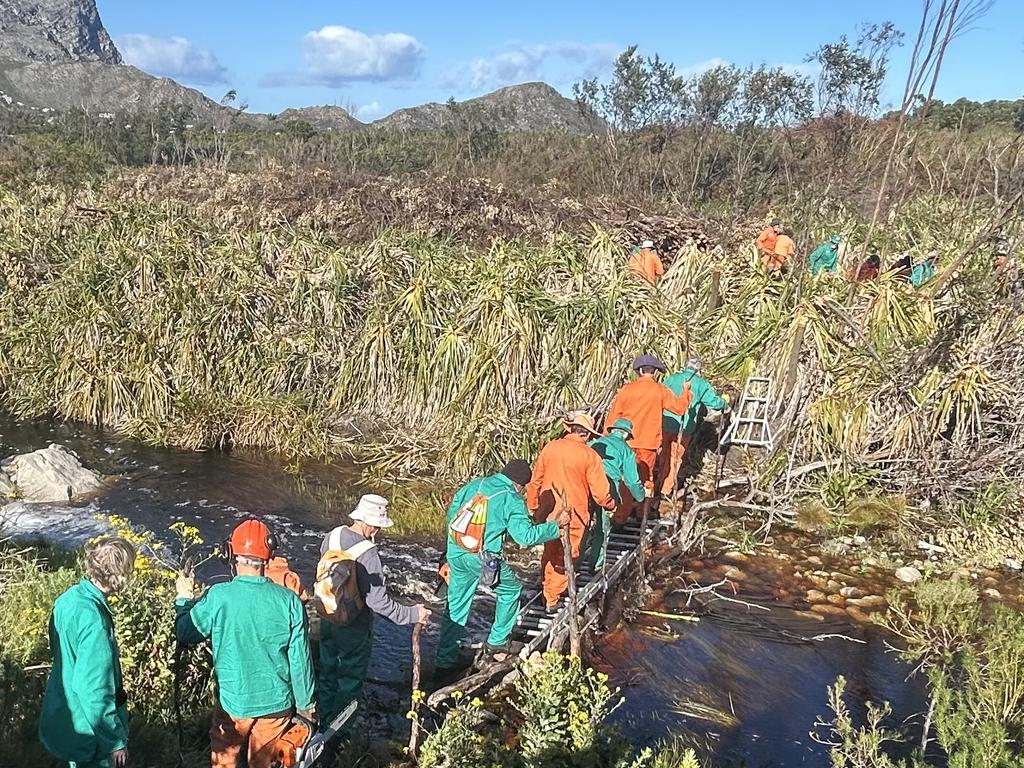
The Hackers at work. [Image: Gaynor Becker]
In the course of the Carte Blanche programme the purpose of hacking was explained, that is, to destroy the invaders so the indigenous flora or fynbos, as it is commonly known, once again has space and light and water to grow. In spite of this, however, someone wrote that when there are mudslides and houses are washed away it will be because “the roots of the trees that keep the sand sturdy have been removed”.
Like the botanists, he couldn’t be more wrong.
Alien trees are nowhere near as effective at holding the sandy soil on slopes or on the flat, as the shrubs and plants of the naturally occurring fynbos. They may look delicate and their flowers are certainly exquisite but they are perfectly adapted to surviving the ferocious winds and driving rain of winter as well as the dry and dusty heat of summer.
Healthy fynbos grows close together, the tougher plants shielding the more delicate from rough weather, preventing erosion of the soil and providing safety and food for the small creatures, the lizards and francolins, the beetles and mice, that live off the fynbos.
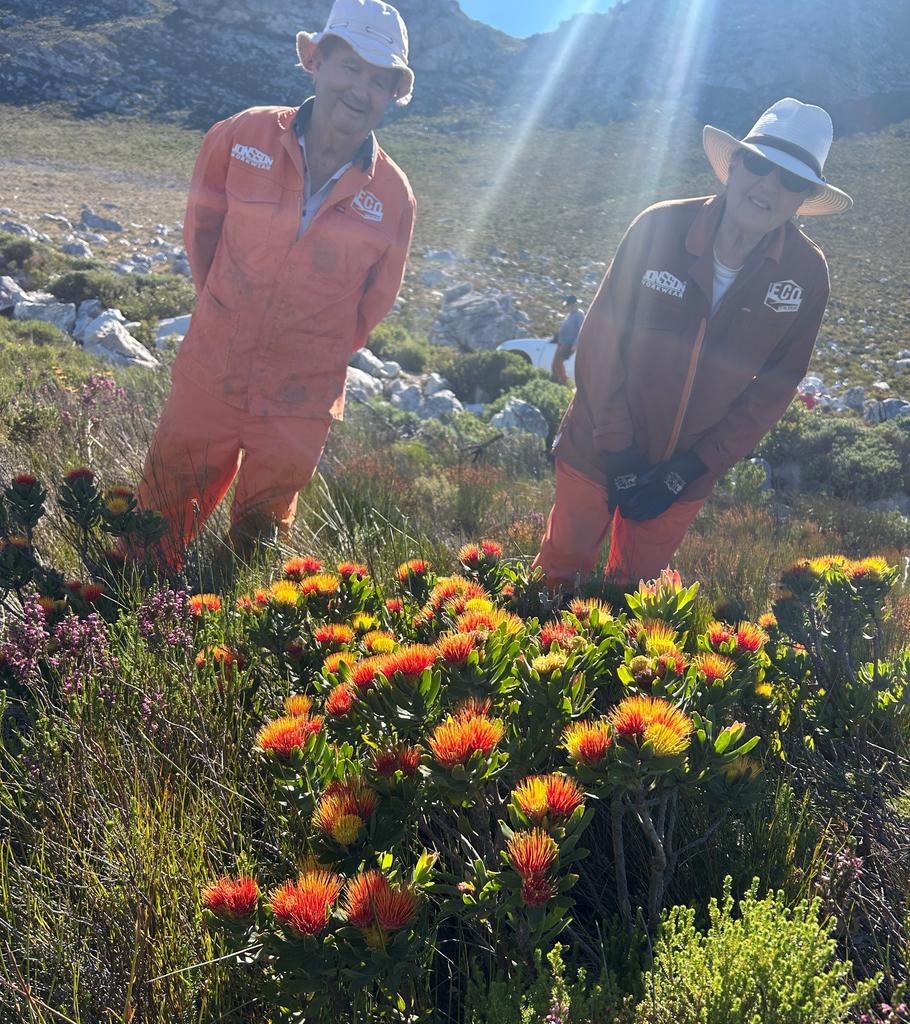
Hackers Nils Röttcher and Joan de Wet admire the resplendent return of the fynbos [Image: Gaynor Becker]
The aliens have no role in this; where aliens flourish in dense thickets, there is no insect or animal life and birds do not nest.
It astonished the Hackers that another viewer accused them of chopping down ‘good’ trees instead of the aliens. The first thing to say here is that while beautiful trees do occur in the broader landscape in the fynbos, not many are endemic to this coast. We are indeed blessed with milkwoods and wild olives and coastal oaks but they don’t grow out of control, spreading like a cancer upon the landscape.
Consequently, if you come upon an area choked with trees, you can bet your bottom dollar they are aliens and so they always turn out to be. One glance will confirm it because the alien trees that terrorise the fynbos in this area, the stony pines, the hakea, the black woods, the Port Jackson Willows, stick out like sore thumbs, they are so different from the indigenous flora.
To those who volunteer to break their backs destroying invasives, week after week, the notion that they can’t distinguish between them and the naturally occurring trees is absurd.
Finally let me say this. The doubters can rest assured the Hackers have neither time nor resources to squander on mistakes. Alien vegetation is a formidable foe and it takes years to eradicate. Cutting down the tree is just the first step. For years afterwards its seeds produce hundreds of seedlings which must be removed – by hand. Only when every seedling has been removed can the area be considered pristine.
The Hackers belong to the Hangklip Botanical Society affiliated to SANBI (South African National Biodiversity Institute). At the last annual general meeting, the Hackers were acknowledged for their the outstanding contribution to conserving the flora and fauna of the Kogelberg.
It is so easy, in ignorance, to get the wrong end of the stick, isn’t it?
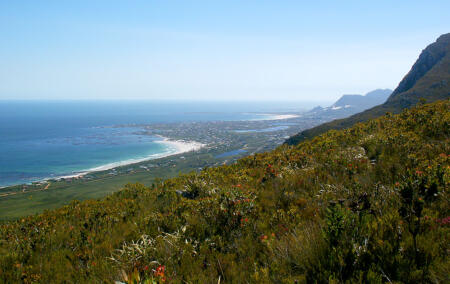
[Image: By Nick Coombe from Toronto, Canada – Betty’s Bay, CC BY 2.0, https://commons.wikimedia.org/wiki/Special:Redirect/page/6094664]
The views of the writer are not necessarily the views of the Daily Friend or the IRR.
If you like what you have just read, support the Daily Friend