

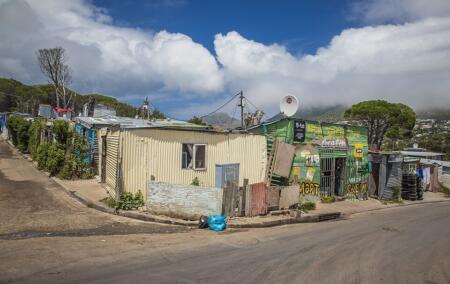
The housing minister’s proposed amendment bill is no solution to the problems posed by the Prevention of Illegal Eviction from and Unlawful Occupation of Land Act of 1998 (“the PIE Act”), as outlined in these pages last week. How then should PIE be changed?
Ideally, the Act – with its lopsided and damaging provisions – should simply be repealed. If the government of national unity (GNU) cannot muster the will to do so, then at minimum a new amendment bill with very different wording should speedily be enacted.
The unconstitutionality of PIE
PIE supposedly gives effect to Section 26(3) of the Constitution, which says that no one can be evicted from their home without a prior court order. However, it goes significantly further than the Constitution requires by demanding that either state entities or private landowners provide “suitable alternative accommodation” before eviction may proceed.
PIE is also supposed to be in keeping with Section 26(2) of the Constitution. This clause requires the state to “progressively” implement a right of “access” to housing, via laws that are “reasonable” and within the limits of the government’s “available resources.” However, PIE is neither reasonable nor affordable: especially with public debt at close on 80% of GDP and most state entities dysfunctional. PIE’s attempt to shift some of the burden of providing alternative accommodation on to private landowners is also in conflict with this clause.
In addition, every unlawful occupation “results in a deprivation of property under section 25(1)” of the Bill of Rights, as the Constitutional Court has stated. The Act also undermines the rule of law by encouraging lawlessness and then allowing the state to benefit financially from this. It bars effective legal remedies against land invasions, undermining the constitutional “right of access” to court in this sphere. PIE also undermines the principle of equality before the law by according significant benefits to land invaders while treating aggrieved owners as if they were the perpetrators of major crimes.
The economic damage from PIE
In the economic sphere, PIE poses a growing threat to property rights in inner city and residential areas as well as on farms and mines facing an upsurge in land invasions. This threat further deters the fixed investment in buildings, machinery, and infrastructure South Africa so badly needs to increase the productive capacity of the economy and stimulate faster growth.
Fixed investment has languished at around 15% of GDP for some ten years. In 2025 it dropped further to 13.7% of GDP. This is roughly half the global average of 26% and less than half the 30% goal set for South Africa by the National Development Plan in 2012. It is also far below the average rate of fixed investment in sub-Saharan Africa – one of the fastest-growing regions in the world – which stands at 24%.
A much higher rate of fixed investment (at least the 24% evident elsewhere in sub-Saharan Africa) is essential to raise the growth rate substantially. Increasing growth is also a vital need, as growth at 7% of GDP would see the economy double in size in ten years. By contrast, if growth remains at roughly 1.3% a year, it will take 54 years for the economy to double.
Without much faster growth, it will also be difficult to reduce unemployment. Currently, the joblessness rate stands at 32.7% on the official definition and at 43.7% on the expanded one (which includes those too discouraged to keep looking for jobs). These are among the highest unemployment rates in the world.
What the GNU should do
The GNU’s most important objectives should be to strengthen property rights and help attract the fixed investment vital to increased growth and reduced unemployment. PIE makes these goals more difficult to attain.
PIE’s ostensible objective – to protect the poor from evictions reminiscent of those in the apartheid era – was always questionable. Now that its damaging consequences have become all too apparent, there is no credible justification for retaining it.
However, if the GNU baulks at repealing PIE at the present, then at minimum a very different PIE amendment bill should be enacted. Here are some ideas as to what it should include.
Some helpful PIE amendments
First, this new bill should require the payment of compensation to all owners for the financial losses resulting from land invasions. This compensation should be payable by those inciting land invasions, by unlawful occupiers, and by the South African Police Service (SAPS), whose task it is to protect people from illegal conduct. All three groups should be held jointly and severally liable for the payment of the compensation due. In practice, the burden of making payments will fall primarily on the SAPS, which should then be induced to do a better job of protecting land and buildings from invasion.
Second, the bill should introduce suitable time constraints. If, for example, a municipality takes longer than 30 days from the granting of an eviction order to make alternative accommodation available to unlawful occupiers, the owner should automatically be entitled to proceed with the eviction in any event.
Third, the bill should scrap clauses in the Act that encourage housing activists to bring private prosecutions against owners allegedly guilty of “constructive” evictions for, say, cutting off the illegal supply of electricity and water to land invaders for which owners may otherwise have to pay.
In general, those wanting to prosecute privately must obtain nolle prosequi certificates from the National Prosecuting Authority confirming that no public prosecution is envisaged. They must also provide security for the costs of the private prosecution. The PIE Act dispenses with these requirements. It also bars owners who are acquitted from recovering at least some of the legal costs of their defence unless they can prove the private prosecution was “vexatious.” In practice, this is difficult to do.
These PIE provisions add considerably to the potential burden on owners who have suffered land invasions. They should thus either be repealed – or redirected. If equivalent rules were to facilitate the private prosecution of those who have incited land invasions, that would be more appropriate.
A tighter definition of “unlawful occupier” too
PIE’s definition of “unlawful occupier” should be tightened up to exclude tenants whose leases have expired, but who are “holding over” and refusing to vacate. As the Supreme Court of Appeal (SCA) ruled in 2002, the Act’s broad definition currently entitles tenants holding over to PIE’s protections. The same applies, said the court, to former home owners who refuse to vacate after defaulting on their mortgage bonds and seeing their houses sold to recover outstanding debt.
The SCA ruling means that landlords and financial institutions can no longer rely on the common law remedy of rei vindicatio (a claim for the return of property to its owner) which would generally allow summary ejectment. Instead, they must comply with the PIE Act’s procedural and substantive requirements for eviction. In practice, this is not easy to achieve – especially when court rolls are clogged and dysfunctional state entities must first provide those holding over with alternative accommodation.
The SCA ruling significantly increased the risks in renting out residential property and financing home purchases. Not surprisingly, this has reduced the supply of rental accommodation and the availability of housing finance. It has also pushed up costs.
“When landlords and investors face excessive legal risk recovering properties after lease defaults or expired occupation rights, the market responds by requiring higher deposits, higher rentals and stricter tenant screening,” says Renier Kriek, managing director of Sentinel Homes, a specialised home finance business headquartered in Cape Town. It also results in stricter checks before people can obtain housing credit.
The increased risk has resulted in “fewer affordable rental units and less investment into low-income housing supply,” adds Mr Kriek. These are the “predictable” consequences of rules that “make it too risky, slow or expensive to recover property.” For more than two decades, PIE has thus exacerbated “a severe affordability crisis at the lower end of the housing market.”
PIE’s definition must be amended to exclude unlawful occupiers whose occupation used to be legal but who are now holding over. The government earlier proposed such an amendment, but failed to enact it.
The way forward
As the IRR wrote in its submission on the current PIE Amendment Bill, this proposed measure adds to the imbalance in the PIE Act and must be scrapped. In addition, if the GNU is serious about investment, growth and jobs, it should go on to repeal PIE too. At minimum, it should reduce the damage from the Act by amending its worst elements.
[Image: https://commons.wikimedia.org/wiki/File:South_Africa_-Cape_Town_Imizamo_Yethu_Township%2816312057200%29.jpg]
If you like what you have just read, support the Daily Friend