

Over the last week I have been playing around with a fun AI tool called “Any Human Ever“. When you click the button on the site, it generates a random imaginary human life, based on statistical probability. Over the entirety of human existence, it is believed that around 100 billion people have lived, of whom 8.3 billion are alive today; most people who have lived live much closer to 2026 than to the origins of our species 300 000 years ago.
In generating this imaginary person from statistical reality, the tool gives them a gender, a name (if possible) a place of birth, age they lived to, major world events they would have experienced, when their parents died and when they themselves died. It also includes some hypothetical details of their life, such as what they would have mostly eaten, worked as, and what sort of house they would have lived in based on what historians believe would have been likely for the year and region in which they lived.
Now historians can argue with the specifics of each hypothetical person this tool creates, but in broad strokes it gives one a fairly good idea of the general outlines of the human experience for the vast majority of our time on this Earth.
When creating new “people”, it’s difficult to not be reminded of the historical reality that most of us have lived in for most of history. That is to say, and this is not an observation at all original to me, but man, life sucked in the past.
If you use the tool for long enough, the statistical reality of the past is laid bare, namely that most people lived difficult lives. Disease was rampant and until the 20th century. As recently as the 20th century between 1/3 and ½ of children died before the age of 5.
Even if you survived into adulthood, rates of violence were much higher than the average today both from crime and warfare. Physical labour was constant and demanding and by old age it had often left your body broken and crippled.
As for the more intangible aspects of life, experiences of the world, pursuit of knowledge, artistic exploration, spiritual exploration, theological study, etc. Opportunities to explore these were much less abundant than today. It doesn’t matter where in the world you lived unless you were a merchant, noble or clergyman you lived and died in a relatively small region. Your access to knowledge on almost every topic was severely limited and you were likely illiterate.
For many your freedom to move or decide such fundamental things like who you married or what work you did was entirely determined by your superiors in the social hierarchy.
That’s not to say that happiness and beauty and invention didn’t exist, or that people didn’t from time to time forge their own path in life, but the odds were not in your favour. Most people struggled to carve out joy and meaning in their lives and when they achieved it, it was often short lived.
And then around 500 years ago, it began to change, slowly at first, but with ever growing impact. Trade flourished, ideas spread, the idea of human rights began to grow and expand, amid all the conflict and chaos, life began to get better than it had been, at first for a tiny elite and then for a growing number of people. Populations boomed, technology surged, conflict began to decline, violence reduced and by the year 2010 human beings were unambiguously better off than they had ever been by any measure.
An incredible transformation that makes me feel blessed to be alive today.
What cased this amazing change? 300 000 years of history and only for around 200 of those years has anyone lived in what we might today viewed as prosperity.
Historians, and ideologues have many answers. I believe there are many causes from key developments in information exchange like the printing press, to the expansion of global trade heralded by major advances in ocean travel to new ideologies and political systems which for the first time set human beings free and allowed the virtuous cycles of free markets. The culmination of which is liberal democracy.
American political writer Jonah Goldberg refers to this great historical change with the nickname “The Miracle” in his excellent book, Suicide of the West.
But as Goldberg suggests in that title and as others have worried the great political question of our time is if we can maintain The Miracle
Francis Fukayama in his book, The End of History and the Last Man, talks of a world where The Miracle and Liberal Democracy has spread everywhere and all oppressions are vanquished
” Experience suggests that if men cannot struggle on behalf of a just cause because that just cause was victorious in an earlier generation, then they will struggle against the just cause. They will struggle for the sake of struggle. They will struggle, in other words, out of a certain boredom: for they cannot imagine living in a world without struggle. And if the greater part of the world in which they live is characterized by peaceful and prosperous liberal democracy, then they will struggle against that peace and prosperity, and against democracy.”
Goldberg argues that inherent in human nature and life is an entropy, a decay which must constantly resisted to prevent the collapse of all that is good.
I think they are both right, I think the many many achievements that we as a species have accomplished and are accomplishing are very fragile indeed. And the forces of entropy and destruction are growing in strength and power. We must not throw away what has worked so successfully in favour of some utopian socialist scheme or some post-liberal fad which seeks to tear down key pillars that support the flourishing of humanity namely universal human rights, a belief in a common humanity, free markets, constitutional democracy, and checks and balances.
If we keep the miracle alive, with any luck our descendants will look back at the lives we lived, and say, “thank God I was born today.”
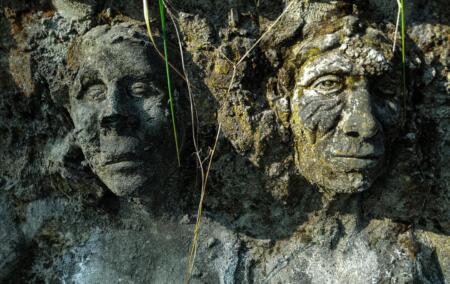
[Image: Human history]
The views of the writer are not necessarily the views of the Daily Friend or the IRR.
If you like what you have just read, support the Daily Friend