
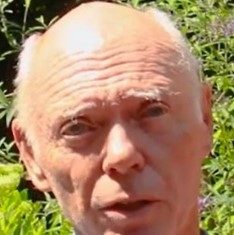

Respected former US Treasury and Federal Reserve official Ted Truman says the Trump administration’s effort to seize control of the Federal Reserve poses an unprecedented threat to the central bank’s independence.
Truman, who headed the Fed’s international division for 21 years and later served as an assistant treasury secretary, says if the president is successful “the Federal Reserve as we know it will be decimated,” requiring years or decades to repair.
Founded in 1913, the Fed won operational independence to set interest rates in 1951. Until then government priorities, not economic data, guided monetary policy. The Fed became the first major central bank to have relative freedom to pursue its twin mandate of promoting price stability and full employment.
President Trump has been adamant that lower interest rates are required to boost economic growth, and he is outraged that the Fed has failed to cooperate. Instead, the Federal Reserve has chosen to move slowly in cutting rates out of fear that the president’s tariffs could soon cause prices to rise.
The president’s wrath has been directed at Fed chairman Jerome Powell, whom he has repeatedly bullied, using crude language calling him a numbskull and not a smart person. He has threatened to fire Powell, but now says he will wait until his term ends in May 2026.
A complicated governance structure has insulated the Fed from presidential interference. Its policy-making federal open market committee is comprised of 12 voting members and meets eight times a year.
Seven Fed governors are nominated for 14-year terms. The committee also includes five presidents of the 12 regional Federal Reserve banks. The Fed chairman sets the agenda. Until recently most FOMC decisions were unanimous, but in July two Trump appointees favouring an interest rate cut dissented from the majority which voted to hold rates steady. It was the first twin dissent since 1993.
Resigned without explanation
It now appears that in addition to nominating a chairman, the president will have two additional openings to fill. In August a governor aligned with Powell resigned without explanation.
Trump is nominating his chief economist to serve out her term. Also, in August Trump fired Lisa Cook, a governor nominated in 2022, because she allegedly made false claims on two mortgage applications the year before she was nominated.
Cook is contesting the firing, arguing there are no grounds for her dismissal. The matter is currently before the courts.
Given these developments, Trump says his administration will soon have a majority at the Fed, a prospect deeply worrying to Janet Yellen, who preceded Powell as Fed chair and was treasury secretary under Biden. She says if Trump controls the board, he could fire regional bank presidents as well as senior staff. She is “utterly alarmed” at this assault on Fed independence.
Concerning interest rates, it is ironic that Powell, who was nominated to be chairman by Trump in 2017, has said publicly that he expected rates would be cut three times this year. One cut has already occurred, and another is anticipated when the Fed’s policy-making committee meets on 17 September.
Small increments
Under Powell the Fed aggressively raised rates in 2022 and early 2023 to combat inflation that had reached 9%. Short-term rates went up 11 times in small increments, taking the overnight lending rate to 5% from a pandemic-induced low of near zero. As inflation cooled later in 2023 the Fed began an easing cycle that has brought the fed funds rate to 4.25%.
As to why central bank independence is important, Kristalina Georgieva, head of the International Monetary Fund, says autonomy from political interference is vital “to winning the fights against inflation and achieving stable long-term economic growth.”
Independence, she says, boosts central banks’ credibility, as they can implement unpopular measures that governments are less inclined to do.
As in other places, there have been recurrent efforts in the States to roll back Fed independence and bend its policies for political gain.
In the 1960s President Lyndon Johnson summoned then chairman William McChesney Martin to his Texas ranch to berate the Fed chief for keeping interest rates high.
President Richard Nixon successfully leaned on then chairman Arthur Burns to lower rates. Burns’s reputation was sullied by his acquiescence to Nixon’s request.
Ted Truman, the former long-time Fed official, says the episodes above are minor compared to the drama now under way. The law stipulates that a sitting Fed governor can only be removed “for cause”, and that has never happened.
Political makeover
If Cook’s dismissal is upheld, the Trump administration would likely have a board majority. A key question then would be whether FOMC members would willingly be complicit in a political makeover of what has been the world’s most respected central bank.
Treasury secretary Scott Bessent, perhaps the closest advisor to Trump, says while the Fed has over-reached and made mistakes, it should remain independent.
If the Fed becomes compliant to Trump, what would be the likely implications for the dollar and its role as an international store of value? That’s just one of the issues facing future Fed policy.
The views of the writer are not necessarily the views of the Daily Friend or the IRR.
If you like what you have just read, support the Daily Friend