

After three and a half months, billions of dollars, and thousands of lives, Trump has “negotiated” his way back to where Barack Obama left things in 2016.
Of course Donald Trump was petty enough to announce that the “Great Deal” with Iran was “complete” on his 80th birthday, in between posting AI slop aggrandising himself, dredging up 40-year-old Fortune magazine covers of himself, berating Israel for striking Hezbollah targets in Lebanon, and hosting a UFC fight night at the White House.
Nothing says “sober custodian of hegemonic power” quite like rushing negotiators to wrap up a Middle Eastern war so the emperor has a birthday gift to give himself while watching tattooed gladiators wearing nothing but spandex tights fight at the Colosseum on the south lawn.
While people lucky enough to be asked to Trump’s invite-only event at the People’s House were treated to a blood-spattered, testosterone-fuelled circus, bread for the common people is too expensive thanks to the high price of fuel.
“Peace Deal”
On Sunday, 14 June, Pakistani Prime Minister Shehbaz Sharif announced that “the Peace Deal between the United States of America and Islamic Republic of Iran has been REACHED”.
Trump confirmed it minutes later, with his customary chest-thumping bravado: “Ships of the World, start your engines. Let the oil flow!” (Of course, until the war, the oil was flowing…)
Iran’s Supreme National Security Council confirmed the memorandum of understanding too, which – after roughly a dozen previous occasions on which Trump declared a deal “largely negotiated” only for Tehran to deny it within hours – is at least novel.
Markets responded with relief. The benchmark Brent Crude oil price dipped to $82, the lowest it has been since the first week of the war back in early March, but still well above the $60 level it traded at the start of the year.
So, 107 days after the bombs started falling, we have a concept of a plan of a deal, which all parties say will be signed by the end of this week. (To leave time for demining the Strait of Hormuz, you see.)
Let us examine this magnificent diplomatic achievement.
Weak sauce
The memorandum is, per Iranian state media and Western reporting, 14 points long.
It ends the war. It withdraws US forces from around Iran. It reopens the Strait of Hormuz, “toll free”, with Iran clearing the mines it laid and the US lifting its naval blockade on Iranian exports.
It opens a 60-day window to negotiate the actual hard questions – uranium enrichment, the fate of Iran’s highly enriched uranium stockpile, and sanctions relief.
In exchange, the US lifts oil sanctions and some financial sanctions, and releases billions in frozen Iranian assets.
Iran, for its part, generously reaffirms its existing commitment under the Non-Proliferation Treaty not to build the bomb the US said just last year it couldn’t build, and Iran has always insisted it never wanted.
Read that list again and try to find a single one of the war’s stated objectives in it.
Recall what we were promised: Regime change (a term they used, then claimed they never used, and then used again to mean something nobody else meant). The permanent end of Iran’s nuclear programme. The destruction of its ballistic missile industry. An end to its sponsorship of, control over, and protection of, terror proxies. The liberation of the Iranian people to rise up against the regime.
The White House itself, on 1 April – a fitting date – insisted these objectives were “clear and unwavering”: “obliterate Iran’s ballistic missile arsenal and production capability, annihilate its navy, sever its support for terrorist proxies, and ensure the world’s leading state sponsor of terrorism never acquires a nuclear weapon.”
The deal achieves none of these.
The nuclear question is punted into a 60-day negotiating window – which is to say, deferred to precisely the kind of patient, technical diplomacy the entire war was supposed to render unnecessary. The missiles go unmentioned. The proxies go unmentioned; except for a Lebanon clause we’ll get to. The regime is not merely intact but is the very counterparty signing the document.
And the Iranian people, whom Trump once urged to “seize control of your destiny”, remain exactly where they were: under the boot.
As the Times of Israel put it, with admirable bluntness, the reported terms “do not achieve the goals of the war”.
It is weak sauce. And it took three and a half months to cook.
“Any day now,” for fourteen weeks
Let us dwell on that timeline, because it is the part Trump would most like you to forget.
This is a man who, more or less from the first week, insisted the war was “very complete, pretty much”, and who then proceeded to promise its conclusion was a matter of “two to three weeks” on a loop for the next three months.
A deal was “largely negotiated” on 23 May (Iran disagreed within hours). It was in its “final throes” on 9 June, signable “in two or three days”.
The man who tore up the 2015 nuclear deal because he, the consummate dealmaker, could surely negotiate something better, took fourteen weeks to produce a framework that mostly just restores the situation that existed before he started bombing and before he tore up that deal.
If the greatest negotiator in the history of negotiating needs three and a half months, billions of dollars, the closure of a fifth of the world’s oil supply, the biggest oil shock in history, and several thousands dead bodies to extract a document this thin, one wonders what a bad negotiator might have achieved.
Possibly the same thing, in an afternoon, by telephone – a medium Trump himself once recommended for solving exactly these sorts of problems before he discovered that dropping bombs is far more fun, and far more macho.
The meaningless trophies
Trump and his defenders point to the wreckage and say: but look what we destroyed!
Iran’s navy is, in his words, “at the bottom of the sea”. Its air force is gone. Many of its missile launchers have been destroyed. And this is true. The US and Israeli militaries comprehensively dismantled the conventional forces of a country that was never going to win a conventional fight, and never intended to try.
I pointed out at the time that the US and Iran were not scoring this war by the same rules. The US Navy sinking Iranian rust-buckets with torpedoes was never the point.
Iran’s navy and air force were never the threat.
The threat – the actual, asymmetric, regime-preserving threat – was its missiles, its cheap and plentiful drones, its proxy militias, its nearly-a-million-strong army to defend its formidable geography, its nuclear ambitions, and the one threat the US apparently didn’t see coming: its grip on the Strait of Hormuz.
Destroying Iran’s surface fleet to neutralise the Iranian threat is like taking a knife off a suicide bomber. Impressive work, but not very useful.
Every one of the things that actually constituted the threat has survived.
Iran still owns the strait
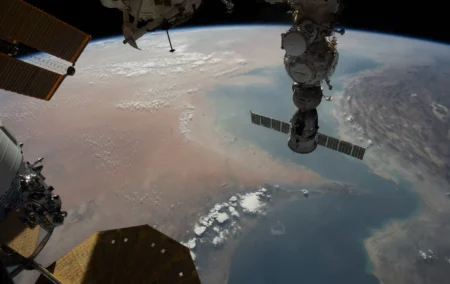
Take Hormuz. The deal “reopens” it, toll-free, which sounds like a triumph until you remember that the strait was open, toll-free, before Trump started this war.
Reopening it merely restores the status quo ante. It neutralises Iran’s retaliation for the war. Iran is now graciously being paid, in unfrozen assets and sanctions relief, to stop retaliating.
Worse, the reopening is contingent on Iran clearing its own mines. Which means Iran retains, at all times, the demonstrated ability and the physical means to close or toll the strait again whenever it pleases.
We have spent fourteen weeks proving the one thing Tehran most wanted to prove: that it can choke a fifth of the planet’s oil whenever it likes, and that the United States Navy – the finest fleet in the entire history of navies ever – cannot reliably stop it.
Iran’s deputy foreign minister has already declared that the 60-day nuclear talks will only begin once the US hands over the frozen billions. The US rejects this. The leverage, you will notice, runs entirely one way, and it is not Washington’s way.
I wrote in March that “it doesn’t take much to keep the Hormuz Strait closed”. Three months, several failed ceasefires, and one half-assed peace deal later, that remains true.
If Iran closes it again next week, what will the US do? Threaten to bomb it back to the stone age again?
The drones didn’t go anywhere
The deal says precisely nothing about Iran’s ability to rebuild its drone and missile stocks. This is not an oversight; it is at the heart of the matter.
Iran pioneered the cheap Shahed loitering munition, shipped tens of thousands to Russia, and kept lobbing missiles and drones at its neighbours throughout a war in which Trump insisted its capabilities had been “100% destroyed”.
US intelligence eventually assessed that Iran had quietly regained access to 30 of its 33 missile sites along the strait, and retained some 70% of its mobile launchers. As recently as this month, Iran demonstrated it could still strike America’s Gulf allies, as well as Israel.
A nation that can rebuild a $30,000 drone faster than its enemies can manufacture the $3 million interceptors needed to shoot it down has not been disarmed. It has been annoyed.
And an annoyed Iran with its missile industry intact remains exactly the threat to its neighbours that it was on 27 February – only now it is also angrier, poorer, and more certain than ever that the Great Satan cannot be trusted.
Iran and its proxies
Here is the most telling clause of all. The MoU reportedly includes a ceasefire in Lebanon, requiring Israel to cease its attacks on Hezbollah. That’s the “poison pill”. Point four of fourteen requires total Israeli withdrawal from Lebanon.
Oof. Consider what it means that this clause exists at all.
The entire war was supposed to sever Iran’s support for its terror proxies. Yet here is Iran, at the negotiating table, successfully making the protection of Hezbollah a condition of peace – and getting it written into the agreement.
Far from severing Iran from its proxies, the deal formally recognises Iran’s standing to defend them. Tehran spent the war insisting that any Israeli strike on Beirut would draw an Iranian response, and then made good on the threat with missiles. The “deal” ratifies that arrangement.
Iran’s proxy network – Hezbollah, the Iraqi militias, the Houthis – has been degraded, but remains, per RAND, “largely intact”. Some analysts warn that Iran has expanded its proxy war beyond the region, and is moving towards what one counter-terrorism expert calls a “violent gig economy”.
And the punchline? Having not been involved in these negotiations, Israel says it isn’t bound by Trump’s agreement. Benjamin Netanyahu reportedly had to telephone the Trump administration to find out what was in the deal, and has informed Trump that Israeli forces will not withdraw from southern Lebanon.
Hours before the signing was announced, the Israeli Air Force struck Hezbollah targets in Beirut, killing three, prompting Iran to threaten to walk away. Trump, surveying the wreckage of his own peace deal, could only complain that Netanyahu is “a very difficult guy”.
So, a central Iranian condition has already been publicly rejected by the one party expected to honour it.
This is not a peace. It is a ceasefire with a lit fuse, resting on a clause that Israel has announced, in advance, it will violate.
As I warned in March, so long as Israeli action against Hezbollah is tethered to any cessation of hostilities, there will be no lasting peace – just another shaky pause that gives the Iranian regime time to regroup and resupply.
No uprising, no regime change, a harder regime
And the people of Iran? They did not rise up. They were never going to, as I argued before the first week was out: you do not stage a popular revolution against a regime that has spent decades perfecting the art of mowing down protesters, armed with nothing but hope and a martyred Ayatollah to rally against.
Trump called for the uprising on 28 February. By 13 March he had conceded it was “a big hurdle to climb for people that don’t have weapons”. Gee, nice of him to join the rest of us in the real world, after asking the Iranian people to embark on a suicide mission.
The Islamic Revolutionary Guard Corps retained more than enough strength to suppress revolt and protect the clerical state – which is precisely why no revolt came.
The Supreme Leader’s chair is now occupied by his son, Mojtaba Khamenei, whom analysts assess to be more hardline than his father, and more inclined to sprint for a nuclear weapon, not less.
A personnel change is not a regime change, any more than promoting Nicolás Maduro’s deputy changed the regime in Venezuela. The clerics still rule. The IRGC still enforces.
And they have now learned just what it takes to defend itself against the Great Satan. With the old Ayatollah, his fatwa against nuclear weapons also dies, and the regime has even more incentive to insulate itself against future attacks by pursuing nuclear weapons.
Back to 2015, the long way round
Which brings us to the final irony.
If this deal is signed in Geneva on Friday, and if the 60-day talks then yield an agreement that restrains Iran’s nuclear programme (the second of these a much bigger if than the first), then ask yourself: what, exactly, will Donald Trump have achieved that Barack Obama did not achieve in 2015?
The Joint Comprehensive Plan of Action – the deal Trump denounced as “the worst deal ever” and tore up in 2018 – restrained Iranian enrichment, monitored its nuclear facilities. In return, it lifted sanctions and unfroze assets. The framework now taking shape would restrain Iranian enrichment, monitor its nuclear facilities, and lift sanctions and unfreeze assets in return.
Trump fought an entire war – billions of dollars, the biggest oil shock in history, a global stagflationary wave, thousands dead – to arrive, breathless and boastful, at a destination that is indistinguishable from the one he set fire to in 2018.
He took the scenic route through hell to get back to where Obama parked the car.
One struggles to imagine a more expensive way of humiliating oneself.
In principle, and in practice
Let me be as clear now as I have been from the start of my first column on this war.
Neutering the Iranian threat was a highly desirable goal. It is one of the most objectively evil state actors on the planet. Toppling the murderous theocracy that mows down its own people and finances terror across the globe was a laudable objective.
I supported, and still support, regime change in Iran in principle. The Ayatollah had it coming, and I hope he is enjoying his 72 incels in heaven.
But desirable objectives pursued with reckless incompetence do not become achievements simply because the man can yell “VICTORY” on his own social media platform.
This war was launched without a plan, without Congressional authorisation, without allies, without an understanding of asymmetric warfare, and without the faintest idea of how the day after was supposed to look.
It was waged by a man who genuinely seemed surprised that his target didn’t roll over and play dead upon command.
And it has ended – if it has ended, which the Beirut rubble suggests it has not – with a flimsy, fragile memorandum that achieves none of the war’s aims, leaves much of the Iranian threat intact, hands Tehran billions of dollars and a permanent veto over the world’s oil, formally blesses its protection of Hezbollah, and lands the United States roughly back at a deal it already had a decade ago and chose to destroy.
Bloody mess
I warned at the outset that there were many ways this war could end in disaster, and very few in which all went well. “The best-laid schemes o’ mice an’ men gang aft agley.”
This scheme was not well laid.
But did you see the bloody mess Justin Gaethje made of Ilia Topuria’s face? Panelled him straight into hospital, he did! What a birthday present for the Don!
[Image: Hormuz.webp]
[Caption: The Strait of Hormuz, with Iran to the right and Oman to the left, as seen from the International Space Station. (Photo: NASA Johnson Space Centre, 14 August 2023.)]