

Why some crises mobilise the world while others fade into silence
The disparity between the scale of suffering in certain conflicts and the level of global moral attention they receive is often explained away as bias, bad faith, or ideological blindness. These explanations are tempting, not least because they offer simple answers to a complex pattern, but they are incomplete. What we are seeing is something more prosaic and more unsettling.
International outrage is not distributed according to suffering. It tends to gather where pressure can plausibly be applied. This observation unsettles a comforting assumption: that the intensity of global moral response reflects the severity of harm or the innocence of victims. It does not — but it does explain a pattern that otherwise appears incoherent.
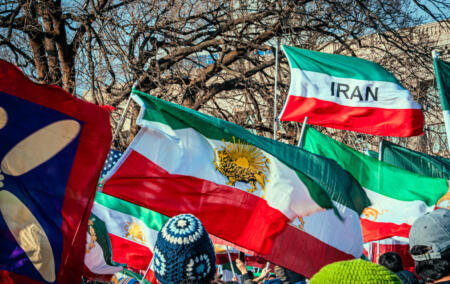
Iranian security forces have killed protesters in large numbers. Mass arrests have been made, executions threatened and, according to multiple reports, carried out. Communications have been throttled. Civil society has been crushed in full view of the world. And yet, beyond brief statements, ritual condemnations, and a short burst of coverage, the issue — while not disappearing — occupies far less space in public and institutional discourse than its gravity would suggest.
This is not because the violence is ambiguous. It is not because the victims are invisible. It is because outrage, in practice, follows leverage.
Moral accountability is uneven by design
Some states are treated as morally accountable to liberal norms. Others are not.
States embedded in liberal institutions are assumed to be responsive to pressure. Their legitimacy is understood to be conditional. Their leaders speak the language of international law, even when contesting its application. They interact with courts, NGOs, journalists, and diplomatic forums that convert moral criticism into reputational cost.
Other states are categorised differently. They are already understood as illiberal, authoritarian, or hostile. Their leaders reject Western moral language outright. They do not depend on Western approval to sustain internal control. When they commit violence, it confirms an existing diagnosis rather than disrupting it.
This asymmetry in moral accountability has recently been explored in the pages of The Daily Friend. In Against the Moral Equivalence of States, Martin van Staden argues that the idea that all states are morally interchangeable is a mistake, and that differences in domestic legitimacy and respect for freedom necessarily shape how states ought to be judged. His argument is normative and philosophical; the claim made here is empirical and descriptive. But the overlap is instructive. In both cases, the premise is the same: states are not treated as morally equivalent in practice, and expectations of behaviour vary accordingly.
Paradoxically, this lowers the moral temperature in some cases. Violence that violates expectation generates outrage; violence that confirms expectation produces resignation—not approval, not indifference, but a muted response shaped by familiarity.
The result is an unspoken hierarchy. States that claim adherence to liberal norms are judged harshly when they fall short. States that reject those norms are judged briefly and then bracketed off as hopeless cases. This is not because their victims matter less, but because the moral shock dissipates more quickly.
Democracies are punished for deviation. Authoritarian regimes are excused by anticipation: not excused morally, but excused emotionally.
What leverage actually consists of
Some states are exposed to reputational risk in ways others simply are not. Those embedded in Western alliances, markets, and institutions incur real costs when their moral standing erodes. Resolutions, sustained media attention, and elite opinion do not remain symbolic; they feed back into diplomacy, trade relationships, and security cooperation. In these contexts, reputational damage is not rhetorical; it constrains behaviour.
There is also the question of permeability. Democracies contain internal mechanisms — courts, legislatures, elections, civil society — that allow external pressure to enter the system and circulate. Even when governments resist, criticism can be taken up, contested, amplified, or institutionalised, and so pressure has somewhere to go.
Finally, there is accessibility. Some states feel compelled to explain themselves. They justify their actions in legal terms, issue statements, commission inquiries, and argue their case in public. That makes them reachable. Their claims can be challenged, their reasoning picked apart, their inconsistencies exposed. Even when those explanations are defensive or self-serving, the fact that they are offered keeps the argument alive.
Iran does not sit inside any of these conditions. Its leadership has already absorbed the reputational costs of isolation. Its institutions are largely sealed against external pressure. Its rhetoric is not intended to persuade audiences embedded in the rules-based international order, nor to participate in its moral grammar.
Protest targets the reachable, not the worst offender
Western protest movements are not purely ethical formations, but instrumental ones.
They organise around actors who can plausibly be influenced: states that value legitimacy, corporations that fear reputational damage, institutions embedded in liberal networks. Protest works where pressure has somewhere to land.
There is little incentive to mobilise against a regime that ignores protest entirely, to boycott a country already comprehensively sanctioned, or to shame leaders who reject the moral vocabulary being deployed against them. Protest energy therefore clusters where it might produce symbolic or material return.
Victims whose oppressors are embedded in pressure-sensitive systems attract sustained mobilisation, because their suffering can be translated into action.
Effectiveness quietly replaces universalism — not because activists are insincere, but because efficacy becomes the organising principle.
Democratic politics registers salience, not suffering
This dynamic is reinforced within democratic systems themselves. Elected officials do not calibrate their responses to global suffering in the abstract. They respond to what registers as politically salient among their constituents. Issues that generate visible mobilisation, sustained media attention, and organised advocacy acquire political weight. Crises that fail to penetrate public consciousness, however severe, struggle to produce comparable institutional response.
This is not duplicity, but the ordinary functioning — imperfect as it is — of representative politics. Democratic systems are designed to translate voter attention into policy priority. Where attention is absent, even sincere concern struggles to convert into action.
In this sense, outrage does not merely follow leverage; it signals it. Protest, coverage, and institutional noise inform political actors where pressure will be rewarded — or punished — electorally. The absence of response, then, is not necessarily moral indifference, but political inaudibility.
This is not unique to Iran
Seen this way, Iran is not an anomaly, but part of a broader pattern. Yemen has endured one of the deadliest humanitarian catastrophes of the past decade: mass civilian casualties, famine, displacement, and the systematic destruction of infrastructure. The scale of suffering is immense. Sustained global mobilisation and news reporting has been minimal.
Sudan’s descent into mass violence and displacement has produced brief spikes of concern, followed by near silence. Entire regions have been emptied. Civilians have been targeted. The state itself has fractured. Outside specialist circles, it barely registers.
These are not marginal cases. They are among the worst human-rights crises of the era. Their relative invisibility reinforces the same conclusion: where leverage is absent, outrage dissipates. The common denominator is not geography, religion, or ideology. It is the absence of pressure points.
Media attention follows what can be shown
Some conflicts are accessible. There are embedded journalists, continuous feeds, high-quality visuals, English-speaking spokespeople, and familiar narrative structures. Stories can be verified, updated, and sustained.
Others are opaque by design. Internet shutdowns, press restrictions, and extreme personal risk for reporters produce fragmented verification and delayed confirmation. Visuals are scarce, numbers are contested, and stories are hard to keep alive.
Dead protesters without images lose against visible destruction with live feeds.
This is not a moral failing on the part of editors. It is a structural constraint. Attention follows what can be shown, narrated, and refreshed. Moral seriousness does not overcome opacity.
Ideological frames and their limits
It would be inaccurate to claim that all academic or NGO discourse operates within a single ideological framework. Traditions often labelled ‘post-colonial’ or ‘anti-imperialist’ are internally diverse, contested, and in many cases analytically rigorous.
But it would also be inaccurate to deny that, in popularised activist and institutional discourse, simplified versions of these frameworks exert real influence.
Within these framings, Western power tends to appear as the primary moral suspect. Non-Western repression is more readily contextualised: as reaction, blowback, or consequence of external pressure. Internal violence in states positioned against the West is explained before it is judged.
This does not require conscious apologetics. It is enough that explanatory reflexes tilt in one direction. When repression can be narrated as a function of sanctions or Western hostility, responsibility diffuses. When violence is committed by a state embedded in liberal systems, responsibility concentrates. The result is an uneven moral field, even where intentions are sincere.
Institutions move where they can
International institutions reflect these incentives rather than correcting them.
Human-rights mechanisms function most effectively where states cooperate: by submitting reports, accepting monitors, and engaging procedurally. This creates a structural bias. States that participate are scrutinised more closely than those that obstruct.
In the current crisis, the United Nations has issued some human-rights statements and fact-finding appeals on Iran, and the General Assembly has adopted a human-rights resolution addressing Tehran’s conduct. The Security Council, however, has not adopted a resolution specifically condemning the Islamic Republic’s violent crackdown on protesters, in part because permanent members can block such measures and the machinery of enforcement is constrained. At the same time, a disproportionately small number of UN human-rights experts have issued statements relative to other crises, illustrating how geopolitical alignments and institutional design shape which violations are formally condemned.
States buffered by geopolitical alignments or veto power face less sustained pressure. Enforcement therefore tracks feasibility. Thus, international law, in practice, is most punitive toward those who acknowledge it.
The shape of the hypocrisy
Taken together, these dynamics produce a world in which victims of authoritarian violence receive sympathy but little mobilisation, while victims of violence committed by accountable states receive mobilisation without proportional context. The hypocrisy lies not in caring about certain conflicts. It lies in the pretence that moral attention is evenly distributed.
We prefer to believe that outrage is a function of conscience. In practice, it is shaped by power relations, access, and expectation. We mobilise not where suffering is greatest, but where pressure appears capable of landing.
This does not make outrage meaningless. But it does make it partial.
What acknowledging this would require
Recognising this selectivity does not yield an easy solution. A more consistent moral posture would require a willingness to sustain attention where leverage is minimal; a readiness to contextualise violence without excusing it; and an admission that much of our moral energy is driven less by justice than by feasibility.
None of this guarantees better outcomes. But without such honesty, human-rights discourse risks becoming performative: loud where it is safe, quiet where it is needed.
Iranian protesters, Yemenis, and Sudanese civilians understand this already. They do not expect rescue. They do not expect sustained attention. They act, survive, or flee anyway.
That should trouble us more than it does.
Because until we are willing to admit that outrage follows leverage more reliably than it follows victims, we will continue to mistake uneven attention for principled concern—and call it justice.
[image: https://upload.wikimedia.org/wikipedia/commons/b/b7/2026.01.11_Free_Iran_Demonstration%2C_Washington%2C_DC_USA_01156_07428_%2855036215113%29.jpg]
The views of the writer are not necessarily the views of the Daily Friend or the IRR.
If you like what you have just read, support the Daily Friend