

What is South Africa to do about its fractured relationship with US? Since Donald Trump took an interest in the state of South Africa last year, this has been a question that has preoccupied the country and given the way the way the last few weeks have turned out, one that cannot be avoided in 2026.
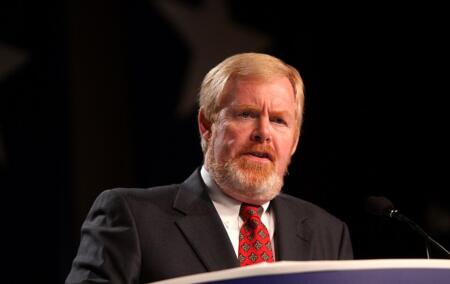
On top of the bellicose rhetoric, the expulsion of the South African Ambassador to Washington (and others), steep tariffs imposed on South African goods and the US boycott of the G20, the US has now confirmed an ambassador widely expected to be singularly unsympathetic to South Africa. Brent Bozell III has a solid “right-wing” pedigree, having been a vocal critic of perceived left-wing media bias and a vigorous Cold Warrior. In 1987, as President of the National Conservative Political Action Committee – at the time an influential advocacy group – he had written that his organisation was “proud to become a member of the Coalition Against ANC Terrorism”, and campaigned against a proposed meeting between the US Secretary of State at the time, George Schultz, and the then president of the ANC, Oliver Tambo.
Among those who feel a sense of grievance at the posture of the US, Bozell makes a compelling target. He’s been the subject of several denunciations – including that he is not a real diplomat, merely a political appointment – and some chatter about refusing to accept his credentials. The thinking is that this would be signal that South Africa will not be bullied, and an even riposte to what the US did to Ambassador Ebrahim Rasool.
This would be profoundly misguided.
That Bozell is not a career diplomat is of course accurate. But this is hardly unusual. Most of the ambassadors to represent the US since 2000 – Delano Lewis, Eric Bost, Donald Gips, Patrick Gaspard, Lana Marks – had no prior diplomatic experience. Jendayi Frazer had a background in the US National Security Council and was an Africa expert. Reuben Brigety had held positions in academia, in the US foreign aid apparatus and was Deputy Assistant Secretary of State for African Affairs, and then ambassador to the African Union. Each of these, in one way or another, was a political appointment. Only one ambassador over this period, Cameron Hume, was a career diplomat.
Besides, political appointees feature strongly in South Africa’s diplomatic corps. Since the 1990s, the ANC has used ambassadorial offices as sinecures to reward long-serving cadres or provide a sheltered form of exile. Rasool, recall, was an active politician before being elevated in 2010 by then President Zuma to the ambassadorship in the US – quite a remarkable responsibility for someone with no diplomatic background. He continued party political activity upon his return to South Africa in 2015, until his reassignment to the US in 2024. Between his two stints, the ambassadorship was occupied by Mninwa Mahlangu and Nomaindiya Mfeketo, both of whom were active ANC politicians and neither of whom seems to have had any diplomatic experience.
It’s just how the game is played, and there is no point in holding this against Bozell.
An ambassador’s primary job is to represent his or her country to another. This should not be confused with maintaining “good” relations; this is another, separate responsibility. It is a reality that states may often find their interests and values in sharp opposition. If there are concerns about Bozell’s presumed lack of sympathy for South Africa, they need to be understood as being in line with the failing relationship.
This, for better or worse, is the state of the relationship between the South African and US governments. One would need to go back to the 1970s or 1980s to find a period of comparable tension. There has been a facile tendency to see this as the work of Donald Trump (and perhaps Elon Musk and maybe the “disinformation” provided by groups like Solidarity). While a mercurial president clearly is a factor, a breakdown in the relationship has been increasingly inevitable for at least two decades.
For all the protestations of “non-alignment”, South Africa under the ANC (in the international arena, this remains substantively the case under a coalition government) has yawed with enthusiasm towards the US’ global adversaries. The ANC’s own documents make this abundantly clear – Ambassador Brigety presented extracts of these in a press conference in 2023 where he alleged that South Africa had supplied weapons to Russia.
South Africa had taken (and continues to take) strong issue with numerous US geopolitical positions, but for the most part retains a stolid silence about abuses carried out by its fellow revisionist powers. It has been vocal about the imperatives of multilateralism when confronting US bullying, but not when China threatens its maritime neighbours and ignores the ruling of an international tribunal on the matter, nor even when Russian tanks enter Ukraine. And so on.
One may argue the morality or wisdom of South Africa’s positions (or those of the US for that matter), but the fact is that they expose a growing rift between the two countries. This will not be mended easily, and there is an argument to be made that in the absence of a substantive change in geopolitical orientation, the relationship cannot be mended, only managed.
Nevertheless, both countries have made considerable investments in the relationship. It’s at moments like this that communication is most important. Not to stroke each other’s ego or exchange pleasant bromides, but to undertake the expressions of frustration and to engage in hard bargaining. Absent professions of friendship, calculations may turn to the more transactional business of benefits.
Indeed, a greater threat to the relationship would be no communication at all. Had Trump simply chosen to leave the position vacant, he would have been signalling something similar to what South Africa has done regarding Israel, that from his point of view the relationship was over and he had no further interest in it. That was a very real fear before Bozell was named as the prospective appointment. That would not only be negative for many people but institutions on both sides whose private relationships with the other require some diplomatic support.
Moreover, the absence of communication would degrade even the most elementary management of the relationship – identifying those benefits might prompt adversaries to a degree of limited cooperation.
Bozell may not appear the most congenial choice to South Africa, and certainly not to the ANC and the foreign affairs bureaucracy it controls. But he is a signifier of a reality. South Africa should accept Bozell as the US nominee and bearer of the incumbent administration’s interests as it sees them. Barring him will not alter that reality. Oh, it might provide some momentary satisfaction, but at the cost of shutting off an essential means of communication. Those conversations may be hard and may be cold, but they need to be had.
And isn’t it time that President Ramaphosa gave some thought as to who might occupy South Africa’s ambassadorial office in Washington?
[Image: https://commons.wikimedia.org/wiki/File:L.Brent_Bozell%286239101620%29.jpg]
If you like what you have just read, support the Daily Friend