

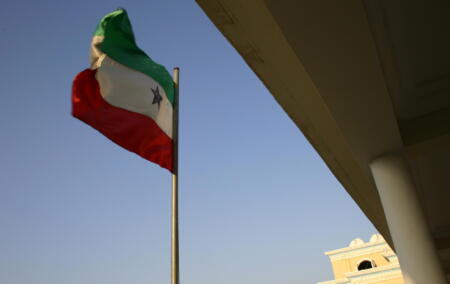
More than 30 years ago, Somaliland declared itself as an independent state from Somalia. They have been functioning as a country with all elements and practices of an ordinary state such as defined borders, flag, citizens, government, identity and passport documents which are used throughout the world.
They have a tax system in place which they use for provisions of quality service delivery. Of course, Somaliland is able to issue passports which are used throughout the world however countries throughout the world have not come to terms with recognising the existence of Somaliland.
Somaliland is far from being compared or contrasted with virtual states such as Palestine, Catalonia, or Western Sahara which do not function as real states. Somaliland has got a hybrid electoral system with very three-tied political parties which are closely monitored by the state, electorate vote from among the three parties.
Even without formal diplomatic relations, Somaliland has been sharing strong economic, cultural and political ties with progressive economies such as Ethiopia, United Arab Emirates (UAE), Israel and others. Is Somaliland a hopeless state like the collapsed state of Somalia? Definitely not, they have created a very strong, solid and resilient self-reliant economic model where they are exporting their livestock, strong dependence on diaspora remittances which is strengthening their small but vibrant economy. What should be loved and noticed by the world is that Somaliland has never experienced any terrorist attacks like Somalia which is very prone to them.
Taiwan, which considers itself to be an independent state with similar experience and challenges as Somaliland, has been the biggest financial contributor to the success of Somaliland. They have been helping to fund elections to encourage the democratic practice in that country. They even go as far as funding humanitarian aid, infrastructural development
In a rather rare but strategic diplomacy at play, the State of Israel towards the end of the year took the world by surprise when they became the first UN member state to recognise Somaliland, a country from the Horn of Africa. As expected, this move was condemned by some countries who deem it as controversial. But Somaliland itself views Israel’s recognition move as a political and diplomatic milestone because they would prefer to be acknowledged by all countries and international institutions to make life easier for its people.
As a result, much of its foreign and defence policy is centred on securing its borders—land, naval, and air—in order to protect its people and territory. The recognition of Somaliland aligns with this long-standing security doctrine. It is aimed at securing a long-term presence along a strategic coastline in the Horn of Africa, providing access to areas dominated by the Houthis in Yemen, who have posed a significant challenge to Israel’s security, particularly during the recent war between Israel and Hamas. The formal establishment of diplomatic relations between Israel and Somaliland should therefore be seen as a strategic move within Israel’s broader counterterrorism campaign.
Security is also a key mutual interest for Somaliland. Unlike Mogadishu, where the militant group Al-Shabaab has thrived amid Somalia’s political disunity, Somaliland has largely remained free from the terror episodes that have plagued the region. While it remains uncertain whether Al-Shabaab may in the future attempt to expand its operations into the relatively peaceful Somaliland, one reason it has not succeeded thus far is the strong sense of patriotism and collective commitment to maintaining a functional state. As a result, Al-Shabaab has been unable to exploit social or political grievances for recruitment or attacks, as it has done elsewhere. Securing borders against such bloodthirsty terrorists therefore remains a shared concern for both Somaliland and Israel.
Some in Somalia believe that Somaliland will become a destination for Palestinians who’ll be dumped from Gaza, is it even possible to achieve such a colossal goal? I believe that Israel since its formation has been striving to establish and strengthen its relations with as many countries as possible. The Israel-Palestine conflict has been shaping and shifting Africa and Asian relations with Israel. In the past, especially during and after the 1970s Yom Kippur war, many African countries severed ties with Israel. As a result, Israel was isolated. Israeli political actors pursued major diplomatic efforts to maintain the relationship with African countries where they went as far as being recognized then as AU observer.
These rumours about the displacement of Palestinians advanced by Somalia have been dismissed by both Somaliland and Israel who have signed a transparent memorandum of understanding.
These allegations have been vehemently denied by Somaliland President Abdirahman Mohamed Abdullahi, the country’s sixth president. The Somaliland Ministry of Foreign Affairs stated on its official X account: “The Government of the Republic of Somaliland firmly rejects false claims made by the President of Somalia alleging the resettlement of Palestinians or the establishment of military bases in Somaliland.”
There is a need for the African Union and its member states to convene and engage seriously with the question of Somaliland’s independence. The AU frequently speaks about the restoration or preservation of colonial borders, yet it often overlooks the fact that Somaliland has always been separate from Somalia. It was a British colony—British Somaliland—before Somalia laid claim to it. In 1991, Somaliland declared its independence from Somalia and has since governed itself, with Hargeisa as its capital. Somaliland is not a creation of Israel; rather, it is a product of the 1884 colonial partitioning of Africa during the Berlin Conference.
This is not the only political or historical scenario in which colonial boundaries have created lasting divisions. A similar situation exists in the Democratic Republic of Congo (DRC), where a group in the eastern part of the country known as the Banyarwanda have remained stateless while seeking integration within the DRC. The confusion stems from the fact that the Banyarwanda are descendants of present-day Rwandans—a reality that was not considered during the arbitrary partitioning of African borders. This, too, is an issue that demands serious attention from African Union leaders.
Kgwadi is a political writer and research fellow at the Middle East Africa Research Institute (MEARI).
[image: https://www.flickr.com/photos/guuleed/1501398140]
The views of the writer are not necessarily the views of the Daily Friend or the IRR.
If you like what you have just read, support the Daily Friend