
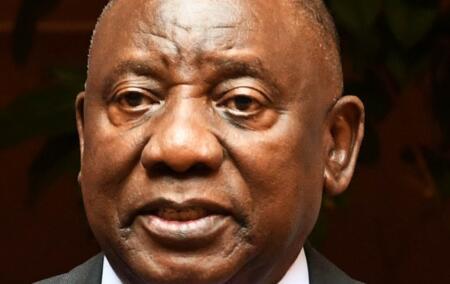
The Phala Phala debacle has generated a lot of loose talk about whether or not a conflict of interest is in evidence on the President’s own version of the goings on around his dollar-stuffed couch at his game farm near Bela Bela.
The dollars found their way into the couch after some buffalo (or was it cattle, or both?) were allegedly sold for cash on Christmas Day 2019 to a Sudanese businessman who happened to be passing by.
The sale was in the name of a close corporation through which the president, as sole member, conducts farming operations at Phala Phala. He was and is still the sole owner of the close corporation. The proceeds of the sale were stored in and, more that a month later, stolen from the self-same couch, which has since disappeared.
The Constitution does not talk loosely. It prescribes in terms that bind all presidents and their cabinet ministers as well as deputy ministers. Section 96(2) sets out the relevant parameters. It outlines the strict code of ethics for Cabinet members and Deputy Ministers. It dictates that they may not act inconsistently with their office, risk conflicts between official duties and private interests, use their positions for personal enrichment, or act as paid professional advocates. The text itself is dispositive:
(2) Members of the Cabinet and Deputy Ministers may not—
(a) undertake any other paid work;
(b) act in any way that is inconsistent with their office, or expose themselves to any situation involving the risk of a conflict between their official responsibilities and private interests; or
(c) use their position or any information entrusted to them, to enrich themselves or improperly benefit any other person.
It will be seen from any proper interpretation of the phrase “any situation involving the risk of a conflict of interest between their official responsibilities and private interests” that the issue is whether a risk of a conflict is in evidence, not an actual conflict.
In litigation concerning the goings on around “security enhancements” at Jacob Zuma’s Nkandla residence, the Constitutional Court has spelt out its views on the meaning of situations involving the risk of a conflict of interest. According to its unanimous judgment in that matter, it ruled that a conflict of interest does not need to materialise to be illegal; merely creating a risk of a conflict between official responsibilities and private interests violates the Constitution.
The Court made the following key determinations regarding this risk:
- Section 96 Violations: Section 96(2)(b) of the Constitution strictly prohibits Members of the Cabinet (including the President) from exposing themselves to any situation involving the risk of a conflict between their official duties and private interests, or using their position to enrich themselves.
- No Actual Harm Required: The Court emphasised that to find a violation of this constitutional duty, it is not necessary to prove that the conflict of interest actually materialised or that the official gained a direct financial benefit; simply placing oneself in a position of risk is sufficient.
- Undue Benefit at State Expense: By permitting state-funded non-security upgrades at his private Nkandla residence (such as the visitors’ centre, amphitheatre, cattle kraal, chicken run, and swimming pool), then President Zuma knowingly exposed himself to a situation involving the risk of a conflict of interest, resulting in an undue benefit at the expense of the state.
- Constitutional Breach: The Court declared Zuma’s failure to adhere to the Public Protector’s remedial action regarding the repayment of these non-security upgrades to be a serious violation of his duty to uphold, defend, and respect the Constitution.
These are the words of the court itself on the topic of a risk of conflict of interest:
“Also, the mere fact of the President allowing non˗security features, about whose construction he was reportedly aware, to be built at his private residence at government expense, exposed him to a ‘situation involving the risk of a conflict between [his] official responsibilities and private interests’. The potential conflict lies here. On the one hand, the President has the duty to ensure that State resources are used only for the advancement of State interests. On the other hand, there is the real risk of him closing an eye to possible wastage, if he is likely to derive personal benefit from indifference. To find oneself on the wrong side of section 96, all that needs to be proven is a risk. It does not even have to materialise.”
The risks of a conflict involved in storing cash in US dollars in a couch on the Phala Phala farm are self-evident, and storing them for longer than the law allows, without banking them, simply exacerbates the risk. Inspanning the presidential security detail to become the unofficial private investigators of the loss of the dollars in a burglary only serves to exacerbate the situation of risk of conflict between presidential private interests in recovery of the cash (on the one hand) and the actual security duties (on the other) of Wally Rhoode and his team who are meant to devote their full time professional attention to the security of the president, not the investigation of crimes committed against him or in respect of his private assets.
Not reporting the burglary in which the dollars, belonging to the presidentially owned close corporation, were stolen to the Hawks is a contravention of Section 34 of PRECCA (the Prevention and Combating of Corrupt Activities Act).
The common cause features of the activities around the sale of livestock on Xmas day of 2019, the burglary and the failure to report the matter to the appropriate authorities, while instead converting an official presidential security detail into a team of private investigators who travelled far and wide, including to Namibia, after the burglary which occurred more than thirty days after the dollars were paid over in cash on Xmas day 2019, all suggest that the President has a case to answer, on his own version of the goings on, and is not entitled to relief on review of the Ngcobo Panel findings nor to any interdict stalling the work that the National Assembly has been ordered to put in hand by the Constitutional Court in its 8 May 2026 findings.
Under section 237 of the Constitution all constitutional obligations must be performed diligently and without delay. The conflict-of-interest risks in the Phala Phala case are far less subtle than those in evidence, and accepted as such, in the Nkandla case. The Nkandla case brought about the premature ending of the Zuma presidency.
The mere risk of a conflict of interest is sufficient to trigger the consequences that flowed for Zuma in the Nkandla litigation and which should flow for Ramaphosa in the Phala Phala matter.
[Image: https://www.flickr.com/photos/governmentza/53723953282]
The views of the writer are not necessarily the views of the Daily Friend or the IRR.
If you like what you have just read, support the Daily Friend