

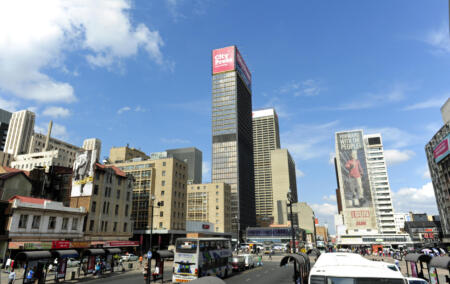
Last week in The Common Sense, David Ansara outlined what it would take to arrest Johannesburg’s accelerating collapse.
His three prescriptions – privatisation, deregulation, and decentralisation – align precisely with the Free Market Foundation (FMF)’s longstanding analysis of municipal malaise in South Africa. This sentiment is thoroughly elaborated in my 2024 paper for the FMF’s Campaign for Home Rule, “Ask Forgiveness, Not Permission: Practical Steps Towards Home Rule in South Africa”.
The fourth element of David’s column – political realism – is in many respects the most important.
Realism, properly understood, does not mean accepting whatever appears immediately convenient, but distinguishing the merely difficult from the truly impossible and then acting with purpose to achieve the former.
Johannesburg, a metropolis whose population is comparable to that of Denmark, Norway, or New Zealand, cannot be rescued by defaulting to the same centralising, over-regulating, and cost-socialising habits that the African National Congress (ANC) used to produce its present collapsing condition.
The Democratic Alliance (DA) stands, at the time of writing, on the threshold of assuming or sharing substantially in the governance of South Africa’s economic core after the November 2026 election. This is a moment of genuine consequence.
After David’s column, we had the opportunity to hear the response, by senior DA figures well-placed to shape the party’s approach to the city, to the case for privatisation, deregulation, and decentralisation. The response was predictable and, in its fundamentals, disappointing.
The DA’s response
Privatisation, it was said, is too slow and too complex to complete within a five-year term. It requires extensive council cooperation, involves too many moving parts, and risks becoming a distraction. Public-private partnerships, where the private sector bears the costs and risks while the state retains a veto, were offered as a quicker route that would secure most of the benefits of privatisation.
Real deregulation was ruled out on the grounds that Johannesburg’s cosmopolitan and multicultural character demand stricter controls. Not every resident, it was suggested, can be trusted to exercise the personal and communal responsibility that lighter state regulation presupposes.
Decentralisation was rejected primarily because of the corruption risk. New sub-municipal structures or devolved powers would, it is feared, create fresh opportunities for nepotism and extraction, particularly in areas beyond firm DA control. Better, therefore, to keep power centralised where the party governs and to resist unbundling that might empower less reliable actors elsewhere.
Underlying these specific objections is a broader premise: privatisation, deregulation, and decentralisation are admirable in theory but socially detached and ultimately inapplicable to the gritty realities of political horse-trading in 2026 South Africa. Serious governance, on this view, requires setting such ideals aside.
Ideas are inescapable
This framing misapprehends the relationship between ideas and action.
One cannot speak about “ideas” and “theories” as if they stand in tension with “reality” and “practice”, when all practice and all action is always downstream from an idea and theory. There is no exception to this anywhere or at any time in human history. Ironically, it is the rejection of ideology that is in fact the abstract, pie-in-the-skie theoretical exercise, and the embracing and reckoning with ideology that is real.
Every decision to maintain a municipal monopoly, enforce a particular bylaw, or centralise revenue and expenditure embodies a theory about how order is produced and how costs should be allocated.
There are good ideas and there are bad ideas. And unfortunately, what the DA is doing (and has done for many years) by presenting politics as a dichotomy of ideas versus practice and theory versus reality, is defending bad ideas against good ideas.
The theory that has governed Johannesburg for years – concentrated municipal power, detailed regulation from above, and socialisation of costs across the entire city – has been tested to destruction. To dismiss the better alternative as mere “theory” while continuing to practice the failed theory of the status quo is not realism but defence of one set of ideas against another.
Achievability is, of course, a legitimate concern. The proper response, however, is to develop (sometimes Machiavellian) strategies, tactics, and sequencing that make good ideas attainable, not to abandon them in favour of bad ideas whose chief benefit is mere familiarity.
Privatisation: Deliberate non-obstruction
On privatisation, the objection that formal asset transfers are protracted is correct as far as it goes.
Yet the practical benefits of privatisation, competent maintenance and improvement by those with the strongest incentive to deliver them, can be secured far more rapidly through a policy of deliberate non-obstruction.
The city can simply tell businesses and residents that, where they are willing and able to assume responsibility for the sidewalk in front of their premises, the streetlights in their street, or sections of water or electrical infrastructure serving their community, they may proceed. No new bylaw or tender process is required at the outset. The city simply needs to omit deploying thugs and goons to prevent such initiative.
Naturally, some communities would be unable to afford taking care of their own lot, and many businesses will insist on formal agreements to hedge against risk. That is fair enough. But the city should never stand in the way of those ready and equipped to arrest the decay.
For example, say that the CEO of a water infrastructure company that does business across Africa and the Middle East lives in a suburb of northern Johannesburg. Now say that a main pipe serving that suburb sports a leak. Significant damage sometimes takes days or weeks to fix, with the trusty old water tanker mafia filling the void.
Nothing should stop that CEO from saying: “Well, I would like water where I live, and I am the expert in the repair and construction of water infrastructure, so I am going to do this with my company.”
And yet, the municipality – under the ANC and the DA – would erect firm barriers against this kind of initiative. They will have all sorts of ostensibly good reasons to do so… none of which fix the problem at hand. The bureaucracy is a disincentive all by itself.
Sound governance does not require the municipality to insert itself as an obligatory and ineffective intermediary in every matter of significance.
Deregulation: Diversity must beget freedom
The objection to deregulation rests on an equally fragile premise.
Deep cultural and behavioural diversity within a single jurisdiction does not strengthen the case for stricter uniform rules – it weakens it.
Different communities will choose, and tolerate, different balances between order and liberty, between development and preservation, between communal standards and individual experimentation.
A neighbourhood that wishes to regulate its own day markets through informal consensus should be free to do so without protracted municipal approvals. If they want to close a local, non-arterial street to hold the market on, that decision must reside within the community alone. Another community may accept building practices that outsiders regard as inadequate. Provided no direct harm is visited on neighbours, that remains a cultural choice in which the state has no compelling interest to meddle, even if (as they will be) the consequences are sometimes dire.
John Stuart Mill’s warning against state paternalism – against the notion that authority exists to protect people from themselves – applies with particular force in heterogeneous settings. The real hubris lies in supposing that central planners possess either the knowledge or the incentives to impose a single, optimal order from above.
And in fact, much of the visible disorder in Johannesburg is the predictable consequence of precisely that overreach. It was after all under this present, centralised, regulated model that the inner city has been turned into an unstable, dangerous slum.
The DA might reply and say that it is because regulations were not enforced that the city fell apart, but this is a similarly misguided notion. If the state has truly been adopting a hands-off, laissez faire approach to Johannesburg, the titled property owners of the inner-city buildings would have long ago brought about peace and order by evicting non-paying tenants and taking care of ganglords. The state has stood firmly in the way of property owners vindicating their rights.
This is not the “unregulated” order the DA believes it is. It is instead chaos regulated into existence.
Decentralisation: Taking responsibility
Decentralisation reveals the most striking inconsistency.
Federalism and subsidiarity do not promise that every devolved unit will be “well-governed” according to the standards decided upon by DA social planners in airconditioned offices.
Instead, federalism promises that the costs of misgovernment will fall primarily on those who choose it, and that the benefits of good government will accrue to those who produce it.
A new structure – whether a new independent municipality or a sub-council within Johannesburg – that produces corrupt or incompetent outcomes will no longer be able to extract resources from ratepayers elsewhere through a centralised budget. Residents of that municipality or sub-council will know, or can readily discover, who has been corruptly appointed and by whom. Accountability, while imperfect, becomes local and therefore more immediate.
At the same time, a community that organises its own security – for instance, as residents in Northcliff might – frees metropolitan police resources for areas that cannot yet do the same. This is decentralisation and privatisation operating in tandem. It requires no new legislation, only a willingness to refrain from obstructing citizens who take responsibility the city has failed to discharge.
Party of paper rules
The DA has long cultivated a reputation as the party of process, procedure, and institutional propriety. In a stable and prosperous constitutional order, that reputation would be an asset.
In a city whose basic services are in visible collapse, it is a serious form of detachment.
Insisting that every improvement must await perfect alignment of council resolutions, legal opinions, tender integrity, and coalition arithmetic is itself a utopian posture when measured against the urgency of the city’s needs. It is, in this sense, the DA that lives in a utopian la la land, while real South Africans face real problems that admit of straightforward, if imperfect, solutions.
The barrier is rarely an absolute shortage of resources or expertise. Instead, it is a thicket of rules and a political culture that treats those rules as ends in themselves.
Worse still, any progress the DA makes “behind the scenes” with city finances and quietly efficient city administration – without significant, real-world tangible benefits for the slim majority of ratepayers that might drag the DA into power – it will at most have five years in office before some configuration of the doomsday coalition undoes it all.
Johannesburg is not Cape Town. It is not an honorary exclave of Western Europe that can be preserved through competent administration of the existing ANC governance framework. It is a vast and diverse African metropolis whose problems will yield only to sustained practical intelligence and political courage.
A sense of urgency, elbow grease, and bravery is desperately needed, even if it means qualified audits or a sour relationship with the central government.
Privatisation, deregulation, and decentralisation are not foreign abstractions unsuited to local conditions, but are the only real, direct responses to the demonstrated failures of centralisation, over-regulation, and cost socialisation.
If the DA cannot bring itself to experiment with these tried, tested, and proven solutions – formally (de jure) where feasible, informally (de facto) where necessary – then it will have shown that it lacks the stuff necessary to govern Johannesburg differently from its predecessors.
I hope events prove this assessment unduly pessimistic. Johannesburg deserves better than managed decline presented as “political realism”. But whether the DA can supply that alternative is evidently still an open question.
[Image: https://www.flickr.com/photos/south-african-tourism/8722268247]
The views of the writer are not necessarily the views of the Daily Friend or the IRR.
If you like what you have just read, support the Daily Friend