

Few people are worried about the normalised killing of many species, including both domesticated and wild plants and animals. Killing occurs on a daily basis for a variety of human uses, notably for food.
Whether you are anti-use or pro-use, we think the general public would consider maximising the sustainable use of the resource to benefit people a good thing.
There has recently been a lot of talk about the reintroduction of culling to manage populations of a wild species and both whether this is needed, and whether or not it is a good thing. These questions often need to be framed by the ecological integrity of one or another area, which then comes down to the pre-determined ecological-value endpoints of the owners or managers of the land in question. What we would prefer to propose is a more nuanced discussion of how wildlife can be given a higher value in Africa and elsewhere through adopting a normalised sustainable-use framework or viewpoint.
Sustainable utilisation – a tool to benefit people
We can frame this with the controversy over the fate of elephants. Elephants die in Africa. That is not a matter of opinion, it’s fact.
Roughly 30 to 60 elephants die naturally every day across the continent (an estimate derived from using standard wildlife population-demography methods). If dying is the destiny of every elephant, how they die is matter of management.
Some will die of natural causes, some will die of elephant-induced mortality – fighting – and some will die from starvation. Others will die from hunting, and others, again, from culling, a population-control mechanism aimed specifically at reducing numbers in a given habitat.
Instead of responding emotionally to an elephant losing its life, could we not be more respectful in how we consider both its life and its death? By looking at wildlife management decisions through the lens of sustainable utilisation we could add a critical economic/enterprise dimension to the management of wildlife stocks, like elephants, in places such as the Madikwe Nature Reserve in South Africa.
What this viewpoint would do is align African wildlife policy with key international biodiversity targets to “[e]nsure that the use, harvesting, and trade of wild species is sustainable, safe, and legal” and “[e]nsure that the management and use of wild species are sustainable, thereby providing … benefits to people”.
These are two of the targets of the Global Biodiversity Framework (targets 5 and 9), formulated through extensive multilateral exchanges, with contributions from leading scientists and scientific authorities all over the world.
Let’s again use elephants as a prime example of this sustainable-use lens.
Currently, there is very little desire to expand the elephant range in countries like South Africa.
We know of one property in the last 18 months that has received new elephants, but beyond that there is no value in elephants based on the lack of demand for the animals.
Consider, then, the most controversial statement of this entire discussion: if we looked at elephants as a resource to be utilised, would the demand for elephants go up? For example, if there was a leather industry for belts, wallets, boots, and furniture, if there was a food industry complex created around the utilisation of the meat and rendered fat for human consumption and use, as well as the grinding down of the bones to provide calcium-rich mineral supplements, fertilizers, and so on, wouldn’t private and/or public landowners be keener to get elephants onto their properties?
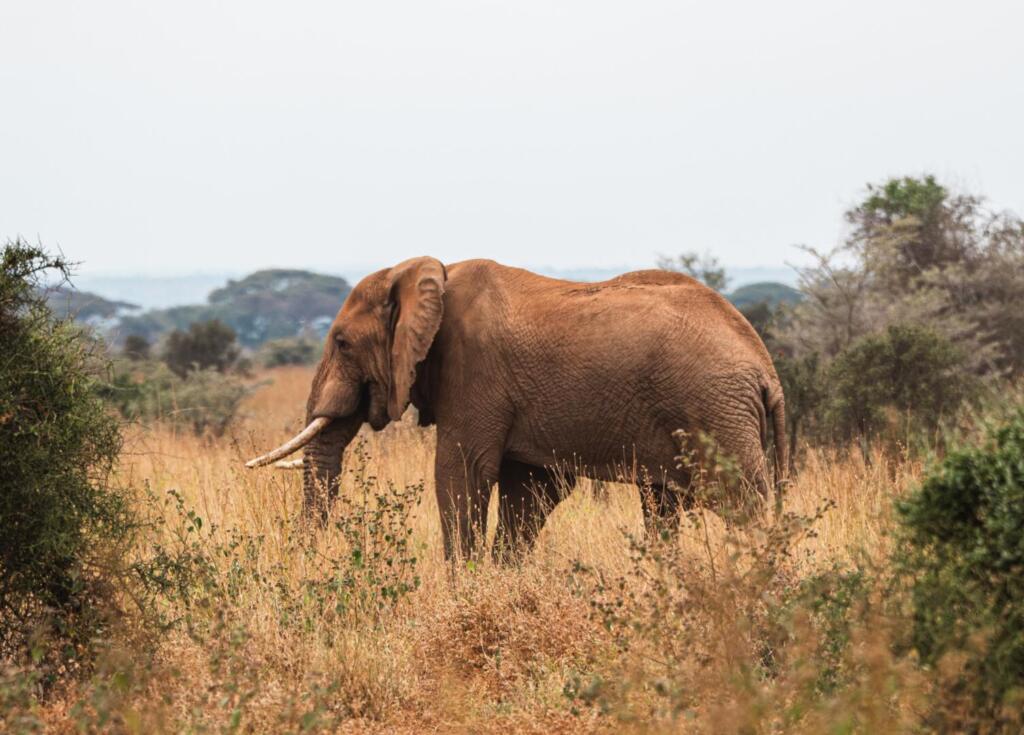
An elephant grazes in a community area in Tanzania where elephant hunting occurs. [Image: The Origins Foundation]
Global outlook on sustainable utilisation
As envisioned in the Global Biodiversity Framework, this sustainable-use system would be explicitly built to benefit people, but there would also be an immediate and extensive indirect benefit to elephant conservation – all due to an increased demand for elephants due to the massive value chain tied to the use of the species. This does not mean that domesticated elephant farming will arise. All it would mean is that properties that could feasibly sustain elephants, but don’t carry any, would more likely take on the responsibility of having them.
Additionally, in our public sector, where we are constantly hearing of financial crises that are crippling the adequate management of wildlife in national and provincial parks, the influx of funding that is likely through sustainable-use value chains for elephant products – as well as other wild species – would have far-reaching ripple effects for wildlife, people, and communities.
Developing sustainable-wildlife value chains can encourage landowners to rewild their properties and restock with wild species while also generating income and employment opportunities with no detriment to the species or their habitats.
The only objection would come from those who do not believe in killing and/or utilising wildlife.
But, given the economic incentives driving habitat loss, it is our ardent, and even urgent, plea that for wildlife populations to be restored and conserved across Africa, wildlife should be viewed as a sustainable economic resource to be managed and used responsibly in life as well as in death.
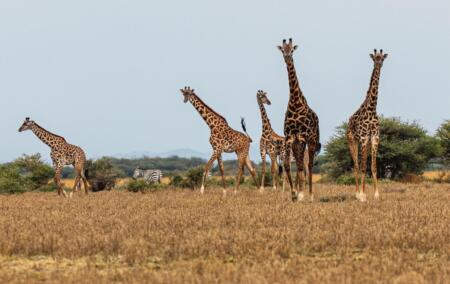
[Image: Giraffes in Tanzania are a species wholly protected as the national animal. Populations are soaring and can be seen as a sustainable utilisation product for rural communities. The Origins Foundation]
The views of the writers are not necessarily the views of the Daily Friend or the IRR.
If you like what you have just read, support the Daily Friend