

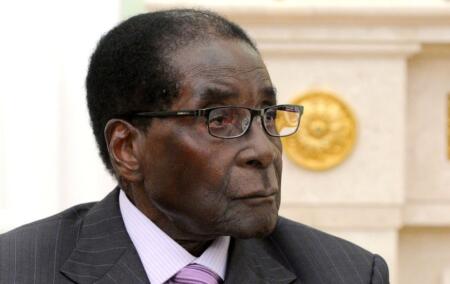
South Africa’s anti-immigrant politics did not start with Operation Dudula. They started, in part, in Harare in 2000, when Robert Mugabe’s government began seizing commercial farms and the Zimbabwean economy began its two-decade collapse. From next door, the African National Congress (ANC) watched that collapse and refused to condemn it. South Africa is now living with the consequences.
What Mugabe, his party, and his government wrought on Zimbabwe is not the only explanation for anti-immigrant and xenophobic sentiment in South Africa. Domestic unemployment, sitting above 30% on the broad definition, and decades of inequality created the conditions for scapegoating long before the first wave of Zimbabwean arrivals. But the ANC’s foreign policy choices toward fellow liberation movements turned a regional governance crisis into a sustained migration pressure that South Africa’s institutions were never equipped to absorb.
Quiet diplomacy, loud consequences
Former president Thabo Mbeki’s quiet diplomacy toward Mugabe, pursued through the 2000s, treated ZANU-PF’s land seizures and political repression as an internal matter for liberation-movement comrades. Public criticism from the ANC was rare and muted. The logic was solidarity: ZANU-PF had fought a war of liberation, as the ANC had, and “African solutions to African problems” meant not airing a brother movement’s failures in Western media.
The Congress of South African Trade Unions broke from this position repeatedly, sending delegations to Zimbabwe and calling for stronger action. The ANC leadership did not follow. Pretoria’s preference for closed-door pressure over public condemnation left Harare with no meaningful cost for governance decisions, resulting in hyperinflation eventually measured in billions of percent.
The same pattern, on a smaller scale, applied to Mozambique’s economic dysfunction under Frelimo and to the Democratic Republic of Congo’s long political crisis. In each case, an ANC government with deep liberation-movement ties to the ruling party next door chose alliance over accountability.
Where the people went
Zimbabweans fleeing economic collapse came to South Africa because South Africa was the nearest functioning economy. Mozambican and Congolese migration followed, with similar motives.
This pressure landed on townships and inner cities already short of housing, jobs and municipal capacity. The 2008 xenophobic violence that killed more than 60 people, and the recurring waves since, including the current Operation Dudula movement’s targeting of foreign nationals in healthcare queues and informal trading, are the visible result of that pressure. Foreign nationals became the explanation for service shortages that domestic policy failures had already created.
The lever Pretoria never pulled
None of this means immigration enforcement alone would have prevented xenophobic violence. South Africa’s home affairs department has struggled with capacity and corruption, regardless of foreign policy, and the borders with Zimbabwe and Mozambique have long been porous.
But diplomatic pressure was a lever available to Pretoria that it chose not to pull. Public criticism of ZANU-PF’s land seizures, backed by South Africa’s regional economic weight, might have shortened Zimbabwe’s collapse or constrained its worst phases. Instead, the ANC offered solidarity without conditions, and Zimbabweans absorbed the cost twice. They lived through the collapse, then arrived in a country whose institutions had no plan for them and whose politics increasingly blamed them for problems with more distant roots.
A reckoning without an admission
The ANC has never had to answer for this chain of decisions, because the language of liberation solidarity sidesteps accountability and responsibility completely. In ANC discourse, criticising ZANU-PF’s record looks like criticising the liberation project itself. That discomfort has outlasted Mugabe, outlasted Mbeki, and now shapes a domestic politics in which foreign nationals carry the blame for a foreign policy choice they had no part in making.
South Africa’s anti-immigrant and xenophobic (and yes, these are separate) problems have many fathers.
Unemployment, inequality, weak migration management, and a decline in the quality of life did most of the work. But the ANC’s decades-long refusal to hold fellow liberation movements to account for governance failures was a policy decision. It deserves to be named as one of the causes of the problems that South Africa is facing now.
[Image: By Kremlin.ru, CC BY 4.0, https://commons.wikimedia.org/w/index.php?curid=40102687]
If you like what you have just read, support the Daily Friend