

Recent claims by AfriForum that school rugby has become compromised by racial bias show that the organisation fundamentally misunderstands what has happened in South African rugby over the past two decades.
The reality is almost the exact opposite.
The success of South African school rugby has been built not on abandoning merit, but on expanding the talent pool through thoughtful institutional leadership. Across the country, headmasters, principals, coaches and governing bodies have managed one of the most significant cultural transitions in South African education. They have preserved the traditions and standards that made their schools great, while ensuring that talented young players from increasingly diverse backgrounds could become part of those traditions.
That achievement deserves recognition rather than suspicion.
I remember playing against Durban High School (DHS) as a Grade 8 pupil. At the time, their first XV was overwhelmingly white. Today, the picture looks very different. Over the past several years, the team’s composition has become far more diverse. Yet anyone who spends time around those kids quickly notices something important: they embody the same values, discipline, pride and culture that have defined DHS rugby and the whole institution for generations.
The institution did not lose its identity.
Instead, new generations of pupils became part of it.
The results speak for themselves. DHS has remained one of KwaZulu-Natal’s strongest rugby schools in recent years, demonstrating that broadening access to talent does not need to come at the expense of excellence. If anything, widening the talent pipeline has strengthened competition and performance.
This story is not unique to DHS.
Schools across South Africa have undertaken similar journeys. Institutions such as Wynberg Boys’ High School have also successfully balanced tradition with inclusion. Their leadership has shown that preserving institutional culture does not require excluding talented young people because of their race. Instead, it requires clear standards, strong values and consistent leadership.
That is the lesson many schools have embraced. That is why year after year, regardless of colour, provincial school sides and the SA Schools sides are filled with players from the same elite institutions (shoutout to both Stellenberg and Graeme College for breaking through this year).
Unfortunately, much of the current public debate ignores this reality. It often presents a false choice between merit and diversity, as though one must inevitably undermine the other. Yet the experience of many leading rugby schools suggests otherwise. The best schools have maintained high performance while opening opportunities to a broader range of talented players.
That is not evidence of declining standards.
It is evidence that talent has always been more widely distributed than opportunity.
Is it any coincidence that Springbok rugby at both junior and senior levels and 7s is enjoying unprecedented success?
It is also worth remembering that school leaders have had to navigate difficult and often competing pressures. They have operated within changing government policies where government has foolishly mandated racial quotas while also protecting the integrity and competitiveness of their sporting programmes. Doing so has required careful judgement rather than ideological posturing.
As a country, we owe these headmasters and governing bodies a debt of gratitude for carefully and skilfully negotiating these minefields.
I don’t think it is a coincidence that both the late Luqobo “Bibo” Makwedini (famous for the Felicia song) and the Hoya chant that captivated social media both came out of Wynberg Boys’ High School. When you talk to people connected to the school you will hear about the leadership deliberately changing the institution, while making sure all pupils understand, appreciate and embody what has made Wynberg Boys’ excellent over the years.
Most importantly, today’s pupils have shown that they are more interested in playing together than re-litigating the divisions of the past. On the field, respect is earned through commitment, discipline and performance, not race. Young players form friendships, compete fiercely and represent their schools with pride.
That is a far healthier reality than the one portrayed by those who insist on viewing every team selection through a racial lens.
South African school rugby should be celebrated as one of the country’s quiet success stories. It demonstrates that institutions can evolve without abandoning excellence, and that diversity and merit are not mutually exclusive.
The children have largely moved forward.
Perhaps it is time the adults did too.
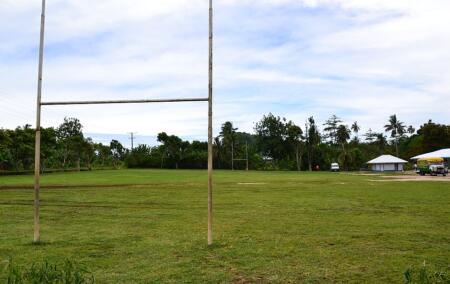
[Image: https://commons.wikimedia.org/wiki/File:School_rugby_pitch_%286932935732%29.jpg]
The views of the writer are not necessarily the views of the Daily Friend or the IRR.
If you like what you have just read, support the Daily Friend