

Ethnic nationalism, “group rights” and “cultural rights” come in left-wing and right-wing flavours. All are incompatible with a free society founded on individual rights and equality before the law.
Election season is upon us, and identity politics is doing a brisk trade.
On 4 November, South Africans will elect new municipal councils, and the parties courting them read like a census of grievance.
The Patriotic Alliance, which has built its brand on coloured identity, is running its deputy president, Kenny Kunene, for mayor of Johannesburg. The MK Party’s support, academic analysis of the 2024 election found, is predicted more strongly by Zulu ethnic identification than by any measure of democratic discontent. The EFF offers African nationalism (or rather, pan-African nationalism) in revolutionary uniforms. The Freedom Front Plus offers ethnic nationalism in a safari suit.
Nor is the phenomenon confined to campaigning. The Orania Movement spent last year touring the United States, seeking international recognition for Afrikaner self-determination.
Solidarity and AfriForum have been locked in battle with the government over the BELA Act’s language and admission clauses.
On the other side of that fight stands a governing party that has spent thirty years sustaining and entrenching racial classification in law, from employment equity to procurement preferences to black economic empowerment.
Internationally, you see critical race theory on one side, and patriotic nativism on the other.
Identity politics, in other words, speaks many languages, and appeals to people across the political spectrum.
In South Africa, it speaks isiZulu, Kaaps, Afrikaans, and the posh bureaucratic dialect known as “demographic representivity”.
What all these dialects have in common is a claim that political power should recognise, establish or preserve the interests of a group, defined by race, ethnicity, culture, religion or language.
That claim is incompatible with a free society. It is worth explaining why, because the argument against it is routinely misunderstood – sometimes wilfully – as an argument against community itself.
No man is an island
Human beings are social animals, and it would be a mistake to suppose that individualism (the philosophical basis of classical liberalism) implies otherwise.
John Donne expressed it well in Meditation 17 of Devotions Upon Emergent Occasions (1624):
‘No man is an iland, intire of it selfe; every man is a peece of the Continent, a part of the maine; … any mans death diminishes me, because I am involved in Mankinde; And therefore never send to know for whom the bell tolls; It tolls for thee….’
Nobody is raised, educated, married, mourned or buried alone.
Culture, language and religion are not incidental to the individual; they are the medium in which individuals form their identities, raise their children and find meaning in their lives.
The desire of Afrikaners to raise their children in Afrikaans, of Zulus to honour the traditions of the Zulu kingdom, of Africans to remember the oppression of colonialism, of Muslims or Jews or Christians to live according to their faith, is not sinister. It is entirely human.
Classical liberalism does not deny any of this. The caricature of liberal individualism – the atomised, rootless consumer with no attachments deeper than a loyalty card – is a straw man that collectivists of both the left and right have been flogging since the nineteenth century.
John Stuart Mill wrote at length about the social formation of character. Friedrich Hayek grounded his entire theory of knowledge in inherited tradition and custom.
Individualism in politics has never meant that individuals are isolated and asocial.
Private vs political spheres
What it means is something narrower, but very important: that the bonds of ethnicity, culture, religion and language belong in the private sphere, not the political domain.
We are all free to form them, nurture them, fund them, teach them to our children and build institutions around them. What we are not entitled to do is enlist the coercive power of the state to privilege them.
This distinction is the same one liberals draw for religion. A liberal state does not abolish churches; on the contrary. It recognises religious freedom. What it doesn’t do is establish a particular church or religion itself.
There was a time when the people were expected to follow the religion of the monarch – Protestant or Catholic during the European Wars of Religion, Islam in many countries to the present day. Religious dissidents themselves insisted upon the separation of church and state to establish the right to worship as they choose.
Nobody thinks freedom of worship is undermined because the government declines to fund the Dutch Reformed Church or write Sharia into the criminal code.
Culture and language deserve exactly the same settlement: free exercise, but no establishment. All people ought to be equally free to practice the culture of their choice, and speak the language of their parents.
Persons, not communities
South Africa’s Bill of Rights has flaws, but gets this architecture broadly right – better, in fact, than many of the politicians who invoke it.
Section 31 provides that persons belonging to a cultural, religious or linguistic community may not be denied the right, alone or in association with other members of that community, to enjoy their culture, practise their religion and use their language.
Note the construction. The right vests in persons – individuals – not in communities as corporate entities.
It is a shield against state interference, not a sword for extracting state patronage and protection. It also comes with an explicit limitation: section 31(2) says these rights may not be exercised in a manner inconsistent with any provision of the Bill of Rights – including section 9, which guarantees equality before the law, the right to full and equal enjoyment of all rights and freedoms, and prohibits unfair discrimination on grounds of race, ethnicity, culture, language and religion.
In other words, the Constitution’s answer to the question “may my community organise privately around its identity?” is yes. Its answer to “may my community’s identity trump the equal rights of individuals?” is no.
(There is one important exception to this in the Constitution, which gives legal – though not moral – cover to race-based empowerment and preferment: “To promote the achievement of equality, legislative and other measures designed to protect or advance persons, or categories of persons, disadvantaged by unfair discrimination may be taken.”)
Even section 235, the clause Orania’s advocates lean on, is hedged into near nothingness. It recognises “the right of self-determination of any community sharing a common cultural and language heritage”, but only “within the framework” of “the right of the people of South Africa as a whole to self-determination”, and only as “determined by national legislation”.
No such legislation exists, other than the private property right law on which Orania relies for its right to reserve admission to Afrikaners only. Other than that, section 235 was a consolation prize handed to the Freedom Front at Kempton Park; it is not a title deed to a volkstaat.
Neutrality
This constitutional architecture has a corollary that cuts against both the ethnic lobbies and the racial-transformation industry.
If cultural, religious and linguistic associations are creatures of the private sphere, then their proper business is serving their members’ private interests.
When they enter politics, the only legitimate demands they can make of the state are equality and neutrality: treat us the same as everyone else, and otherwise leave us alone.
The moment such an organisation demands recognition, funding, quotas, territory or special legal remedies as a group, it has abandoned civil society for identity politics.
The ratchet
The reason it is important to draw a line (and why the Constitution’s own category-based redress clause is problematic), is that group-based political concessions do not stay put. They ratchet.
Grant one group official recognition of its interests, and you have set a precedent every other group can cite.
If Zulu customary institutions warrant public funding and constitutional deference, why not Pedi ones, or Griqua ones? If coloured identity entitles a community to preferential hiring in the Western Cape – a demand the Patriotic Alliance flirts with openly – why should Venda identity not do the same in Limpopo? If Afrikaners deserve state-recognised territorial autonomy, the same logic licenses every ethnic entrepreneur from Nongoma to Namaqualand.
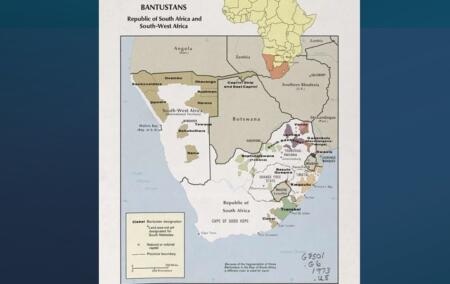
This is not hypothetical. It is a description of South African history. Apartheid was nothing if not an elaborate system of “group rights”: every nation its own homeland, its own institutions, its own state-curated culture.
The post-1994 order, having correctly repudiated that system in principle, and for all its good intentions, has steadily rebuilt that logic in practice: racial classification for employment equity, racial targets for procurement, racial formulas for sports teams, racial criteria for empowerment deals.
Each concession to one group’s claims has fuelled the next group’s demands.
Some more equal
The end state of this process is a society in which, as Orwell put it, some animals are more equal than others – and where which animals those are depends on who last won the scramble for political power.
Once identity is the currency of politics, every group must organise politically merely to avoid falling behind. Politics becomes an ethnic arms race, and populists prosper by pandering to one group’s fears of another, rather than by governing in the interest of all South Africans.
One can look to Africa, and more recently also Europe and North America, to see exactly where that road leads: divisive, bitter contestation between populist identity-based factions on both the left and the right.
This is why those of us who want a non-racial society, and an end to race-based empowerment and affirmative action, cannot make an exception for identity politics we happen to find sympathetic.
The case against BEE and the case against a state-recognised volkstaat are the same case. You cannot demand that the government stop counting by race on Monday and petition it to recognise and protect your ethnic community on Tuesday.
The language test
Language policy is one particularly contentious arena where this principle applies, and where sentimentality often derails it.
The Constitution, in section 29(2), grants everyone the right to education in the official language of their choice in public institutions – “where reasonably practicable”.
That qualifier is not a loophole; it is a concession to basic arithmetic.
South Africa has twelve official languages. No government could staff, fund and equip mother-tongue schooling in all of them, in every district, at any acceptable cost.
Most linguistic communities have therefore always maintained their languages privately, at home, in churches and in community institutions, while their children were schooled in a lingua franca: almost always English or Afrikaans. Other common home languages are offered as a language of instruction in relatively few schools, and then only at the Foundation Phase level (Grade R-3).
Language equality
The equality principle suggests an honest way to handle this problem.
English is, by unsentimental consensus, the lingua franca of commerce, law and government. Beyond that, the state must treat all languages on an equal footing.
What no group may demand is a publicly funded privilege for its own language that is not – and cannot be – extended to all the others.
Afrikaans speakers cannot insist on state-guaranteed single-medium Afrikaans schools while isiXhosa and Xitsonga speakers make do; that is a demand for preference, not equality.
Equally, the state may not do what the BELA Act’s language clauses invite: strip school communities of the freedom to organise instruction in their own language where they do so without excluding anyone from an available alternative.
The liberal answer is symmetrical. If Zulu speakers must maintain their language privately, so must Afrikaners maintain their language privately – and both must be equally free to do so, in their own schools if they wish, at their own expense, without either obstruction or subsidy from the state.
That answer satisfies nobody’s nationalism, which is rather the point.
Dead hand of the state
A core principle of classical liberalism is the idea of a small government. The state should not reach any further than it absolutely has to, and is explicitly authorised to.
We should not wish to see state interference in our private social, cultural and community affairs. They don’t need government protection, and when they get it, are often worse for it.
The apartheid government tried to protect and promote Afrikaans. Instead, it stultified and petrified the language.
To speak “proper” Afrikaans, one had to hew to the elite version codified in the 1933 Bible translation, formal government papers, SAUK talking heads, and the publications of the Taalkommissie and Spellingskommissie.
Many colloquial versions or dialects were deliberately excluded from Standaardafrikaans, as part of the “separate development” project.
The fall of the Afrikaner nationalist government, and the end of its protection of Afrikaans, did not lead to the death of the language. Instead, it led to an incredible flourishing, in its all its spoken, written, and sung diversity.
Now, it is curated by the people who use it, grow up with it, and speak it at home, on stage, and on the air. Freed from the dead hand of the state, Afrikaans could finally live again.
Laager
Any political recognition of “group rights” is implicitly a grant of preference to that group over others. There is no such thing as recognising one community’s collective claims while leaving everyone else’s position unchanged; the recognition itself is the inequality.
A free society is one in which the state sees only citizens – not Zulus and Afrikaners, not blacks and whites and coloureds and Indians, not believers and unbelievers – and in which everything that makes us Zulus, Afrikaners, believers or unbelievers flourishes, or fails, in the boundless private space beyond the state’s reach.
Identity politics promises every group security, but in fact creates for every group alaager.
Whether it is ethnic, cultural, language or religious, one cannot pretend to be free, huddled in a laager.
[Image: The Bantustans were the product of identity politics. Public domain image]
The views of the writer are not necessarily the views of the Daily Friend or the IRR.
If you like what you have just read, support the Daily Friend