

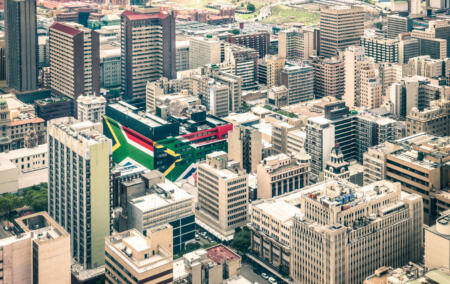
Johannesburg is facing significant social, economic and infrastructural challenges that demand an energetic, decisive and capable mayor who can halt the city’s decline and pursue a transformative developmental agenda.
The incoming mayor will have to confront deteriorating and ageing infrastructure, rising unemployment, violent crime, poverty and persistent service-delivery failures. Johannesburg is also among the 69 municipalities affected by the National Treasury’s recent decision to freeze funding over concerns about financial mismanagement, highlighting the seriousness of the city’s financial and governance challenges.
Johannesburg is a diverse and cosmopolitan city comprising residents from different backgrounds who nevertheless share many common interests and aspirations. These shared interests should provide the foundation for cooperation and collective efforts to improve the city, rather than being undermined by divisive political rhetoric that creates unnecessary tensions and fractures.
The political influence and authority entrusted to councillors should be exercised responsibly and in the best interests of Johannesburg’s residents, rather than being used to pursue international political agendas that have little bearing on the immediate challenges confronting the city.
The city therefore needs a mayor who will first and foremost unite its residents around a transformative developmental agenda. Johannesburg’s rapidly growing population, approaching five million residents, places enormous pressure on the municipality to maintain, upgrade and expand essential infrastructure and services.
These include water and sanitation systems, roads, traffic lights, housing, public parks, cemeteries and other basic municipal services. The mayor’s primary responsibility should be to ensure that these systems function effectively and that residents receive the services to which they are entitled.
The city needs a mayor who will put the Johannesburg community first, and not use it as a vehicle to pursue foreign conflicts. Given its cosmopolitan nature, social cohesion is a prerequisite to establish a very vibrant business and investment destination for everybody without regard to colour, language, religion, political or ideological affiliations.
Focused
This does not mean that Johannesburg should be indifferent to international affairs. However, international relations are primarily the responsibility of the national government, through the Department of International Relations and Cooperation (DIRCO), while local government should remain focused on matters that directly affect the communities it serves.
The incoming mayor should therefore devote energy to addressing the city’s service-delivery backlog, creating economic opportunities for unemployed young people, combating crime and corruption, and maintaining and expanding critical infrastructure.
A safe, functional and well-managed Johannesburg would not only improve the quality of life of its residents, but also make the city more attractive to investors, businesses and tourists.
This concern becomes particularly relevant when considering some of the prominent candidates in the mayoral race. Dr Tlaleng Mofokeng of the EFF, Reverend Frank Chikane of the ANC and Lukhona Mnguni of Rise Mzansi have all been vocal critics of Israel and have devoted significant attention to the Israeli-Palestinian conflict.
Their strong focus on this long-standing and complex international dispute raises questions about whether international affairs could overshadow the pressing domestic challenges facing Johannesburg.
Should any of them become mayor, their engagement with international issues should be balanced against the urgent local priorities requiring the mayor’s attention, including service delivery, infrastructure, unemployment, crime, poverty and municipal financial management.
Potential conflict
Dr Mofokeng’s candidacy also raises a separate question concerning the perceived impartiality of a United Nations Special Rapporteur, while she is simultaneously participating in party politics. Her decision to become a mayoral candidate creates a potential conflict between her political activities and the expectation of impartiality associated with her UN responsibilities.
If she intends to pursue a political career, her continued role as a UN Special Rapporteur may raise legitimate questions about whether she can discharge those responsibilities without political considerations influencing, or being perceived to influence, her work.
A resignation from the UN position would therefore provide a clearer separation between her political ambitions and her international responsibilities, allowing an independent and impartial successor to assume the UN role.
Johannesburg has already seen the potential consequences of a mayor becoming deeply involved in contentious international political issues. Following the 7 October 2023 Hamas attacks on Israel, then-Mayor Thapelo Amad of Al Jama-ah publicly expressed support for the Palestinian cause and Hamas.
Such interventions in contentious international affairs can have political and social consequences at the local level, particularly when they become sources of division within a municipal council. A fractured council is less capable of building the political consensus required to address pressing community problems and improve service delivery.
More importantly, statements made by a Johannesburg mayor are unlikely to have any meaningful influence on the trajectory of the Israeli-Palestinian conflict. They can, however, have consequences within Johannesburg itself, where residents in suburbs and townships continue to confront unemployment, crime, poverty, inadequate infrastructure and unreliable service delivery.
Embroiled
The mayor’s political capital would be better spent addressing these challenges than becoming embroiled in international disputes over which the municipality has limited influence.
The next mayor of Johannesburg should therefore be judged primarily by their ability to govern the city effectively, unite its diverse population and deliver tangible improvements to residents’ lives. Johannesburg does not need a mayor who sees the City Hall as a platform for international political activism.
It needs a mayor who will fix its roads, ensure reliable water and sanitation, improve public safety, expand economic opportunities, strengthen municipal finances and restore confidence in local government. The city’s international outlook should not come at the expense of its domestic responsibilities.
For Johannesburg to thrive, its next mayor must put the people of Johannesburg first.
[Image: by MirkoVitali]
The views of the writer are not necessarily the views of the Daily Friend or the IRR.
If you like what you have just read, support the Daily Friend