

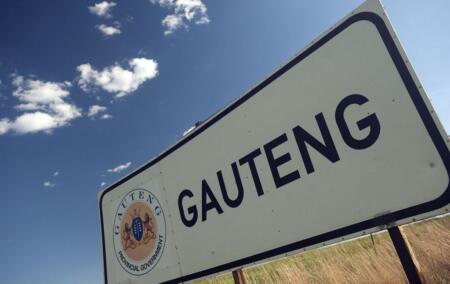
The local government elections on November 4th are of special importance in Gauteng. The province is the economic hub of the country, and its three largest cities, Johannesburg, Tshwane, and Ekurhuleni, are all collapsing after years of ANC rule. And as the most urbanised province in a fast-urbanising country, Gauteng points to where the politics of the country might be headed.
If the DA were to win outright majorities in Johannesburg and Tshwane, SA politics would undergo a big change. Above all, the DA would be given the chance of showing its skills in turning around a deep mess.
It will be difficult, although perhaps possible, for the DA to achieve outright majorities and displace the ANC-led coalitions in Johannesburg and Tshwane. But it’s unlikely that the DA can win an outright majority in Ekurhuleni, which would see the ActionSA-led coalition, which includes the ANC, replaced.
Much of the importance of November 4th lies in the central role that Gauteng cities play in the country’s economy.
As a recent report released by the Centre of Development and Enterprise points out: “A national economic, social and political recovery needs a prosperous Johannesburg powering growth, investment and employment in the country and on the continent.”
The three big cities now largely form one conurbation, so if all are under ANC and rat and mice party rule, provincial-wide disaster is likely. Five more years of ANC-led coalition rule is almost certain to have serious negative wider consequences for the cities, the provinces, and the country.
Gauteng accounts for about a quarter of the country’s GDP and is an overwhelmingly urban province. Johannesburg, the country’s business centre, accounts for 16 percent of GDP. About 70 percent of South African company head offices are in Johannesburg. And Johannesburg still draws business from the rest of the country and the region for key services and buying.
About 87 percent of the Gauteng population lives in the three big metros, Johannesburg, Tshwane, and Ekurhuleni, so the vote will mean a lot to most people in the province.
That ANC mayors ruled Gauteng’s biggest cities was a source of immense pride to the party until five years ago. If the DA won outright majorities in Gauteng metros, the ANC would have a seriously bloody nose at the local and even the national level. Loss of support at the local level would very probably result in further losses of support at the national level.
Arguably, all this makes the upcoming elections the most significant we have had since the 1994 polls, which marked the end of white rule.
Such a change would be good for democracy and demonstrate that many black voters are prepared to cut deep emotional ties to the ANC, the party of liberation, because it is unable to deliver. And change in government alone indicates that the system allows change, a key aspect of democracy.
The best-laid DA campaign plans could be wrecked by the rats and mice parties, who might be prepared to sell their votes on council to the highest bidder.
As much as the importance of the upcoming polls lies in the prospects of the DA achieving a majority, they are also significant because the DA might not achieve this. If the elections allow ANC-led coalitions to remain in power in Johannesburg and Tshwane and for the ANC to play a large role in an Ekurhuleni coalition, the urban decay is almost certain to accelerate.
Five more years of decay, neglected maintenance, lack of investment, corruption, rising rates, falling property prices, and the fleeing of businesses and professional skills will make these cities increasingly poor and uninhabitable.
Townhouse complex enclaves do not entirely protect middle-class residents from crime when they go outside their protected zones or from water and power cut-offs, or strikes by garbage collectors.
And the longer the bad rule continues, the more difficult and expensive it becomes to achieve a turnaround. We will be entering dangerous territory.
Given its sheer size and its role as the business and financial capital of the country, the demise of Johannesburg is bound to have wider national consequences. Apart from businesses fleeing or closing due to urban decay and reduced revenue for the City, there would be a shock to our financial markets if the city defaults on its debt.
Bailouts from the national government could take some time to put together, which means the city will suffer in the meantime. And all municipalities would have to pay higher borrowing rates if Johannesburg went bust.
Organised business, the provincial and national governments would have to play a larger role if the DA lost. But that might not save the city. There would be substantial cuts and ring-fencing of revenue to pay off debt, but there is no guarantee of an improvement in service delivery.
November 4th is so vital because if the DA’s Mayoral candidates, Helen Zille in Johannesburg and Cilliers Brink in Tshwane, achieve outright majorities, the election could also be about paving the way to South Africa’s turnaround. These cities could be a test bed for implementing the sorts of decisions that will have to be made at the national level in ending corruption, cadre deployment and appalling management, and improving service delivery.
This has to mean new administrations will come up against powerful ANC, union and tenderpreneur interests. Winning without fighting and reaching deals would be best, but ultimately the new mayors would have to get their way to deliver and maintain public support. Strong mandates from the voters will immensely help them achieve their goals.
The experience gained from Gauteng’s collapsing cities will be of immense value if and when the DA ever achieves national power.
What is key is that Gauteng voters probably fully realise that their cities are facing collapse and the urgency of the situation. That is often the reason why people vote for substantial change when they are convinced a party can fix the problems. Potholes and long water and power cut-offs act as forceful reminders about the urgency for change.
In the face of the collapse in their immediate environments, it will also be important if the voters do not vote for decisive change and fail to give the DA an outright majority. Why, in the face of deteriorating conditions that can only objectively be blamed on local governments, would people not want change?
Even with xenophobia added to the mix of who is to blame, it is unlikely that many believe that illegal foreigners are causing potholes and water cut-offs. But many might just vote on their frustrations.
If the DA does not achieve outright majorities, it will be a hard lesson for the DA to swallow. That will mean there could be a long wait for a turnaround of the country’s key cities. Gauteng will pay a high price for this.
[Image: https://www.flickr.com/photos/south-african-tourism/6253216234]
The views of the writer are not necessarily the views of the Daily Friend or the IRR.
If you like what you have just read, support the Daily Friend