

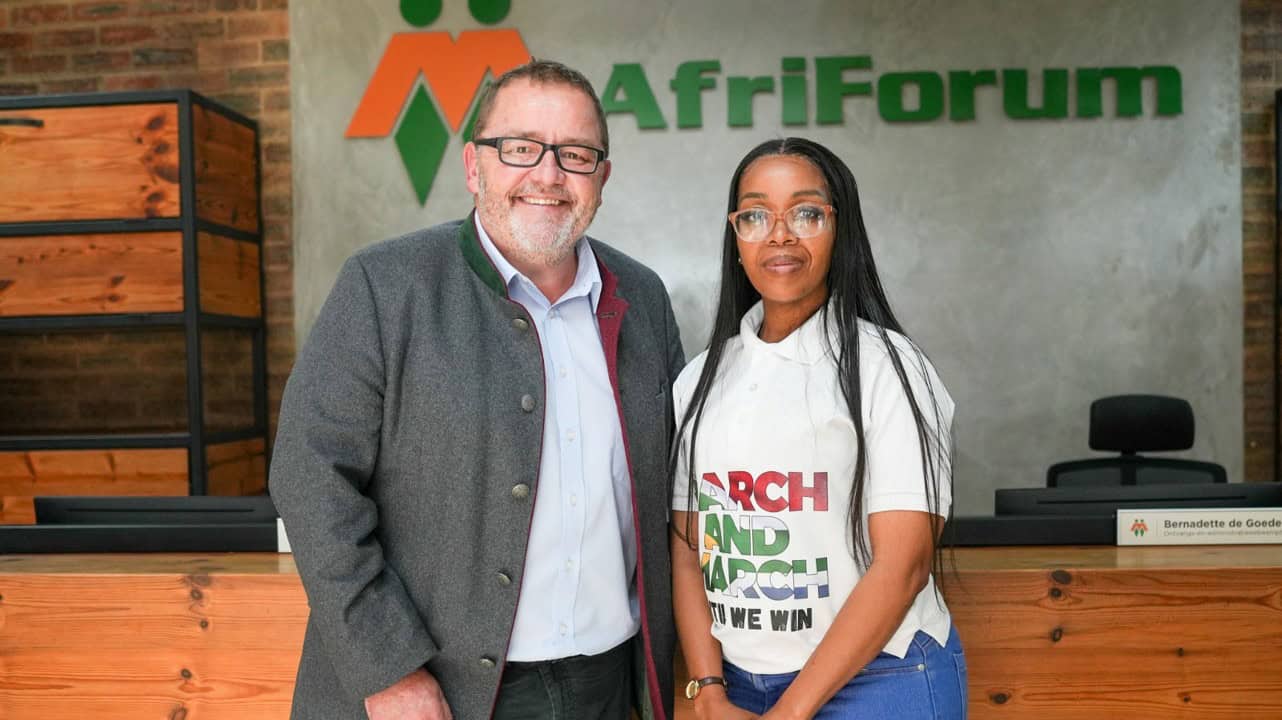
The first thing I thought of when I heard that AfriForum and March and March were collaborating was Piet Retief and Dingaan trying to broker a deal on a precarious cliff called Vulture’s Hill (Aasvoelkop) after a festivity took a wrong turn. In the modern version, the festivity is a braai, there is 24-hour TikTok coverage, and it is hard to say who the vultures are. Much remains the same, however; there is an epic battle for the same land, and only the invited will get a chance at a piece of it. In this version, the rainbow has taken a raincheck, and Ubuntu has been declared missing in action, presumed dead.
Contemplating the March and Braai story is like looking at an Escher painting with its weird series of cyclical steps, where moving through hierarchical levels unexpectedly brings you right back to where you started.
It is not surprising that I structure this narrative as the Zulu vs Afrikaner story. It is a legendary relationship, soldered into my cultural framework. Viewed from a Christian nationalist lens, the Zulu loomed large as a worthy adversary, a life force to be admired, and a threat to be destroyed simultaneously. I know, I know: ‘not all’ Afrikaners and not all Zulus and I am reducing Kriel and Zuma to crude cartoon figures in a much more complicated story. And yet, and yet, and yet, this exclusionary tactic posing as samewerking en ontwikkeling feels familiar.
As a child, I felt more kinship with the Zulu than with the British. Partly because we both got screwed over by the English, but also because we viewed our bond to our own people as a deep solidarity rooted in survival and faith. It is a powerful, steadfast glue which you can only understand if you feel it in your body and soul. I suspect Ubuntu feels like that, and I am saddened to hear of its passing in certain quarters. It does not amaze me that AfriForum and March and March have this attraction to each other, both being nationalist in similar ways. They both have fierce identities which will seek self-determination before assimilating. Plus, both understand what it means to take power and keep it. In my spare time, I am indulging a parallel plotline in which Retief and Dingaan change their minds at the last minute, decide to work together, drive the British colonialists into the sea and see where it goes from there. Back to the future, we are here now.
In this rendition of the reality show called Boer soek ‘n Vrou, Kallie and Jacinta have entered a marriage of convenience which has both the poor, huddled black majority and the warmblankes shifting uncomfortably. AfriForum certainly scores some rainbow photos from the deal which might help offset those pesky allegations of racism. March and March gain valuable information and baasskap of how to use litigation in new and authoritative ways. Ostensibly, they will work together on issues of border control, home language education, and law and order. If you sort of squint your eyes and turn your head a bit skew, it looks a bit like nation-building, but then reminders of the violent xenophobia and banshee wails of white genocide bring the vultures back into circling formation.
And yet, and yet, and yet … It is the hallmark of a liberal democracy that you have the difficult conversations with people you don’t agree with; not for an easy outcome, but for a difficult compromise. The intellectual architecture of a free society is built around the inconvenient reality that human beings have different values, varied interests, diverse histories, and spectacularly unalike ideas about how the country should be run. The liberal answer to this problem is not to eliminate disagreement – it is to create institutions and habits that allow disagreement to exist without becoming warfare. It is a framework of tolerance, tricky trade-offs, and second prizes for all. Nobody gets exactly what they want, but still – more people are freer than they have been before. More South Africans now have electricity and access to services. Fewer people are in abject poverty and all things being equal, people are more equal than ever.
If March and Braai had an event for our upcoming National Heritage Day, one wonders whether Jacinta and her clan would be invited to Kallie’s fire. If so, would she be expected to make the salad, stay in the kitchen and clean up afterwards while Kallie takes charge of the meat? It would still be a place at the top, which remains an exclusive club. It would be like figures endlessly walking up and down that impossible nested rectangular staircase that loops on itself without gaining or losing actual height, whilst there is a lot of positive trajectory.
So, forwards we must march. And headlong we must braai. But more importantly, onwards we must vote. For that is the only shisa nyama that we are all invited to.
Viva!
[Vivienne Vermaak is an award-winning journalist and keynote speaker.]
[Image: AfriForum]
The views of the writer are not necessarily the views of the Daily Friend or the IRR.
If you like what you have just read, support the Daily Friend