

We are overwhelmed by news flows – which are rarely reported objectively – while knowing little about how national leaders make key decisions.
Few people have the time or inclination to become well-informed about the complexities of economics or geopolitics. Yet we feel a need to have an opinion about things like trade wars and military conflicts. This creates abundant scope for politicians and media outlets to manipulate us.
Consider the Black Lives Matter movement. George Floyd’s life choices would not have inspired sympathy but it is unsurprising that the grotesque images of his final moments became iconic symbols of injustice. Advocating for defunding the police was a so-called “luxury belief” that fed on victimhood narratives while being dismissive toward the pursuit of solutions.
The narrative that shaped SA’s contemporary politics was that all-race elections and a robust constitution would lead to broad prosperity. As luxury beliefs go, this was a whopper. Today, a majority of SA’s black households are poor and reliance on grants has been increasing. Worse still, about a third of our school leavers become permanently marginalised before they turn thirty – and there are no workable solutions under consideration.
The rise of luxury beliefs this century was encouraged by the transformation of news reporting. The market for non-partisan journalism lost much ground as consumers flocked to infotainment sources that provide brief satisfaction for an addiction that they create.
Headlines are often invitations to judge. The news story is then framed to confirm the biases shared by the publication and its audience. That is, news reporting has, generally speaking, downgraded informing to emphasise judging. Many universities follow a similar pattern. Eventually people are not just inadequately informed; rather, many become addicted to having their biases validated to the point that this resembles a learning disability.
It has become routine to engage with people who are unable to rationally explore a complex social topic. Challenging their side’s talking points is fruitless. Rather than defending their positions with facts or logic, they simply shift into judging mode and label those that disagree with them as extremists. The same sort of indulgent framing that enthused the BLM movement now undermines trading relationships and respect for sovereign borders. Similar patterns surface in foreign-policy debates. Complex institutional and strategic issues are depicted as morality tests.
Exploring mistakes
Two recent attempts to write about these issues have alerted me to how difficult it has become to interpret and assess today’s shifting global order.
A couple of months ago I began to write an article exploring the mistakes US president Donald Trump had made regarding the Iran War. It isn’t particularly difficult to criticise various aspects of the war but making such a case, and apportioning blame, requires stacking layers on top of layers of speculation. We need to acknowledge how little we know and how insanely complex the relations are among the countries involved, which extend beyond the Middle East to Russia, North Korea, and China.
Conversely, what this year has conclusively demonstrated about Iran is that its leadership is extraordinarily ruthless towards its own people and its neighbours. We can also confidently conclude that its budding arsenal of missiles was on the verge of making the IRGC unassailable.
These two assessments should have received much more serious scrutiny because, firstly, they provide a strong case for considering military action against Iran and, secondly, enough information is publicly available to reach firm conclusions about the nature of the Iranian regime and the growing danger posed by its missile programme. Instead, media organisations have focused excessively on the war’s dramatic features and its most speculative dimensions.
My take is that Trump realised that diplomacy was hopeless and that Iran would soon become unassailable. Much subsequent evidence supports both conjectures but the public just doesn’t know what Trump knew in February or how he framed his decision. For instance, to what extent was he influenced by concerns regarding China or Russia?
Instead, given the success of labelling Israel’s response to the savage 7 October 2023 a “genocide,” the term “illegal war” is now also repeated so frequently that many people mindlessly parrot it. There may be strong arguments that the war was unlawful, but unlawfulness and strategic or moral justification are separate questions.
A particularly dangerous luxury belief is the presumption that international law and institutions are so well constructed that leaders can lead responsibly by merely heeding legal counsel or appealing to the United Nations. When actors with evil intent threaten regional or global security, nations must safeguard their interests.
Researching Israel’s ongoing military assault on Gaza is not prohibitively difficult. Nor is it particularly difficult to research the history and legal use of the term “genocide.” Evidence of war crimes by Israel or Hamas must be investigated, but accusing Israel of “genocide” is political and wrong.
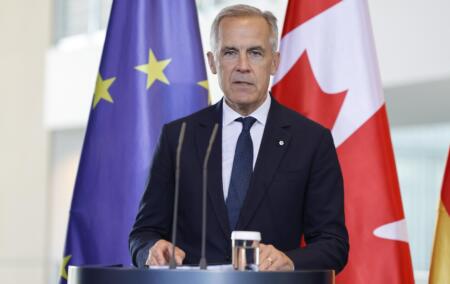
Mark Carney
My second recent experience relevant to this article is that I had intended to write about Canadian Prime Minister Mark Carney’s efforts to create a coalition of middle power nations. This should have triggered much media scrutiny about whether this would be likely to serve the interests of such middle power nations.
Carney’s still vague proposals create the illusion that middle powers have a newly discovered collaboration option which avoids the need to choose between aligning more closely with the US or China. Jamie Dimon, chairman and CEO of JPMorgan Chase, has dismissed the notion of a middle-power coalition as a “fantasy,” remarking that Europe had already tried something similar.
Lenders know from experience that they need to reduce their exposures to customers, whether companies or countries, which are becoming less competitive and lack a recovery plan. It isn’t hard for senior global bankers to recognise that Europe is on a dangerous trajectory that traces to its being an ineffectively aligned group of middle power nations that is easy prey for China’s predatory trade practices.
The economic aspects of the rules-based global order have been gravely damaged by China’s extraordinary success at undermining the core principles of free trade and the World Trade Organisation’s enforcement mechanisms. Iran and Russia have routinely violated the sovereignty of their neighbours.
Maintaining a rules-based order requires leaders to focus on protecting their nations’ interests. This becomes less likely the more voters rely on media outlets that, rather than accurately informing, build their audiences through validating biases.
The Iran War and Carney’s flirting with European and other middle-power nations are central to how geopolitics and global economics are shifting. Coverage of both illustrates how audiences have been conditioned to indulge their biases, leaving them willing to demand little substance from media organisations or political leaders. Unsurprisingly, this is what they get.
[Image: Mark Carney]

The views of the writer are not necessarily the views of the Daily Friend or the IRR.
If you like what you have just read, support the Daily Friend