

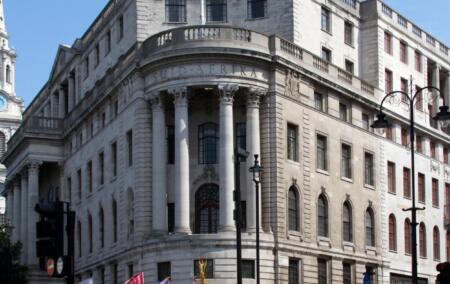
South Africa’s diplomatic properties have recently become the subject of a familiar argument: with the country facing persistent economic and fiscal pressures, should it really be spending hundreds of millions of rands upgrading embassies and other overseas properties?
The Department of International Relations and Cooperation has estimated that R830.98 million will be required over three years to renovate overseas diplomatic properties, based on condition assessments. The requirements include chanceries, consular facilities and official residences, with some individual properties requiring substantial expenditure.
The expenditure deserves scrutiny. South Africa should examine whether it has the right number of missions, whether they are in the right locations, whether properties should be owned or leased, whether staffing levels are appropriate and whether the estimates and procurement costs are reasonable.
But that is different from questioning whether South Africa needs professional diplomatic representation.
An embassy is not simply an office building. It is a physical representation of the state and a platform for political engagement, consular services, economic diplomacy, relationship-building and, when necessary, crisis management.
A country that wants to exercise influence abroad needs that infrastructure.
The more interesting question is what South Africa expects its diplomatic network to achieve.
That question matters because South Africa’s foreign-policy ambitions remain considerable. It emphasises strategic autonomy and non-alignment, maintains relationships across competing centres of power, seeks a stronger voice for the Global South and continues to use multilateral institutions, BRICS, the G20, the African Union and other forums to advance its interests.
Considerable influence
There is nothing inherently contradictory about this. A middle power can derive considerable influence from diplomacy, coalition-building, geography, institutions and the ability to bring different interests together.
But diplomatic autonomy and strategic agency are not quite the same thing.
Autonomy is the freedom to make one’s own choices. Agency is the capacity to make those choices and achieve something with them.
That distinction becomes particularly relevant when considering South Africa’s increasingly difficult relationship with the United States.
Relations have deteriorated over trade, domestic policy and foreign-policy disagreements. The United States imposed a 30% tariff on South African imports in 2025, while further diplomatic disputes have followed. In September, International Relations Minister Ronald Lamola described the relationship as having reached a “critically low point”.
Yet South Africa does not approach Washington without leverage.
The two countries have substantial economic interests in one another. South Africa has important exports to the US, while American companies have invested heavily in the South African economy. The automotive, agricultural, pharmaceutical and mineral sectors all create areas of mutual interest, while South Africa’s position as an industrial and financial centre provides additional reasons for continued engagement.
The problem is that possessing assets is not necessarily the same as possessing bargaining power.
A stronger and faster-growing economy would not guarantee that Washington accepted Pretoria’s positions. Nor would it eliminate disagreements over trade, legislation or foreign policy.
It could, however, give South Africa more economic weight with which to negotiate, more opportunities to create reciprocal dependence and greater capacity to absorb pressure if negotiations failed.
Economic growth
This is where economic growth becomes a foreign-policy issue.
South Africa’s economy grew by an estimated 1.3% in 2025, according to the IMF, which projected growth of 1.4% in 2026 and around 1.8% over the medium term. The IMF has also identified entrenched structural constraints as limiting potential growth and employment.
These numbers matter for more than employment, living standards and the public finances.
Economic growth expands the resources available to the state and, more importantly, expands the capabilities that can underpin international influence.
Consider the difference between a mineral resource and a strategic supply chain. The first is an asset; the second requires investment, infrastructure, technology, industrial capacity, efficient management, logistics and access to markets.
The same distinction applies to South Africa’s domestic market, ports, financial sector, companies, universities and technological capabilities. These are potentially valuable assets, but their strategic value depends on the country’s ability to maintain, develop and efficiently manage them, while connecting them to wider economic relationships.
This is where South Africa’s prolonged period of weak growth becomes strategically significant.
The country has not suddenly lost its international relevance. It retains considerable economic, geographic, institutional and diplomatic assets.
But assets can depreciate.
Other countries grow
Infrastructure deteriorates. Industrial capabilities become less competitive. Skilled people leave. Investment opportunities move elsewhere. Fiscal constraints limit what government can sustain. Other countries grow and acquire capabilities that South Africa may once have possessed in relative abundance.
The issue is therefore not simply whether South Africa is powerful or weak. It is whether its relative capacity to influence events is expanding or contracting.
That distinction is particularly important for a country pursuing strategic autonomy.
Non-alignment provides South Africa with room to engage different partners without formally subordinating itself to a particular bloc. Lamola has described it as a means of preserving independence, engaging widely and making decisions on a case-by-case basis.
But maintaining freedom of choice becomes more difficult when the costs of those choices increase and the country’s capacity to absorb them declines.
Foreign policy therefore has an “offer side” that is sometimes overlooked. Countries do not only negotiate on the basis of what they want from one another; they also negotiate on the basis of what each can offer.
That might be market access, investment, minerals, technology, infrastructure, financial services, industrial partnerships, security cooperation or diplomatic support. The more valuable and difficult-to-replace those offerings are, the greater the potential leverage they provide.
This does not reduce foreign policy to economics. States exercise influence through ideas, legitimacy, institutions, relationships and diplomacy as well.
But economic capability gives many of those other instruments greater weight.
This was recognised in earlier South African foreign-policy scholarship. Bradlow, Sidiropoulos and Bizos argued that foreign policy should contribute to domestic economic and social transformation, while warning that South Africa lacked the financial and human resources to pursue every element of its broad international agenda equally and therefore needed to establish priorities.
Renewed relevance
That observation has acquired renewed relevance. It also brings us back to the embassy debate.
If South Africa expects its foreign missions to attract investment, develop markets, support exporters, build political relationships and advance strategic interests, then properly maintained diplomatic facilities are not an indulgence. Parliament has itself identified under-resourced missions, high vacancies, slow ICT modernisation and poor overseas properties as operational risks, while placing economic diplomacy at the centre of DIRCO’s strategic priorities.
But that strengthens the case for asking harder questions about the diplomatic footprint, not weaker ones.
Does South Africa need every existing mission? Are some properties better sold than renovated? Would leasing be more sensible in particular locations? Are missions adequately staffed for their purposes? Are the costs competitive? And what political, economic or strategic outcomes should each mission be expected to produce?
Those are legitimate questions of national strategy.
What would be a mistake is to regard the physical standard of diplomatic missions as inherently expendable. A country does not need extravagant embassies, but it does need premises that allow its representatives to work effectively and present a professional face to the governments, businesses and societies with which they engage.
The embassy debate therefore points towards a much larger issue.
Strategic assets
South Africa still has considerable strategic assets, but prolonged low growth makes it harder to convert those assets into capabilities and those capabilities into leverage. The result is not necessarily a loss of foreign-policy autonomy, but potentially a gradual narrowing of the practical choices available to exercise it.
Strategic autonomy is therefore only part of the equation.
The other part is having something sufficiently valuable to offer, the economic and institutional resilience to withstand pressure, and the diplomatic capability to convert those assets into relationships and outcomes.
South Africa cannot choose between an ambitious foreign policy and the material foundations required to sustain it.
Its embassies are part of those foundations.
So are economic growth, infrastructure, industrial capacity, technological competence, fiscal resilience and a diplomatic service capable of putting them to work.
The question is not simply whether South Africa can afford to upgrade its embassies, but whether it is building the economic and institutional capacity that will allow those embassies – and the foreign policy they represent – to remain instruments of meaningful national agency.
Where to, South Africa?
[Image: By Tony Hisgett from Birmingham, UK – South Africa HouseUploaded by tm, CC BY 2.0, https://commons.wikimedia.org/w/index.php?curid=27908667]
The views of the writer are not necessarily the views of the Daily Friend or the IRR.
If you like what you have just read, support the Daily Friend