

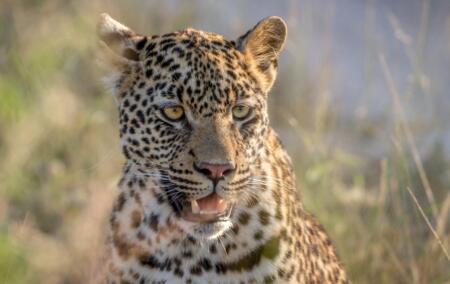
I am delighted that leopards still occur around my thirteen hectares on the West Rand. But one settling there and killing my dogs would soon exhaust my enthusiasm. I don’t find that difficult to admit. Most people become rather less philosophical about wildlife when the loss is their own.
A farmer has more at stake. The animals being killed may be his income, and losing breeding stock can follow him into the next season. On a wildlife ranch, an impala is both natural prey and an animal somebody might have paid to hunt. Calling it prey doesn’t put it back on the farm.
If we want leopards outside our parks, we need the cooperation of the people who live with them. Much of the argument around South Africa’s draft leopard conservation strategy takes that cooperation for granted.
The EMS Foundation wants hunting stopped until its conditions on scientific evidence and legal compliance are met, and further restrictions on killing problem animals. The Wildlife Animal Protection Forum South Africa argues that trophy hunting is inherently incompatible with leopard conservation on land used by people.
I would find these arguments easier to take seriously if they came with a workable offer to the farmer. His patience apparently has to last until everyone else is satisfied. His money may run out rather sooner.
Of course he should prevent losses where he reasonably can. But telling everybody to get a kraal and a shepherd is hardly an answer. In rare cases sheep can be brought in at night. Try applying that advice to free-ranging game in the bushveld. A farmer cannot spend money he hasn’t got merely because someone recommended it in a document.
Photographic tourism can pay well in the right place, but certainly not everywhere. A leopard passing a camera occasionally won’t fill beds in a lodge, and building the lodge would be an expensive way of finding that out. Nor does moving the animal guarantee success. South African research found successful leopard translocations, failures and many moves whose outcomes were never established.
Meanwhile, the farmer is expected to keep applying for help. An application can be delayed while losses continue. A mauled ewe or dog is also a suffering animal, however little attention it attracts in the argument.
“Shoot, shovel and shut up”
I am acutely aware of the attitude which has taken hold among some livestock and wildlife farmers. “Shoot, shovel and shut up” concerns cheetahs as well as leopards. I cannot give a reliable national figure for the concealed killing. But pretending it isn’t happening because nobody puts it on an official form is absurd.
I am not recommending it. I want a farmer willing to report a leopard and confident enough to ask the authorities for help. When he decides that keeping quiet is his best option, officials lose information and researchers may lose access to his land.
In the Waterberg, research found higher rates of retaliatory leopard killing than recreational hunting, especially at low leopard abundance. That was recorded mortality, including damage-control permit records, not a count of every secretly killed animal. It should still trouble anyone who thinks stopping trophy hunting is the whole answer. Predation gives people reasons to kill leopards which have nothing to do with wanting a trophy.
The Biodiversity Act already requires permits for hunting and killing leopards on private land. An authority which controls that decision has to provide a service people can actually use. Back in 2012 I was writing about departments unable to deliver the services their own regulations required. Adding conditions is easy. Getting an answer from the office responsible can be quite another matter.
There is evidence that benefitting from wildlife helps. Researchers who interviewed 250 Namibian ranchers found greater wildlife income and lower livestock losses associated with greater tolerance of carnivores, among other influences. Leopards were the most tolerated of those studied. Farmers themselves gave value for trophy hunting among their reasons for wanting leopards.
Something more useful
That doesn’t prove selling a hunt will convert every hostile neighbour. It does give us something more useful than telling him to improve his attitude. The income must reach the people carrying the losses. A farmer won’t be comforted by a handsome hunting fee paid to somebody else, but abolishing that opportunity won’t help him either.
Regulated leopard hunting also deserves an honest description. The published export allocations are eleven trophies for 2026 and ten for 2027, from males at least seven years old, with one qualifying animal per eligible hunting zone. The age rule aims to reduce the damage caused by taking males before they have had an opportunity to father young which reach independence. Local population evidence and other leopard deaths still have to be considered. A small quota cannot excuse a bad decision in a particular place.
South African hunters also hunt for trophies and, where permitted, hunt leopard and other dangerous game. We are not merely employed to assist wealthy visitors. Competent local hunters deserve fair access under the same safeguards. A hunter’s passport tells us precious little about whether the right animal has been selected.
Our Constitution provides for ecologically sustainable use alongside justifiable economic and social development. The people making a living from wildlife are entitled to be heard. Conservation cannot be administered as though they are an inconvenience.
Next meal
I want EMS and the protection forum to show the farmer how their alternative will work on his land, including who pays when it costs more than he can carry. They ought also to have an answer when it fails. The leopard will need its next meal long after the argument has disappeared from the newspapers.
For my part, I’d rather have a farmer willing to phone the Department about a leopard than one who has learned never to mention it again.
[Image: by Simoneemanphotography]
The views of the writer are not necessarily the views of the Daily Friend or the IRR.
If you like what you have just read, support the Daily Friend