

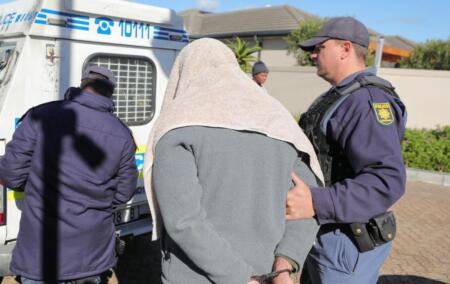
Across South Africa, dedicated detectives and police officers are fighting tooth and nail against violent crime. Many carry crushing caseloads, work under enormous pressure and put their lives at risk to protect communities. They want to arrest dangerous criminals, build strong cases and secure convictions. Yet too many lack reliable vehicles, adequate forensic support, functioning technology and the investigative resources they need.
We cannot expect these officers to win the fight against violent crime without giving them the tools to do their jobs. Nor can we measure their success through statistics that fail to explain what happens to thousands of unresolved cases.
SAPS reported 89,893 unfinalised murder cases in 2025/26, up from 82,796 the previous year. Behind these figures are victims, families waiting for answers and investigators struggling with growing workloads.
The Portfolio Committee on Police’s Budgetary Review and Recommendation Reports (BRRRs), adopted on 14 October, highlight weaknesses in investigative capacity, operational support and performance measurement. They also provide an opportunity to strengthen accountability.
One concerning issue emerged during our engagement with SAPS over its murder-conviction statistics.
SAPS acknowledged that its murder-conviction rate measures outcomes among cases reaching a court verdict. It is not calculated against all murders reported or carried forward. A high conviction rate among cases reaching this stage can therefore coexist with thousands of unresolved murders.
The statistic may be technically correct, but it answers a narrower question than the public expects. It tells us about cases reaching a verdict without accounting for investigations that never reached prosecution or remain unfinished for years.
SAPS also reported a murder-detection rate of 9.50%, down from 10.13%, against a target of 60%. The Committee requested clarity on the calculation and its denominator. Until that is provided, we cannot responsibly interpret it as the precise proportion of newly reported murders solved.
Parliament needs to track cases throughout the criminal justice process, starting when a crime is reported.
We should know how many murders were reported, how many remain under investigation, how many suspects were identified and arrested, how many dockets reached prosecutors, how many cases proceeded to trial and how many resulted in convictions.
These measures must follow the same groups of cases over time, rather than combining unrelated annual totals. Outstanding investigations must remain visible, including their age and reasons for delay.
This would reveal where cases are failing and which institutions must intervene.
The operational evidence reinforces the need for reform. During 2025/26, SAPS achieved 49 of its 94 annual performance targets. Detective Services achieved nine of 22.
Of the planned 4,000 additional detective placements, only 2,444 materialised, while 1,031 detectives left the organisation.
Experienced detectives carry years of institutional knowledge and investigative judgement that cannot be replaced overnight. Recruiting inexperienced officers without proper mentoring, training and operational support will not automatically improve murder investigations.
On oversight visits, we repeatedly encounter officers willing to work but constrained by the systems around them. Vehicle shortages, forensic delays, excessive workloads and inadequate technology undermine investigations before cases reach court.
The Committee has called for a properly funded investigative recovery programme linking detectives, Crime Intelligence, forensic services and prosecutors.
SAPS must prioritise detective retention, mentoring, case management and timely forensic evidence. Detective commanders need the resources and authority to identify failing investigations early and intervene.
We must also reconsider what constitutes operational success.
Arrests and high-visibility operations matter, particularly when disrupting dangerous criminals. But arrest numbers alone cannot establish that communities are safer.
An operation producing hundreds of arrests but few sustainable prosecutions must be assessed differently from an intelligence-led investigation that dismantles a violent criminal network and secures convictions.
Police management should be assessed on investigative quality, reductions in unresolved cases and measurable community safety.
The same principle applies to police accountability, where the Independent Police Investigative Directorate (IPID) plays a critical role.
Importantly, IPID has demonstrated meaningful improvements deserving recognition.
Its investigations programme reported achieving all annual targets, including making 3,950 older investigations decision-ready against a target of 3,500.
IPID also recorded 84 criminal convictions and 277 disciplinary convictions. These are separate outcomes, but demonstrate that independent investigations can produce real consequences for police misconduct and criminality.
This progress matters. Holding officers accountable strengthens the credibility of honest police members serving with integrity.
IPID has made progress addressing historical investigative workloads despite resource constraints and dependencies on forensic services, prosecutors and other institutions. Its investigators deserve the independence, resources and support to sustain these improvements.
Nevertheless, important challenges remain.
IPID reported an active investigative workload of 19,728 cases, with 5,566 becoming decision-ready during the year. Completing older investigations does not necessarily mean the overall backlog declined by the same number, because other cases may become overdue.
Reporting must therefore distinguish completed investigations from actual reductions in outstanding cases.
Follow-through matters too. Of 2,081 criminal matters IPID reported referring to the National Prosecuting Authority, 1,196 awaited prosecutorial decisions and prosecution had been declined in 799.
These cases require proper tracking, including reasons for declined prosecutions and whether additional investigative work is necessary. Annual convictions cannot automatically be compared with referrals from that same year.
IPID’s audit regression and the Auditor-General’s findings concerning unreliable performance information also require corrective action, without disregarding its investigative achievements.
The Committee must recognise progress while insisting on reliable reporting, stronger capacity and accountability.
For SAPS, the immediate priority is restoring investigative capability through properly resourced detectives, effective Crime Intelligence, timely forensic support and accountable management.
For IPID, it means consolidating improvements, strengthening independence and ensuring investigations and recommendations result in appropriate consequences.
Our BRRR recommendations must produce measurable action, rather than another round of commitments.
South Africa has police officers determined to confront violent criminals. They deserve leadership, equipment and systems that allow them to succeed.
The ultimate measure of policing effectiveness must be whether crimes are properly investigated, perpetrators are brought to justice and fewer families spend years waiting for answers.
[Image: https://www.saps.gov.za/newsroom/thumbnail.php?f=60995]
The views of the writer are not necessarily the views of the Daily Friend or the IRR.
If you like what you have just read, support the Daily Friend