

Biased reporting underplays global shifts and the US’s core interests.
Political leaders failing to pursue their nation’s interests or to earnestly fulfil their international obligations doesn’t make breaking news headlines. Yet such gradual developments, alongside major shifts in the world’s economic landscape and political contours, have reshaped the US’s strategic interests.
A rare point of agreement among US legislators that is under-reported has been the growing bi-partisan consensus to focus less on Europe and more on challenges from China. Nor do US voters want to offset Europe’s neglect of its defence needs – and continuing to do so would incentivise European politicians to further deprioritise their defence requirements.
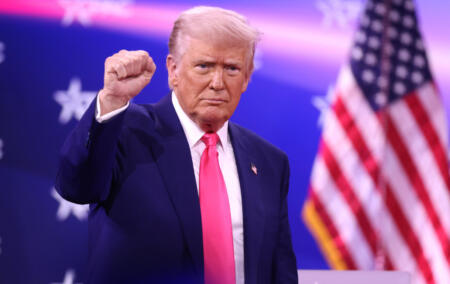
US president Donald Trump’s “National Security Strategy” which was released late last year clearly deprioritises Europe, the Middle East and Africa to emphasise the Western hemisphere and risks related to China.
The document depicts Europe as being in long-term decline. It calls for Europe to stand on its own while the US seeks a stable relationship with Russia and an end to the war in Ukraine. It also asserts that given the US has achieved energy independence, the Middle East has become less strategic to the US.
To what extent have European countries been freeriding on the US’s commitment to global security? The US administration’s position was depicted by its Treasury Secretary Scott Bessent stating earlier this year that, since 1980, the US has spent $22 trillion more on defence than its European partners. This despite Europe’s larger population and similar size economy.
After aggressive badgering by Trump, most NATO countries agreed to significantly increase their defence spending. Yet major European countries show little enthusiasm for actually improving their combat readiness.
The core problems within the EU are deeply entrenched and the political will to overcome them has been lacking. The region’s leaders and voters haven’t prioritised competitiveness and now, as China’s economic growth relies on growing exports, de-industrialisation looms for large European nations.
Meanwhile, the regulatory zeal expressed by bureaucrats in Brussels has undermined the region’s ability to grow globally relevant IT companies. ASML, the standout exception, lacks European customers.
Bond traders now worry France is careening toward a debt crisis and polls suggest sensible centrists will be sidelined at next year’s French presidential election. The leading candidates are seen as hard-right and hard-left. Both promote hard-edged policies with potential to unravel the EU. The front-runner, Marine Le Pen, does not want France to fund its share of the EU budget or to send billions in aid to Ukraine. She favours expanding France’s already unaffordably generous pension benefits.
Boxed in
It is not unreasonable that a majority of US legislators see Ukraine’s war with Russia as Europe’s problem. Yet the US is boxed in. If the US was to ardently support Ukraine, that would encourage European legislators to continue to neglect their defence obligations. And the US can no longer afford, militarily or economically, to carry NATO.
The US must focus on China’s growing economic and military threats and that would be much more manageable if the Europeans were advancing their national and regional interests. Encouragingly, in recent days, the EU leaders have belatedly begun to assertively negotiate with China. Last week they announced China’s exports of hybrid cars into the region will be capped at roughly half of last year’s level.
Whereas the US’s 100% tariffs on Chinese EVs came quicker and reflected greater decisiveness, European leaders seemed to have rather suddenly decided to pursue a similar path. Last Wednesday German chancellor Merz echoed Trump’s concerns about China when he said, “We will no longer stand by and do nothing when other states harm our economy through heavy subsidies, artificially devalued currencies, overcapacities and aggressive pricing.” The US and the EU could benefit immensely from collectively resisting China’s subsidising strategic industries.
Trump’s off-putting style includes making abrupt moves and dominating headlines. European leaders prioritise slow bureaucratic protocols. Neither approach is ideal but when it comes to deterring hostile threats, European nations are weak partners. Unfortunately, how left-leaning news outlets typically cover security issues makes this difficult to discern.
Consider how in his first term Trump made clear emphasised that it was in Europe’s best interest to renegotiate the defence of Greenland. EU leaders responded by slow-walking their response. Last year, Trump ratcheted up pressure with aggressive threats and insults. Last month the interaction produced a signed agreement which benefits all the parties.
European leaders pretend publicly that they could grow their militaries to become independent of the US. Privately, they must know this is highly unrealistic.
Why did Russian president Putin’s nuclear sabre rattling not intimidate European countries into pulling their support for Ukraine? Russia and China both have unequivocal nuclear escalation dominance over Europe. What gives Europe the luxury of resisting such intimidation is that the US nuclear deterrence threat extends over much of Europe.
A core implication of this is that the US dare not withdraw from NATO as the European member countries would become extremely vulnerable. In this important sense, the US is boxed in to having to support NATO.
Trump is annoyingly verbose and tactically unpredictable but he isn’t strategically erratic. He wants to decrease the US commitments to Europe while building stronger alliances across Latin America. Next week’s election in Brazil is expected to confirm that region’s broad shift toward aligning more closely with the US.
Canada should follow the US and Europe and they should then collectively pressure China to rebalance its economy while dialling down its aggressive violations of WTO trade rules regarding subsidies and dumping. This could produce tremendous benefits whereas talk of middle-power options reflects wishful thinking. The US and China have the largest and most dynamic economies and military capacities.
Global shifts
Given China’s intelligence gathering expertise, the US pressured the UK and other close allies to remove Huawei equipment from their communication networks. As AI models become deeply integrated into government, corporate and home communication and storage devices, the option for countries to remain non-aligned will likely become non-viable.
Technological advances related to cryptocurrencies and stable-coins will continue to challenge SWIFT’s relevance and the roles of major credit card companies. BRICS-sponsored efforts could accelerate such shifts.
However, Iran, the world’s primary supporter of state terrorism, has recently joined BRICS – and so has the UAE, the Arab world’s economic role model. The front-runner in Brazil’s presidential election later this week, Flávio Bolsonaro, has said exiting BRICS is “on the table.”
As with Europe, the US’s military support for its Middle East allies is a legacy from an earlier era that has bred complacency across the region. That region’s future hinges on constraining Iran and its proxies. But Iran’s neighbours couldn’t deter it from building an overwhelming arsenal of missiles.
US voters have grown intolerant of Americans dying in Middle East wars and the US’s energy independence reinforces this view. It therefore seems likely, given the current status of the conflict, that Trump erred when he stopped last year’s “12 Day War”, mostly between Israel and Iran.
The Middle East is very different from Western Europe. Yet in both regions it has become much harder for the US to justify maintaining military bases. While very expensive planes can now be destroyed by low-cost drones, the long-simmering problem is that heavy US commitments have led to its allies failing to develop meaningful military deterrence.
Many political leaders pursue agendas poorly aligned with their nation’s interests and the demands of a harshly contested global order. It is imprudent for them to play for time and presume the next US president will be more accommodating of their poor policy choices.
[Image: https://www.flickr.com/photos/gageskidmore/54362601640]
The views of the writer are not necessarily the views of the Daily Friend or the IRR.
If you like what you have just read, support the Daily Friend