

I recently wrote a column about the impact that AI is already having on drug discovery, particularly in the early part of the process where researchers try to find a molecular “key” that fits a biological “lock”. The article described how a painstaking and torpid process is now being sped up by orders of magnitude in silico, with AI sweeping through a zillion virtual combinations before handing over a few high-probability candidates to human scientists for molecule assembly, wet-lab tests and, eventually, trials.
What about the rest of the process?
Wet-lab testing is the point at which the process again slows to a crawl. There are a host of complex processes – in vitro and animal testing, efficacy testing, toxicity testing, dosage filtering, side-effect reporting and mountains of other stuff. If the stars remain aligned, there are then human trials, the next phase. And throughout all of this, there is the march of time. Time to discover whether the drug works, whether it keeps working and whether it causes something unexpected and unpleasant to happen. And then the teeth-grinding downtime for researchers as regulators slowly and carefully adjudicate each phase before finally allowing the drug anywhere near the general public.
Wet-lab drug discovery is an unforgiving business where failures abound and successes are few. Roughly nine out of ten drugs entering clinical trials ultimately fail to make it to approval. The entire journey from discovery to an approved medicine has traditionally taken something like 10–15 years. AI can dramatically accelerate the early part of the process by finding promising molecules faster, but it cannot instruct the FDA to hurry up with the rest. If five years of molecular searching becomes five months while everything downstream still takes years, we have improved the journey a tad without really abolishing the downstream traffic jam.
So, we come to this – a largely unremarked news report that passed my screen last month suggests the traffic jam itself may finally be attracting regulatory attention.
On 21 September, the US Food and Drug Administration changed its regulations to make explicit that drug developers can, where appropriate, use non-animal methods to provide safety evidence before a medicine is tested in humans. The FDA specifically pointed towards human cell systems, organs-on-chips, computer models and other new technologies such as organoids (the subject of this article) as part of an effort to reduce animal testing. The regulatory door, in other words, has begun to open.
And so on to the remarkable story of organoids, which, for those with fervid imaginations, sounds a bit like science fiction. But it is indeed science, and it is here, now.
The story of organoids actually begins quite a while back (2009), when Hans Clevers’s lab in Utrecht showed that a single intestinal stem cell, given the right chemical encouragement, would grow into a miniature lining of the gut, so this is not really brand-new science. But its development and application have accelerated dramatically.
Organoids are small (sesame-seed-sized), three-dimensional, self-organising cellular structures grown in laboratories from stem cells derived from adult human skin, blood samples or other tissue. Coaxed with precise chemical signals, these cells differentiate and assemble into miniature, simplified versions of human organs. Mini-brains, mini-livers, mini-kidneys, mini-guts and heart tissue. Of course, they are not actually miniature organs ready to be transplanted into Lilliputians, but their cellular architecture mimics that of their full-sized counterparts.
Crucially, they are not flat, two-dimensional cell cultures stuck to the bottom of a Petri dish (the traditional way), but possess actual 3D architecture – they are lumpy, squishy stuff, just like organs. Their cell-to-cell signaling pathways and tissue complexity mirror real human biology far more accurately than standard laboratory cell models ever could.
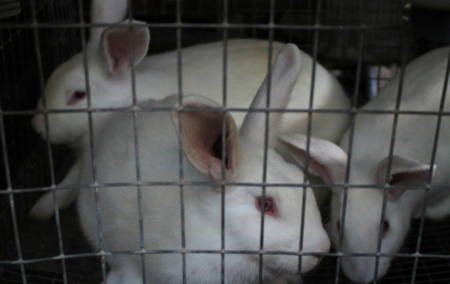
This matters because traditional pre-clinical testing relies heavily on animal models – mice, rats and non-human primates. While animal testing has saved millions of human lives, its predictive fidelity leaves much to be desired. A mouse is not a human being. Countless drug candidates show stellar efficacy and zero toxicity in rodents, only to fail miserably or prove dangerous when administered to human subjects. Conversely, promising human therapies have been abandoned prematurely because they were poorly tolerated by mice.
Organoids bridge this chasm by offering human-specific biological testing environments from day one. Rather than waiting years for Phase I and Phase II clinical trial data to observe how human tissue responds to a novel therapeutic, researchers can expose hundreds of patient-derived organoids to a candidate molecule simultaneously. They can monitor toxicity, cellular stress, metabolic degradation and target engagement in real time across living human tissues – all before a single human volunteer ever swallows a pill or receives an injection.
So – wet labs, squishy stuff and pipettes and Petri dishes and syringes and kitchen-looking appliances attended by scientists in white coats and sanitary gloves, looking for all the world like any lab in the past 50 years. Right? No, because this is where AI, now sniffing around every human endeavour, is flexing its muscles.
In a growing number of labs, the white coats are giving way to machines that look less like science fiction’s androids and more like a cross between a vending machine and a car assembly line. Robotic arms lift plates of organoids out of incubators. Liquid-handling heads with dozens of nozzles feed and dose hundreds of the tiny tissues at once, with a steadiness no postdoc can match. Automated microscopes photograph every organoid, every few minutes, for weeks.
And then are the bits and bytes. A rack of organoids generates far more data than a cage of research mice. Time-lapse images of thousands of tiny tissues swelling, shrinking or dying, along with readouts of which genes switch on and off. No human can watch all that, and nobody needs to. In June, researchers at UCLA described in Nature Protocols a system that bioprints tumour organoids from patients’ cells and uses deep learning to track each one’s response to drugs, with the aim of testing hundreds of therapies at once. The more ambitious idea is a closed loop in which AI proposes molecules, robots test them on human organoids, and the results train the next round of AI – so that whatever reaches a human trial has already been tried on human tissue, albeit in miniature.
Finally, this – organoids may also change the trials themselves. Many trials fail not because a drug is useless but because it works only for some of the patients enrolled (the one-drug-fits-all approach we have all been taught to expect). Patient-derived organoids offer a way to find that subset of treatment-responsive patients in advance. The European HIT-CF project, for example, is growing organoids from rectal biopsies of around 500 people with cystic fibrosis caused by rare mutations, testing experimental drugs on them, and selecting those whose organoids respond best for clinical trials.
None of this abolishes human trials, and nobody serious says it should. An organoid has no circulation to carry a drug to it, no kidneys to clear it and, usually, no immune system to overreact to it. But the distance from pathology to cure may finally be starting to shorten, far away from the headlines of LLM wars, job losses, autonomous weapons, hallucinations, billionaires, data centres and AI-generated slop. It is a glimpse of an AI future with real promise for humanity, perhaps even with a sprinkling of grace – an ingredient in rare supply in the never-ending, noisy AI debate.
Steven Boykey Sidley is a visiting professor at the Center for Graduate Studies at Rhodes University and a partner at Bridge Capital and a columnist-at-large at Daily Maverick, Daily Friend and Financial Mail. His new book “Checkmate: How Shoprite Checkers rewrote the rules and won” is published by Jonathan Ball
[Image: Chelsea Marques for Unsplash]
The views of the writer are not necessarily the views of the Daily Friend or the IRR.
If you like what you have just read, support the Daily Friend