

The EU’s new ambassador wants South Africa to tax Chinese electric vehicles, to shield us from unfair competition. It isn’t South Africans he wants to shield.
Kristian Schmidt, the new European Union ambassador to South Africa, has already learnt which buttons to press. In an interview with the Daily Maverick’s Peter Fabricius last week, he praised black economic empowerment (“You’ll never hear me complain”), gushed about South Africa’s G20 agenda (“Europe bought into [it] totally”), and – in a pointed dig at the United States – declared his host country’s domestic issues “not my business”.
Yet he went on to make one of our domestic issues very much his business.
Schmidt underlined a suggestion by Bernd Lange, who chairs the European Parliament’s trade committee, that South Africa should follow the EU and slap tariffs on Chinese electric vehicles. Beijing subsidises its carmakers, the argument goes, creating unfair competition and vast overcapacity, “flooding the world with cheap products that are not competing on equal standards”.
Lange himself, visiting in June, said South Africa should impose such tariffs to offset what he called “illegal subsidies”. Asked whether he was advising our government to do so, he demurred: “It’s not my job to advise the government. I demonstrate our experience.”
A week after Schmidt’s interview, Wang Chuan, spokesman for the Chinese embassy, replied in the same publication. “Exporting is not a sin,” he wrote. “Africa does not have too many affordable clean cars; it has far too few.”
I take no pleasure in siding with the mouthpiece of a one-party communist state against the envoy of a union of liberal democracies. When Wang writes that “China asks for nothing in return”, I reach for the salt. But on this question, Wang is right, and Schmidt is wrong.
Fair point
Schmidt does have some facts on his side, as far as they go.
China does subsidise its electric vehicle industry. The Center for Strategic and International Studies estimates that Beijing spent $230.8 billion propping it up between 2009 and 2023. The overcapacity is real, too. Chinese car factories run at about half their capacity, and a ruinous price war has left dozens of carmakers bleeding cash.
But their overcapacity is not our problem. On the contrary, overcapacity is great for buyers. Contrast it with the global market for computer memory and graphics cards, where undercapacity (because of the AI datacentre boom) has caused prices to skyrocket to such a degree that new or upgraded computers are unaffordable to all but the richest buyers.
The real question is whether China’s historical EV subsidies explain why a BYD or a Geely cost less than a Volkswagen. It does not.
In February, the New York research firm Rhodium Group compared the costs of China’s leading carmakers with those of Tesla’s Shanghai factory, which enjoys the same wages, the same suppliers and much of the same state support. It found that BYD can build a comparable car for about $4,700 less than Tesla can. Subsidies account for only about 5% of that gap.
The rest comes from vertical integration: BYD makes about 80% of its first-tier components in-house, saving the markups other carmakers pay to suppliers; and from lower overheads, including cheaper research and development spread over far more cars.
Most of that $230 billion, moreover, never touched an export. The biggest single item was an exemption from China’s vehicle purchase tax, and the next biggest was consumer rebates. Both apply only to cars sold in China. The rebates ended in 2022, and the tax break, halved in January, is also on its way out. Not a cent of either subsidy reached a buyer in Gqeberha.
Dumping, in trade law, means selling abroad for less than you charge at home. Chinese carmakers do the opposite. A Reuters review in 2024 found BYD’s export prices ran between 30% and 178% above its Chinese prices.
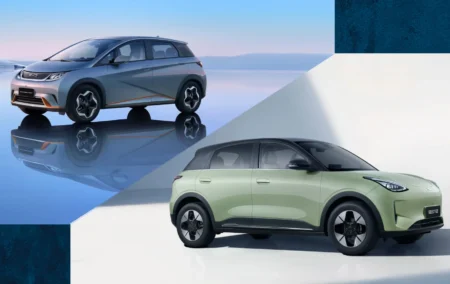
Here, the Dolphin Surf (like the Geely E2) sells from R339,900. In China, the same car, sold as the Seagull, starts at 69,900 yuan, or about R174,600. Strip our 15% VAT and 25% import duty out of the local price, and South Africans still pay more than a buyer in Shenzhen does. That Shenzhen price, mind you, includes China’s own 13% VAT.
Thank you, Beijing
But suppose subsidies did make Chinese cars cheaper here. So what?
Milton Friedman dealt with this complaint decades ago. “If foreign governments want to use their taxpayers’ money to sell people in the United States goods below cost,” he asked, “… why should we complain?”
A subsidy is a transfer from the taxpayer who funds it to the buyer who enjoys it. If a factory worker in Hefei is taxed so that a nurse in Polokwane can buy a cheaper car, the nurse ought to send Beijing a thank-you note. Schmidt would have our government tax the nurse instead, to steal the gift from her.
Schmidt knows better. In the same interview, he said that “unlike some others we don’t believe a trade deficit means you are being ripped off”.
Quite right. Cheap imports are the benefit of trade, not its cost.
The threat of new tariffs on imported vehicles is not hypothetical. The International Trade Administration Commission told Parliament in January that duties on fully built cars could rise from about 25% to the maximum of 50% allowed under World Trade Organisation rules.
China supplied 23% of our light-vehicle imports last year by value, and India, also in the firing line, another 56%. The cost would fall on price-conscious buyers who chose Chinese or Indian brands precisely because they could not afford more expensive local brands or imports from Europe.
Piglets, revisited
Two years ago, I described the motor industry as a lump of coal in the crown of South Africa’s industrial policy. After 25 years of protection and subsidy, vehicle manufacturers had shed 22.5% of their jobs, and the sector as a whole had added a mere 11,300 jobs. Taxpayers forked out R76 billion in eight years for this lack of success.
Little has changed. About 70% of the cars built in South Africa are exported, and roughly 80% of those go to Britain and Europe. Our tariff wall does not serve South African motorists. It serves multinationals that use South Africa as a subsidised export platform for rich-country markets, while charging locals a premium.
And the government that subsidises South African exports to rich-country markets, while taxing the average imported vehicle to the tune of about R120,000 – counting VAT, ad valorem tax, carbon tax and the tyre levy – has the temerity to whine that Chinese industrial policy allows its car makers to sell electric vehicles to South Africans at affordable prices!
Even Toyota South Africa’s Andrew Kirby, whom I called a piglet squealing for more milk from the government teat, has since cautioned against raising duties on fully imported vehicles. When the piglets counsel restraint, the farmer should probably listen.
Who benefits?
Protectionism fails ordinary South Africans on every count.
It fails them on jobs. While domestic vehicle manufacturers cut more than one in every five jobs in return for the import tariffs that protect them, the newest employers in the sector are Chinese manufacturers. In July, Chery took over Nissan’s Rosslyn plant, keeping all 692 workers Nissan was about to let go, and aims to create more than 3,000 jobs across manufacturing and its supply chain. BAIC has assembled vehicles in Gqeberha since 2018. Chery became a manufacturer because its imports first earned it a customer base worth investing in.
Wang claims that more than 200 Chinese enterprises have invested and built operations in South Africa, creating more than 400,000 local jobs. That directly contradicts Schmidt’s claim that China was coming to South Africa not – as he said the EU was – to invest and create jobs, but to export surplus capacity.
Defenders of tariffs will say that is the point: make imports dear enough, and the Chinese will have to build here. But Chery committed to Rosslyn under a 25% duty, not a 50% one. And a factory that exists only because a tariff wall leaves it no other way into the market will need that wall forever. That is how we got the piglets.
It fails South Africans on investment. Fixed investment languishes at about 14% of GDP, against 21% in 2008 and the National Development Plan’s target of 30%. Factories are fixed capital. So are the bakkies, minibuses and delivery vans that small businesses use to earn a living. Making them more expensive does not stimulate investment. It taxes it. If you tax something, you get less of it.
And it fails South Africans on access to clean cars. In March, the Dolphin Surf was the country’s best-selling battery electric car, with all of 239 sales. Battery cars made up about 0.2% of the market last year, chiefly because they cost too much. Yet a petrol or diesel car imported from the EU pays 18% duty, while an electric car pays 25%. Europe’s fossil fuel engines already get a better deal at our border than China’s electric vehicles do.
Running interference
So, who exactly would be protected by Schmidt’s tariffs proposal?
Not South African consumers, who would pay more. Not South African workers, whose latest employers are Chinese. Not the climate, about which Europe professes to care so deeply.
They would protect laggard European carmakers that build cars here for Europe, and are losing the local market to better, cheaper rivals from India and China.
Volkswagen is a prime example. In China, its new-energy vehicle deliveries fell by 44% in 2025, to about 4% of its Chinese sales, as BYD and Geely overtook it. In 2024, VW’s local chief, Martina Biene, asked our government to “protect and support” Volkswagen’s local manufacturing against a “flood” of Chinese brands.
Flooding. Schmidt reached for the same word.
The ambassador is trying to talk the South African government into doing for Volkswagen what Volkswagen cannot do for itself: beat BYD. There’s a word for a diplomat who calls his host country’s domestic affairs “not my business”, and then urges it to tax its own citizens for the benefit of his compatriots’ companies.
Let us buy
Do not raise duties on Chinese cars.
Cut duties on all cars, from everywhere, starting with electric vehicles.
Let Chery, BAIC and anyone else build factories here because South Africa is a good place to make things, not because a tariff wall leaves no other way in.
And let European carmakers compete for South African buyers on price and quality, as the Chinese must.
When a stranger offers to sell you a good product at an excellent price, the polite response is “thank you”. Mr. Schmidt would have us reply with a tax, to benefit the EU’s own manufacturers. That’s a pretty shameless way to meddle in our domestic affairs.
[Image: BYD and Geely.webp]
[Caption: The BYD Dolphin and Geely E2, South Africa’s cheapest electric cars, cost more here than they do in China, not less. (Images: BYD South Africa and Geely South Africa.)]
The views of the writer are not necessarily the views of the Daily Friend or the IRR.
If you like what you have just read, support the Daily Friend