

There are plenty of good criticisms of the Democratic Alliance. You’d have to be daft not to vote for them tomorrow, though.
Many parties – the ANC and another 545 smaller parties – will give you reasons why you shouldn’t vote for the DA tomorrow.
Some of the arguments, such as that the DA is a whites-only party that wants to bring apartheid back, can be dismissed simply by recounting its history.
The DA traces its origins to the 1959 formation of the Progressive Party (PP), which broke away from the United Party (UP), opposing the National Party by supporting a qualified non-racial franchise. From 1961, Helen Suzman served as the sole Parliamentarian opposed to apartheid, for 13 years.
When black membership in political parties was banned in 1966, the party decided – unlike the Liberal Party, which refused to comply and dissolved itself in 1968 – that it could achieve more by remaining in opposition in Parliament. Over the following decade, mergers with other former UP groups turned it into the Progressive Reform Party in 1975, and the Progressive Federal Party (PFP) in 1977.
In 1984, after the adoption of the racist Tricameral Parliament in the new constitution, the PFP defied the government and opened its membership to all races once again. Another merger, with the Independent Party and the National Democratic Movement, created the Democratic Party (DP) in 1989. In 2000, the DP merged with the New National Party (NNP) and the Federal Alliance to create the Democratic Alliance, although the NNP left the following year to merge with the ANC instead.
Throughout, the DA and all its predecessors opposed apartheid and supported a non-racial democracy for South Africa. Claiming that it wants to “bring apartheid back” is an absurd smear on a party that has remained true to its principles for two thirds of a century, and you don’t have to buy Helen Zille’s toyi-toying to believe that.
There are better criticisms, though.
The DA’s flagship, the City of Cape Town, lost its clean audit this year after the Auditor-General found weaknesses in its procurement controls. The city disputes the finding, but there it is.
In DA-run George, 34 workers died when a building under construction collapsed in May 2024, and investigators found that the municipality had approved the plans only after building had begun.
The DA’s coalitions in Johannesburg, Tshwane and Nelson Mandela Bay have produced, to put it kindly, mixed results. Its critics say, not without evidence, that Cape Town is still divided along lines apartheid planners drew. And its local government manifesto contains a few howlers, as we shall see.
All of that is true. None of it is a reason to vote for anyone else tomorrow.
A liberal manifesto, mostly
Let’s start with the manifesto, because that’s what the party promises to do with your vote.
Race appears in Getting South Africa Working for All exactly once. That is in a pledge to keep fighting, at national level, to replace BEE with an empowerment model that targets poverty instead of skin colour. Municipalities have no power over that. But in their own sphere, DA councils promise to publish every rand paid above the lowest qualifying bid, including premiums “arising from preferential procurement requirements”. That doesn’t abolish racial preference, which councils couldn’t do anyway, but it makes its price tag clear. There is no talk of transformation, redress or racial employment targets anywhere. That is the best a non-racialist can expect from any political party, under the constitutional status quo.
The manifesto has many liberal strengths. It defends property rights, promising title deeds for state-subsidised homes and a tighter law against orchestrated land invasions. It takes aim at red tape with a full review of municipal regulation and a “silence-is-consent” rule, under which permits that aren’t processed in time are automatically approved. Informal traders get simple online registration and an end to the routine confiscation of their goods.
On electricity, municipalities will be permitted to buy power directly from private generators, and households will be paid for surplus solar. On water, the authority will be separated from the provider, so delivery can go out to competitive tender. Policing will be devolved, with private security treated as a partner instead of a threat. Tariffs will cover costs, and those who won’t pay will be cut off. Zoning reform will permit second units and densification, to help address low-cost housing shortages.
The premise throughout is sound: the state makes and enforces the rules, and lets the private sector do the delivering.
Howlers
Now the howlers that make a true liberal’s skin crawl.
The DA has promised to pass by-laws to phase out single-use plastics, which is a consumer ban dressed up as environmentalism, and is based on junk science.
Liquor licences will be “re-evaluated”, with proximity to places of worship a factor.
The manifesto leans on a Greenpeace estimate that air pollution costs the economy up to R960 billion a year, or 14% of GDP. That figure is, to put it politely, fiction. It should embarrass a party that so often mocks others for their bad numbers (and I’ll explain exactly why later this week).
It also proposes municipal crime intelligence, AI pattern recognition, and data-sharing agreements with national departments about residents’ incomes. All of this is protected by a single clause about “existing privacy laws”, but that has a distinct air of “war is peace, freedom is slavery, ignorance is strength” about it.
Still, on the things municipalities actually control, the DA’s manifesto points firmly in the right direction. I have seen no manifesto from a party with a track record and a realistic shot at running a council that matches non-racial, classical liberal principles better.
It should be said, however, that this is a manifesto for better government, not smaller government. It promises to run municipalities well, not to have them do less.
Where the DA governs
Better government, though, is exactly what South Africa’s municipalities need, and the DA’s own record is the best evidence that it can (usually) deliver.
In 2024/25, only 39 of 257 municipalities earned a clean audit, and 21 of them were in the Western Cape. Free State and North West had none. In Gauteng, DA-run Midvaal received its twelfth consecutive clean audit.
The latest index from Ratings Afrika gives Western Cape municipalities – most of which are run by the DA – an average financial sustainability score of 57 out of 100. That’s not excellent, but in other provinces the average is 27.
As a metro, Cape Town scores 71 against an average of 36 for the other cities. It collects 98% of what it bills, against a national average of 83.9%.
Swartland now leads the index with a score of 80. The five highest-scoring municipalities, which include Drakenstein, Saldanha Bay, Hessequa and Overstrand, are all in the Western Cape, all but one of them run by a DA-majority council. The exception is Saldanha Bay, in which the DA governs in coalition with the Freedom Front Plus (FF+).
Or look at the FW de Klerk Foundation’s 2026 local government report card, which scores 50 municipalities on a hundred tests. Its top four are Swartland (90), George (87.5), Stellenbosch (86) and Midvaal (84.5). DA-led Kouga, in sixth place, is the best in the Eastern Cape.
Jobs follow good governance. Between early 2022 and mid-2026, Cape Town added 418,000 jobs, half of all net new jobs in the eight metros. In fairness, eThekwini now has a slightly lower official unemployment rate, but on the expanded measure, which counts those who have given up looking, Cape Town’s 24.3% is 11 points better than the next-best metro.
Mossel Bay vs Knysna
The usual objection is that DA municipalities are wealthier and whiter, so comparing them with the rest is unfair. The objection has some merit, so let’s compare like with like.
Mossel Bay and Knysna are neighbouring Garden Route towns, with a similar demographic makeup, governed under the same provincial government.
Mossel Bay has an outright DA majority and a stable council. It has collected clean audits almost every year since 2011, and Ratings Afrika has ranked it the country’s most financially sustainable municipality several times, most recently jointly with Midvaal in 2024.
Knysna came under an ANC-led coalition in August 2022, after the Patriotic Alliance switched sides. The town’s slide began earlier, with an unstable coalition municipality in 2018 (for which the DA must shoulder a large part of the blame), but as I wrote in 2024, the ANC/EFF/PA coalition took a poorly run town and wrecked it in 18 months.
Since then, it has only gotten worse. Knysna goes to the polls without an elected mayor. Its former mayor, the acting municipal manager, and the acting CFO, are out on bail over criminal corruption charges. Said former mayor is contesting the election under the SA Communist Party banner, where charges laid by bourgeois capitalist pigs are no impediment to political ambition.
The comparison between Mossel Bay and Knysna strongly suggests that a DA-majority municipality handily outperforms an ANC-led council or an unstable DA-led coalition.
Midvaal vs Mogale City
Midvaal and Mogale City make a fairer comparison than the usual one between Midvaal and its basket-case neighbour, Emfuleni, where the charge that it is unfair to compare a poor township with a much wealthier district holds up.
Both are Gauteng municipalities that mix old towns, townships and farmland, and both have some of the province’s lowest unemployment. Mogale City even has a bigger budget and sits next to Johannesburg.
Midvaal scores 84.5 on the FW de Klerk Foundation report card. Mogale City scores 58.5, and Emfuleni 33.5. Midvaal’s audits are clean. Mogale City hasn’t had a clean audit since 2014/15. In the Gauteng City-Region Observatory’s latest quality-of-life survey, 59% of Midvaal residents were satisfied with their local government. For Mogale City, only 30% were satisfied, for the rest of Gauteng, the average was 22%, and in Emfuleni it was 5%. Mogale City had the highest proportion of residents who would relocate to another province. Midvaal has had two mayors since 2013. Mogale City has had at least six since 2016.
In 2013, before the churn in Mogale City began, the two were almost level on residents’ dissatisfaction, at 51% and 54%.
Counter-examples
For the sake of plain dealing, I’ll concede some exceptions.
Mogale City’s financial recovery happened under its current ANC-led coalition. The DA’s own brief minority administration there did not improve its audits. Perhaps this says more about the value of a stable coalition than about ANC governance.
Midvaal loses more water than Mogale City does, at 35% to 19%.
Knysna’s real troubles began in 2018, when two DA councillors helped to topple a DA mayor, and the party leaders then expelled them from the party, despite their new positions as mayor and deputy mayor. As I said, the DA must shoulder at least some blame for Knysna’s governance crisis.
uMhlathuze, which is not DA-run, ranks fifth on the FW de Klerk Foundation’s report card.
Add Cape Town’s audit and George’s collapsed building, and the DA’s record is clearly not spotless. Nor is the ANC’s record one of universal failure.
But counter-examples are just that: exceptions. Ratings Afrika concludes from the Western Cape that there is nothing “fundamentally flawed or broken” about the municipal funding model. It isn’t just that municipalities don’t get enough money from the national government. The difference between failure and success lies in how councils are run.
On balance, the record favours the DA, and that there is a wide gulf between it and its nearest rivals is indisputable.
The coalition trap
Which brings us to the DA’s most self-serving argument: that votes for small parties produce fractious coalitions. It is self-serving, but it is also right.
Theewaterskloof is as good an experiment as any. The DA governed it with a slim majority until 2021, and it was earning unqualified audits, clean in some years. Then an ANC, GOOD and PA coalition took over.
In under four years it went through five mayors and four municipal managers. In 2023/24 it received a qualified audit, with R262 million in irregular expenditure. Its auditors warned there was material uncertainty about whether it could continue as a going concern. In November 2024 it was placed under financial administration.
Johannesburg has had 11 mayors since 2016. Its financial sustainability score fell from 48 to 35 in four years.
Mogale City earned clean audits under a stable ANC majority, and hasn’t had one since the churn began.
Coalitions of convenience are often worse for service delivery than the ANC majorities they replaced. Small parties sell their seats to the highest bidder – in well-paid jobs or lucrative tenders – and the decisive question for a council becomes who gets which mayoral committee post, not who fixes the pumps.
Any council where the DA lacks an outright majority is also exposed to coalitions of the ANC, EFF, MK and PA. That exposure is greatest when small local parties hold the balance of power, because their loyalty lasts only until a better offer arrives.
On the Freedom Front Plus, my views on the ethnic-identitarian right, the inheritors of apartheid-era nationalism and conservatism, are well known from recent columns. I’ll grant, however, that it would make a more trustworthy coalition partner for the DA than ActionSA, the Patriotic Alliance or any other small party, as it has shown in Saldanha Bay.
ActionSA and the PA, in particular, have proven themselves to be snakes. They will happily turn a municipality over to a corrupt coalition in return for power and patronage.
The PA abandoned the DA in Knysna in 2022 to install the current ANC-led “coalition of corruption”. PA members got senior positions with the power to direct tenders to PA supporters. In Johannesburg in 2023, the PA voted with the ANC and EFF to oust DA mayor Mpho Phalatse. Its deputy leader got a seat on the mayoral committee for his trouble. In Tshwane in 2024, ActionSA joined the ANC and EFF to remove the DA’s Cilliers Brink, in exchange for the mayoral chain.
A vote for either party is a vote for whoever offers them the most loot.
Vote with your head
The DA is far from perfect. Then again, there’s no such thing as a perfect politician or a perfect party.
The question tomorrow isn’t which party best expresses your convictions. It is which party gives you the best chance of a well-run municipality, with adequate service delivery, improving economic circumstances and balanced budgets. On every measure I can find, your odds are significantly better if you vote DA than if you vote for any other party.
That is true even if another party is a better ideological match for you, or another party feels more like it represents your tribe. That is true even if the DA deserves to be punished for its occasional failures.
Tomorrow, don’t be daft. Vote with your head, not your heart.
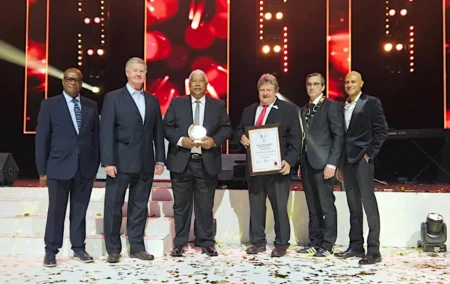
[Image: The DA-majority municipality of Swartland took top honours at the Municipal Performance Awards on 1 October 2026, hosted by Ratings Afrika, the South African Property Owners Association, and the Banking Association of South Africa. Swartland Municipality]
The views of the writer are not necessarily the views of the Daily Friend or the IRR.
If you like what you have just read, support the Daily Friend