

South Africa’s political landscape fundamentally changed at last week’s municipal elections.
Fresh coalition possibilities are now open as the decline in ANC support continues at pace, and as the party’s former voters move to other parties instead of not voting. The ANC lost votes to the DA and ActionSA, and to many of the smaller parties. There was a swing away collectively from the parties that believe in redemption with a National Democratic Revolution: the comrade parties – the ANC, and its breakaways, MK, the EFF and the Communist Party.
Parties of the centre-right that are committed to reform and free-market policies are a lot stronger in the Gauteng metros.
Can this new configuration in our politics bring about stable coalitions that are able to carry out reforms to avert the municipal crises across much of the country?
The task of negotiating coalition arrangements is mammoth. Last week in 127 of the country’s 213 municipalities, no single party was able to achieve a majority. The big test for reform coalitions is in the Gauteng metros of Johannesburg, Tshwane and Ekurhuleni, where the Democratic Alliance is now the largest party, followed by ActionSA and the ANC.
Can Helen Zille lead a stable, reform-minded coalition to turn Johannesburg around?
Given its size and the scale of the city’s financial and service delivery failure, Johannesburg could be a proving-ground for DA-led reform and turnaround efforts for the country. After all, it is likely to face the same problems in building alliances and similar fights against patronage networks and the unions on a national scale.
There are three basic permutations for coalitions in the Gauteng metros. The first is a DA-ANC coalition, the second a DA-ANC-ActionSA alliance, and the third is a deal that excludes the DA and brings together most of the others with council seats. A DA-Action SA deal does not have the numbers, if it does not obtain ANC or smaller party support.
A DA deal with rats and mice parties excluding radicals, the Patriotic Alliance and some others would not give the DA the numbers for a majority.
The third would leave the DA in opposition, but all would not be lost. Zille’s campaign has propelled the party’s brand in Johannesburg and firm opposition could put the DA in a powerful position for national elections in 2029 and municipal polls in five years’ time.
The Johannesburg Council has 270 seats, which means any coalition will need at least 136 seats to remain in power. Last week the DA won 91 seats on the Council, the ANC won 63, and ActionSA, 43. That means that together, the ANC and DA would have a comfortable majority with 154 seats. If they reached a deal, the DA and ActionSA would be two seats short of a majority and would require support from a third party.
Manageable and stable
The general rule is that the smaller the number of parties in a coalition, the more manageable and stable the arrangement. With ActionSA leader Herman Mashaba demanding that the DA drop Helen Zille in Johannesburg and Cilliers Brink in Tshwane as their Mayoral picks, a deal with this party is a non-starter. Besides, the DA should have learned that ActionSA is a very difficult coalition partner and should be wary of any deal.
Rejecting a deal with ActionSA might weaken the DA’s hand in talks with the ANC and others, as it would demonstrate that the party has no better alternative. But rejecting ActionSA’s demands at the outset lays down a necessary marker. That is a pity, as ActionSA and the DA are centre-right parties that believe in the free market. And the DA should also continue to say no to deals with the EFF, MK and the Communists.
What sort of deal could the DA reach with the ANC?
The two are certainly not like-minded parties, which is usually a key condition for a stable coalition. If the DA is to achieve its goals, it must rid the city of the ANC legacy of patronage, corruption and mismanagement.
An ANC that has been damaged at the polls has a narrow range of options. The party knows that it would face heavy demands if it did a deal with other comrades and small parties. In any deal with the ANC, the DA would insist on control over key budgetary matters, tight supervision of all procurement, and replacement of ANC cadres in senior positions. Zille has said she will ensure public transparency of procurement if she becomes Mayor.
There would also have to be an agreement that the R10 billion wage settlement with the unions made before the election is scrapped. Further, there could be an agreement that the remit of the Madlanga Commission be extended to look into Gauteng corruption.
Agreeing to this sort of DA deal could mean that the ANC could convincingly say to voters that it made terrible mistakes, but is now part of Johannesburg’s turnaround. The downside for the ANC leadership is that they would be accused of selling out to white capitalists to remain in power. But the pragmatists might be thinking that they have already lost the radicals to the three breakaway parties, so they do not have much to lose from such a deal with the DA.
Pressure for such a deal is likely to come from organised business, which would give help to a new pragmatic Mayor in Johannesburg. The upside is enormous for residents.
Negotiations over coalition arrangements have been centralised and put in the hands of the big party bosses. The Mayoral candidates are not involved in coalition talks. We will never know what the party bosses are trading to make deals, as these will all be backroom deals.
This would have merit if the sole rationale was to ensure that the wider interests of the party are met, rather than those of the mayors and the councillors who want to be in power and would give too much away. But the drawback is that the deals might lack legitimacy because they are secret and will leave voters with a sense of betrayal.
Secret deals
The problem with secret deals of this sort is that they are likely to raise the suspicion of voters and will lack legitimacy. We have a right to know why: for instance, why the DA might be prepared to give up certain positions such as Mayor in exchange for others, as part of a global deal?
A final written agreement that is made public does not solve the problem, as we do not know what the big trades were. And there is no guarantee that these secret global deals will necessarily result in stable and reform-minded coalitions.
The most compelling reason that reform across Gauteng could be in the offing is that the municipal crisis is so deep that the newly elected council has no option other than to address the problem. The council has run out of money, and the National Treasury is unlikely to give it further slack with an election five years away.
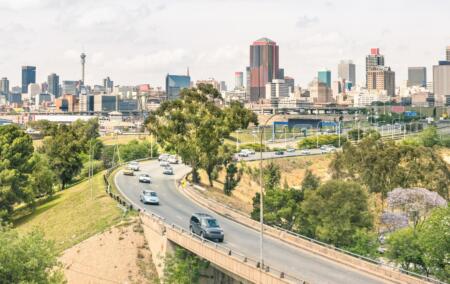
[Image: by MirkoVitali]
The views of the writer are not necessarily the views of the Daily Friend or the IRR.
If you like what you have just read, support the Daily Friend