

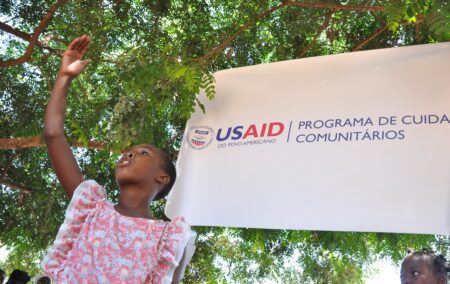
In a Mozambican village, a clinic once bustling with USAID-funded nurses lies abandoned, its shelves bare of HIV drugs that sustained 389,000 lives. Nearby, Russian advisors broker deals with Maputo’s elite, securing stakes in the country’s $100 billion natural gas fields.
This scene encapsulates a stark truth: the termination of the US Agency for International Development (USAID) was a geopolitical blunder, ceding a critical chess piece in America’s global strategy. USAID’s dual role: winning hearts and minds through humanitarian aid while gathering economic and military intelligence, was invaluable, despite its inefficiencies.
Scrapping it outright, rather than reforming it, has handed rivals like Russia a free move on the geopolitical chessboard, nowhere more evident than in Mozambique. The US must revive USAID under new management to reclaim its influence, or risk further losses in the global contest for power.
Soft-power linchpin
USAID was America’s soft-power linchpin, blending humanitarian impact with strategic insight.
In Mozambique, its $664 million annual budget in 2023 fueled programmes that countered poverty − 3% of Mozambicans live on less than $1.90 a day − and curbed insurgent recruitment in Cabo Delgado, where ISIS-linked groups have displaced 800,000 people since 2017. Its health initiatives, like PEPFAR’s $400 million HIV programme, built goodwill, tying communities to Western values. Simultaneously, USAID’s 100–150 staff, coordinating with local networks, gathered critical intelligence. They tracked Mozambique’s gas boom, aiding US firms vying for contracts, and monitored insurgent movements, bolstering counterterrorism efforts.
This dual role made USAID a force multiplier, amplifying US influence in a resource-rich nation at the crossroads of Africa’s future.
Yet USAID was not flawless.
Its $40 billion global budget suffered from bureaucratic bloat and vague objectives. In Mozambique, overlapping education and health programmes lacked measurable targets: say, reducing poverty by 10% or insurgent activity by 20%. This muddled strategy diluted return on investment (ROI), fueling arguments for its termination under the Trump administration’s “America First” policy.
Gutted
By 2025, 90% of USAID’s programmes were gutted, slashing its budget to $3 billion and leaving 83% of contracts frozen. Critics claimed this saved $37 billion: 0.1% of the US GNI, but the cost was negligible compared to the strategic losses. USAID’s inefficiencies demanded reform, not eradication. A leaner agency with clear, outcome-driven goals could have preserved its geopolitical edge.
The fallout in Mozambique is a case study in strategic folly.
Russia, capitalizing on the vacuum left by USAID’s withdrawal, has deepened its influence in Mozambique since 2019, leveraging Soviet-era ties. It forgave 95% of Mozambique’s $40 million debt and secured energy deals, including Rosneft’s $20 billion stake in the Rovuma Basin gas fields.
In 2019, Russia briefly deployed Wagner Group mercenaries to combat insurgents in Cabo Delgado, but their failure − marked by a deadly ambush that killed at least seven, some beheaded − led to their withdrawal within months. Rwandan forces stepped in to secure strategic assets, stabilizing key areas. While Russia has no active military presence now, recent talks, including those during President Nyusi’s 2023 visit to Moscow, suggest a potential military cooperation agreement, possibly including a naval base.
Cost of America’s retreat
This strategic pivot exploits USAID’s absence, underscoring the cost of America’s retreat.
Without US aid, local NGOs have collapsed, and communities, desperate for support, are swayed by Russian promises of stability. Moscow’s approach is surgically precise: targeted investments and security assistance that project reliability where the US now appears fickle. The absence of USAID’s 100 to 150 staff and $664 million in annual programmes, disrupting $1.5 billion in total commitments, has left Washington blind to local dynamics, weakening its ability to counter Russia’s advances or compete in Mozambique’s lucrative gas market.
The broader implications are dire.
Mozambique’s tilt toward Russia is part of a larger pattern.
Meanwhile, China’s $121.8 billion Belt and Road investments in 2024, including $29.6 billion in Africa, amplify the stakes, as rivals fill the void left by US retreat. The abrupt end of USAID signals to allies that American support is unreliable, pushing nations toward authoritarian rivals who offer consistency, however self-serving.
Rivals gain
In Cabo Delgado, the insurgency festers without USAID’s development programmes, which once addressed the root causes of poverty and unemployment. This instability threatens regional security and US interests, from counterterrorism to economic access.
The cost of termination far outweighs the savings, as rivals gain strategic ground for a fraction of USAID’s budget.
Critics of USAID argue its inefficiencies justified its end.
They point to redundant programmes and a lack of accountability, claiming the agency’s humanitarian efforts were a luxury misaligned with US priorities.
But this ignores USAID’s strategic value.
Its intelligence-gathering and soft-power projection were cost-effective compared to military interventions or lost economic opportunities. Termination was a sledgehammer where a scalpel was needed. New management could have streamlined operations, setting clear metrics; like stabilizing 50% of Cabo Delgado’s displaced population or securing 20% of Mozambique’s gas contracts for US firms. Reform would have preserved USAID’s dual role while maximizing ROI.
The US cannot afford to cede more ground.
Congress must revive USAID under new leadership, with a mandate for clear objectives and rigorous outcome assessment. In Mozambique, targeted investments in health, education, and counterterrorism could counter Russia’s influence while rebuilding trust.
Continued slide in global influence
A reformed USAID would prioritize strategic regions, aligning aid with US economic and security goals. The alternative is a continued slide in global influence, as rivals exploit America’s absence.
Mozambique’s shift toward Russia is a warning: soft power is not a luxury but a weapon in the geopolitical arsenal.
Restoring USAID is not just about aid. It’s about securing America’s place on the global chessboard.
[Image: https://www.flickr.com/photos/usaidmozambique/12500554925/]
The views of the writer are not necessarily the views of the Daily Friend or the IRR.
If you like what you have just read, support the Daily Friend