

Universities have traditionally served as intellectual and academic spaces, where every individual is free to exercise academic freedom, engage in open and critical debate, and participate in intellectual contestation without prejudice.
Globally, institutions of higher learning are regarded as intellectual hubs that play a central role in shaping society, prescribing solutions to socio-economic and political challenges, and enabling us to make sense of the world in which we live.
UCT has subjected itself to exploitation for ideological and political domination by one group over another. UCT and other universities should never allow themselves to serve particular political ideologies or be used as vehicles to advance narrow political interests. This only serves to discredit institutions that have taken many years to build and establish as respected centres of learning.
UCT and other universities around the country should be used to address the problems faced by their own communities on a daily basis; that is why they exist. It is immature for UCT to enter a political space that has been harmful to the prestigious brand that was built by generations of South Africans.
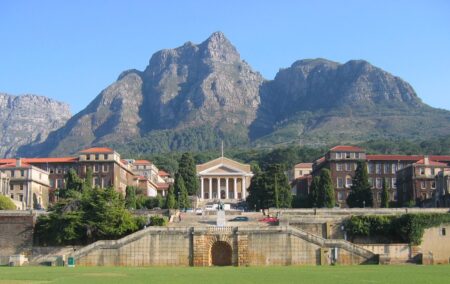
The chickens have finally come home to roost for the University of Cape Town (UCT) because of its past ideological positioning, which sought to adopt a firm and strong political stance against Western linkages and associations.
More radical approach
Having taken a more radical approach, UCT ignored warnings, as it adopted anti-Israeli motions that would surely not contribute towards resolving the Israel-Palestine impasse: a futile but costly exercise for academics, the research community, and beneficiaries of external funding programmes, most of which originate from the United States.
According to UCT management, the university is administering more than 178 US federally funded awards, comprising direct awards to UCT and sub-awards from collaborating institutions in the United States. The US, under the administration of Donald Trump, has terminated financial aid and funding programmes since early 2025. Between 2025 and 2027, UCT is set to lose close to R1.67 billion, if nothing is done to reinstate these programmes.
It was a bitter pill to swallow when the Portfolio Committee on Higher Education recently scrutinised the university’s management over the loss of more than R250 million in funding, which will affect research projects, students and academics. This loss resulted from the ignorance of the wannabe politicians serving on the university’s Council, who have hijacked the institution to pursue their own nefarious political agendas. These have nothing to do with the university community, the people of Cape Town, South Africa, or even the African continent.
A DA Member of Parliament, Karabo Khakhau, made a compelling point when he challenged the university management, arguing that its anti-Israel agenda and focus on Gaza are responsible for the ongoing funding cuts, the effects of which will be felt by South African students at UCT who have, for years, benefited from these study programmes that contribute to the development of South Africa and the African continent across all sectors of society.
Selfish
It is selfish of those academics pursuing an anti-Israel agenda. Their children do not need bursaries or scholarships to complete their studies because they can afford to pay for them through the generous salaries they receive from the university. Their responsibility should be to preserve and protect the brand associated with the university rather than using it as an ideological instrument.
It is a given that most, if not all, Western nations are among Israel’s strongest allies, which means they would be displeased by decisions taken against their ally. Why would the UCT Council ignore this simple reality by picking unnecessary fights with countries that have been partners for so many years, and for what exactly? What is their political endgame?
It should have been known to the academics who make up the Council that there would be a reaction from funders to their unpopular ideological positioning and interference in foreign conflicts. As already stipulated in this article, these funding cuts are not limited to scholarships, bursaries and research programmes.
They will also affect patients and participants, most of whom are poor South Africans, the broader university community, and medical research and healthcare across the country. This is a serious blow to primary healthcare in the country because of an obsession with Israel.
If those serving on the UCT Council truly have the best interests of the people of Gaza at heart, they should seek more direct ways to contribute to the preservation and development of Gaza and the upliftment of its communities.
I have seen academics from the Middle East working together with universities and scholars in Gaza to establish peace initiatives, water and environmental projects, entrepreneurship and agricultural programmes, and many other initiatives that get people to better understand the issues on the ground and the realities of the situation.
This is better than relying on narratives “fabricated” by some in the mainstream media.
[Image: https://upload.wikimedia.org/wikipedia/commons/0/07/UCT_Upper_Campus_landscape_view.jpg]

The views of the writer are not necessarily the views of the Daily Friend or the IRR.
If you like what you have just read, support the Daily Friend