

El Salvador has achieved something extraordinary in its fight against violent crime. With South Africa recording around sixty murders every day, the attraction of similarly drastic measures is obvious. But would we really want to entrust such powers to our own government?
A colleague suggested recently that South Africa ought to do what El Salvador has done to tackle its crime problem. He was referring, of course, to President Nayib Bukele’s crackdown on criminal gangs, which has seen the Central American country transformed from one of the most violent places on earth into one with an officially reported murder rate below that of the United States.
I found the suggestion rather appealing, at least initially. South Africa’s violent crime problem is so severe, and has been so for so long, that it is difficult not to look favourably upon someone who appears to have done something about a similarly dreadful situation. Particularly when the results are as dramatic as those coming out of El Salvador.
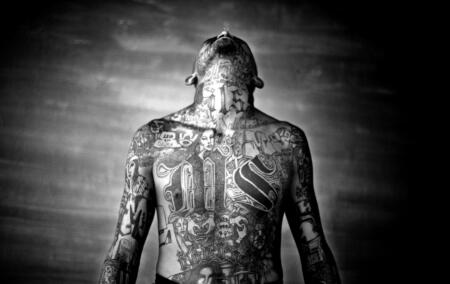
In 2015, El Salvador recorded more than 100 homicides per 100,000 inhabitants. Entire neighbourhoods were effectively controlled by gangs, particularly MS-13 and Barrio 18, whose members terrorised communities, extorted businesses, and killed with extraordinary impunity.
Going to work, opening a shop, or sending children to school could involve negotiating the presence of violent criminals. By 2025, the government reported just 82 murders for the entire year, equivalent to 1.3 per 100,000 people.
There are legitimate questions about the accuracy of these figures, which I will come to, but the improvement in security is real. InSight Crime, hardly an uncritical supporter of Bukele, acknowledges that the crackdown has effectively dismantled the country’s two principal gangs. That is quite an achievement.
Bukele took office in 2019 and, in March 2022, introduced emergency measures following an outbreak of gang killings. Certain constitutional protections were suspended, sweeping arrest powers were introduced, and more than 90,000 people have since been detained. The government built the enormous Terrorism Confinement Centre, and images of heavily tattooed gang suspects, stripped to their shorts and crowded together under armed guard, have become familiar. Bukele plainly understands the value of the spectacle.
International discussion of his methods tends to focus on the human rights implications, and understandably so. But what of the Salvadorans who no longer have to pay protection money, or worry quite so much about being murdered in their own neighbourhoods?
The economic benefits also matter. A 2025 IMF report found that the proportion of Salvadoran businesses identifying crime, theft, and disorder as major or very serious obstacles had fallen from almost 50% in surveys conducted between 2016 and 2018 to 14% in 2023.
Tourism has expanded considerably. Foreign investment remains relatively weak, so we should not exaggerate the transformation, but it is hardly difficult to imagine what a comparable improvement in public safety could mean for South Africa, especially for people who cannot simply retreat behind high walls and private security.
Complications
Now, before we get carried away with Bukele, there are complications. El Salvador’s homicide rate had already fallen to approximately 18 per 100,000 by 2021, before the 2022 crackdown.
The United States Treasury has accused senior Salvadoran officials of negotiating arrangements with gang leaders to suppress violence, allegations denied by Bukele’s government.
Official homicide figures also exclude certain categories of deaths, including those in prison and killings by police. None of this means the crackdown did not work. It does mean that the story is more complicated than a president suspending rights, locking up criminals, and solving crime.
How much of the improvement required extraordinary powers, and how much might have been achieved through determined policing and intelligence work? We need to establish that before suggesting anyone copy his methods.
Which brings us to South Africa.
Between April and June 2026, 5,427 people were murdered here. Approximately sixty every day, or one every 24 minutes. During the same period, 9,201 rapes were reported to the police, more than one every fifteen minutes, and we know that rape is substantially underreported.
The murder figure was 5.9% lower than in the corresponding quarter of 2025, which is an improvement worth acknowledging. But these numbers remain appalling.
I sometimes wonder whether our familiarity with them has made us incapable of appreciating just how dreadful they are. We receive the quarterly figures, ministers announce renewed interventions, and life goes on. Except, of course, for the thousands of people whose lives have ended.
It gets worse.
In October, Parliament’s Portfolio Committee on Police reported a murder detection rate of just 9.5%, against a target of 60%, although it requested clarification of how the figure was calculated.
Detective services met only nine of their 22 annual performance targets. Detection and conviction rates are different measures, but the relationship is obvious enough: if the police cannot identify a murderer, there is little prospect of convicting him.
South Africa has no shortage of laws against murder, rape, or robbery. Enforcing them is another matter. One imagines that the prospect of a lengthy prison sentence loses some deterrent value when a perpetrator has reasonable grounds to believe he will never see the inside of a courtroom.
Section 12(1)(c) of our Constitution guarantees everyone the right to be free from violence from either public or private sources. Section 7(2) requires the state to respect, protect, promote, and fulfil constitutional rights. In the 2001 Carmichele judgment, the Constitutional Court recognised that the state may have a positive obligation to protect people against violent crime. The Constitution, in other words, is concerned with protecting citizens from criminals as well as protecting individuals from the state. This seems obvious when stated plainly, but I am not convinced it receives nearly enough attention.
Fundamental to democacy
We quite properly devote considerable attention to the rights of arrested suspects and prisoners. The presumption of innocence, legal representation, protection from arbitrary detention, and freedom from torture are fundamental to a democracy.
But consider the woman who cannot walk safely through her neighbourhood, the business owner paying protection money, the elderly couple living behind electric fences, and the couple a few streets away who cannot afford even basic security. Their rights matter too, as do those of the family whose son has been murdered by someone with previous offences.
I find it odd that a proposed infringement of a suspect’s rights can rightly prompt an urgent constitutional debate, while the state’s continuing failure to protect thousands of citizens from violent crime is discussed as though it were an unfortunate administrative problem.
The Constitution cannot guarantee that every crime will be prevented. It does, however, place obligations on government to take reasonable measures to protect people.
And this is where the Salvadoran example becomes tempting. At what point does a society decide that enough is enough? I am inclined to think there must be circumstances in which extraordinary threats justify temporary restrictions on liberties that would be unacceptable under ordinary conditions.
The familiar expression about breaking a few eggs to make an omelette comes to mind, although it is an unpleasant metaphor when the eggs are people. Still, public policy involves weighing competing interests, accepting risks, and making decisions whose consequences fall unevenly upon different groups. If an intervention could save thousands of lives, restore security to communities, and generate substantial social and economic benefits, surely the possibility deserves serious consideration.
That argument becomes rather less comfortable when we consider whose liberty might be sacrificed. Imagine an innocent man arrested because he lives in a gang-controlled neighbourhood, has a particular tattoo, or has been identified by a corrupt officer as an associate of a criminal organisation.
He might spend years in prison, perhaps without a meaningful opportunity to challenge the accusation. He might be assaulted or tortured while there. It is easy enough to accept certain sacrifices in pursuit of the greater good when somebody else is making them.
I suspect I would feel rather differently if the person concerned were someone close to me.
These are hardly hypothetical concerns in El Salvador.
Human Rights Watch has documented mass trials involving hundreds of defendants, weak evidence, and limited opportunities to challenge accusations.
Amnesty International has reported arbitrary arrests, torture, and deaths in custody.
Raises questions
In October 2026, Bukele discussed conditional release for certain detainees; subsequent clarification indicated that approximately 10,000 alleged gang collaborators were under review, with roughly half potentially eligible for earlier release. This does not establish their innocence, but it raises questions about the breadth of the original arrests. I would find it difficult to tell a wrongfully imprisoned person that his suffering was an unfortunate consequence of an otherwise successful policy.
South Africa’s crime problem is different, too. El Salvador’s violence was closely associated with gangs exercising territorial control. We have such organisations, certainly, including gangs in the Western Cape, extortion syndicates, illegal mining networks, and organised robbery groups.
But much of our serious violence arises from interpersonal disputes, domestic abuse, and alcohol-related confrontations.
Acting Police Minister Firoz Cachalia has acknowledged the role of acquaintances and alcohol in many killings. Arresting thousands of gang members will not stop a drunken argument ending in murder, or a woman being assaulted in her own home. Even if Bukele’s approach were justified in El Salvador, it does not follow that it would work here.
Our Constitution already makes provision for emergencies. Section 37 permits a state of emergency when the life of the nation is threatened by specified circumstances and a declaration is necessary to restore peace and order. It provides for time limits, parliamentary approval, judicial review, and rights that cannot be suspended.
Whether South Africa’s crime levels satisfy that legal threshold is another question; horrific statistics alone do not settle it. Still, during the April-to-June quarter, a South African was murdered, on average, every 24 minutes, and the number of rapes reported was equivalent to roughly one every 14 minutes. How much worse must things get before we are willing even to consider measures that would ordinarily be unthinkable?
Perhaps we have already reached that point. I do not know. And yet, the more I thought about my colleague’s suggestion, the more I perceived a rather large problem: who would actually implement such a crackdown in South Africa?
The ANC, or more accurately, an ANC-led government of national unity acting through our police, intelligence, and criminal justice institutions does not have a record that inspires confidence. We have lived through state capture, corruption, political interference in appointments, and the deployment of party loyalists to positions for which they were not necessarily qualified.
Exploitation of institutions
The Zondo Commission documented the deliberate weakening and exploitation of institutions, including law enforcement and intelligence structures. Eskom and Transnet have borne the costs of corruption and serious mismanagement. There have been reforms, and many capable, honest people remain in the public service, but the broader record is there for anyone who cares to examine it.
Then there is the Madlanga Commission, investigating allegations of criminality, corruption, and political interference within the criminal justice system itself.
Its interim work has produced referrals for disciplinary action and criminal investigation involving senior officials. Those are not findings of guilt, and the final report remains outstanding. Yet these are the institutions we would entrust with exceptional powers.
It is quite an extraordinary proposition when you think about it. Our government has presided over the deterioration of important parts of the criminal justice system, and the proposed solution is to allow those institutions to detain people with fewer safeguards against error and abuse. What could possibly go wrong? We need not accuse the current government of planning to use extraordinary detention powers for intimidation or favouritism to recognise the risk.
And the difficulty does not end with the ANC. Suppose its government introduced these measures, used them competently, and dramatically reduced violent crime. Suppose the safeguards worked. Wonderful. What happens when another government takes office, inheriting the machinery and the precedent? It may have rather different views about who constitutes a threat to public safety. Would you entrust these same powers to the political party you distrust most? If not, the safeguards are inadequate.
Any such programme would require time limits, judicial oversight, parliamentary scrutiny, independent investigations of abuses, and remedies for wrongful detention. But these protections depend on the institutions enforcing them. And if our police struggle to investigate ordinary murders properly, why assume they would be particularly good at accurately identifying thousands of dangerous criminals under an emergency regime?
Perhaps we should begin by demanding that the state exercise the powers it already has with something approaching competence. Better intelligence, properly functioning detective services, forensic capacity, effective prosecution, witness protection, and sustained operations against organised criminal networks are hardly revolutionary ideas. None should require the suspension of basic safeguards.
Of course, demanding institutional reform is much easier than achieving it. We have been hearing promises about strengthening policing, improving investigations, and restoring accountability for decades. Meanwhile, the murders continue. So I remain reluctant to declare extraordinary measures illegitimate in every conceivable circumstance. South Africa’s levels of violence are intolerable, and I am still attracted to what El Salvador has achieved. But we have not established that the most troubling aspects of Bukele’s methods were necessary to achieve those results, much less that those methods would be effective or responsibly administered here.
Reasonable enough
My colleague’s suggestion sounded reasonable enough when we were discussing El Salvador’s remarkable fall in violent crime. I still understand its appeal. What I cannot get past is the prospect of placing extraordinary powers in the hands of a state that struggles to exercise its existing ones competently, and then hoping that those powers will always be used for the purposes we intended.
I would much rather see South Africa develop the capacity and determination to enforce its existing laws properly. That is hardly an exciting proposal, and after decades of promises about fixing the police, I can understand why people might be losing patience with it.
But I have yet to see a convincing argument that allowing our institutions to operate with fewer restraints would make them any better at catching criminals.
[Image: A member of the Mara Salvatrucha gang displays his tattoos inside the Chelatenango prison in El Salvador. https://www.flickr.com/photos/markarinafotos/3074777695]
The views of the writer are not necessarily the views of the Daily Friend or the IRR.
If you like what you have just read, support the Daily Friend