

Several months ago, something scandalous happened that in substance, if not form, broke a part of South Africa’s constitutional integrity, and yet it became a muted and ordinary part of the news cycle. What does our non-reaction to this event say about our democracy?
The fading interest in the January 2026 Iran naval exercise scandal – and the puzzling delays from the presidential panel meant to “investigate” the military’s open defiance of its “Commander-in-Chief” – might be further proof that South African democracy is fundamentally immature. Any healthy democracy would have reacted with more zeal to the soft coup or self-coup that gripped the state.
Soft coup
A so-called “soft coup” is not the classic seizure of the presidential palace by tanks and junior officers. It is the quieter, often bloodless displacement of civilian authority by parts of the state apparatus – most commonly the military – while the formal institutions of civilian government are left standing. The executive remains nominally in place, elections continue, the Constitution is not formally suspended, and the language of democratic legitimacy is retained.
What changes is the location of real decision-making power: Policy is unilaterally determined by those with the guns or the institutional leverage, and the civilian leadership either acquiesces or is reduced to a decorative role.
“Will for Peace”
Something uncomfortably close to this appears to have occurred in South African waters in January.
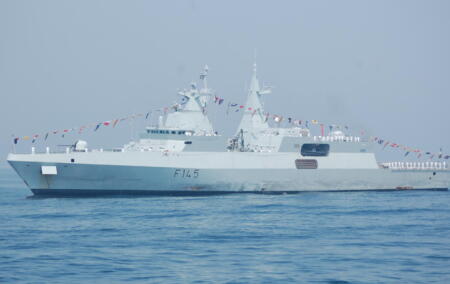
Three Iranian warships took part in Exercise Will for Peace off False Bay, despite Cyril Ramaphosa’s (ostensible) order that they be excluded or relegated to observer status. The order was conveyed, acknowledged at senior levels, and then, seemingly, simply ignored.
Defence minister Angie Motshekga first announced a board of inquiry that was supposed to report within days. When that did not materialise, the Presidency took the matter over in late February, appointing a panel under retired judge Bernard Ngoepe and directing it to report within one (!) month.
By July, Ramaphosa confirmed to Parliament that he had still not received the report.
The timeline has now stretched to six months, with further extensions available on “compelling cause”. Democratic Alliance (DA) MP, Chris Hattingh, has correctly noted that the Constitution vests supreme command of the South African National Defence Force in the President and that basic command-and-control facts should have been established within days, not months.
I would argue within mere hours.
By right, there should never have been a panel or board of inquiry in the first place. Ramaphosa either gave the order or he did not.
If he did give the order, then he knows he did – he does not need to establish yet another Ramaphosite task force. The military’s refusal to implement the order would thus be open insubordination that necessarily invites immediate consequences: the dismissal of those responsible, starting with the relevant service chiefs.
That none of this happened implies a variety of soft coup whereby even the hopelessly weak South African military has some kind of leverage over Ramaphosa and can now freely dictate public policy.
The total lack of consequences for Chief of the SANDF General Rudzani Maphwanya’s unauthorised though no less apparently “official” visit to Tehran in August 2025, is further evidence of this.
Self-coup
If Ramaphosa did not (sincerely) give the order despite informing the world that he in fact did, we might have something more nefarious than a soft coup on our hands: a self-coup.
Under these conditions, the “defiance” by the South African Navy was not genuine insubordination at all, but a carefully calibrated performance designed to maintain plausible deniability with both Washington DC and Tehran.
On this reading, Ramaphosa wanted the Iranian ships to remain while simultaneously needing to signal to the United States that he had tried to exclude them. The military’s public non-compliance would then serve as an alibi: Ramaphosa could claim, with a straight face, that he had issued the instruction, while the practical outcome – Iranian participation – proceeded undisturbed.
The subsequent panel “investigation”, then, is nothing but another layer of delay and contrived accountability rather than a genuine search for truth.
To be fair, whether this fully constitutes a self-coup in the strict sense is debatable.
Classic self-coups involve an incumbent leader illegally expanding his own formal powers against other branches of government. What is described here might be closer to the deliberate corruption of the civil-military relationship – the use of a superficially insubordinate military as an instrument of dual messaging and public policymaking.
But it would be no less corrosive: It turns the constitutional principle of civilian control of the armed services into a prop in a foreign policy pantomime.
The underlying calculus is not difficult to reconstruct, of course.
While he and his fellow African National Congress (ANC) comrades are singularly responsible for the rupture in relations with the United States, Ramaphosa understands that the relationship still yields certain benefits that he would rather retain. Access under the African Growth and Opportunity Act, investment flows, and diplomatic access still matter to the ANC to some (insufficient) degree. And yet, they also display a persistent, almost inexplicable attachment to Tehran.
The solution, if the managed-defiance hypothesis is correct, was elegant in its pure cynicism: Ramaphosa tells the Americans, publicly and through official channels, that Iran had been ordered out, but he tells the Iranians, privately, that the public statement was theatre and they should proceed as planned.
South Africa could then claim to have attempted to do the right thing while delivering the opposite result. The military’s role was simply to absorb the institutional blame.
Pretend-democracy
Either way – genuine insubordination met with presidential weakness, or orchestrated dual messaging – the deeper indictment is not of Cyril Ramaphosa or the ANC. It is of the broader political culture that has allowed the episode to sink beneath the daily news cycle.
The Watergate scandal consumed American public life for years because the American political class and public still treated the constitutional order as something that could be broken. A president bugging the offices of his political opponents is a categorically less severe event than a military apparatus conducting foreign affairs independently of the elected branches in a supposed democracy.
Even South Africa’s own Infogate scandal of the 1970s generated sustained institutional and media heat. It led to the resignation of ministers and even eventually the Prime Minister, despite only being about a relatively tiny amount of money spent on a propaganda vehicle.
Nkandlagate? Guptagate? Even Phala-Phala attracted more hype.
All these are less severe than what happened in January. The Iran affair has been allowed to drift into the same bureaucratic limbo that swallows so many other constitutional breaches. That silence is itself is uncomfortable evidence of willing constitutional decay.
A pattern
Years ago, I wrote that loadshedding and the lockdowns had already exposed the paper-thin character of South African democracy.
The depth of our democracy, I argued then, does not really extend far past the five-yearly elections that decide the identity, not the policy, of government. When there is an opportunity to expand state power or escape accountability, the political elite acts without care of “mandates”. However, when there is a demand for the restraint of political power or the imposition of consequence, the elite suddenly discovers the necessity of process, consultation, and endless inquiry.
The Iran episode is the same pattern applied to the most fundamental relationship in any constitutional order: civilian control of the military.
A soft coup does not require tanks in the streets or the formal displacement of the civilian government. It can consist simply of the military unilaterally determining policy while the civilian facade remains intact – or in the case of a quasi-self-coup, of the civilian leadership deliberately using unconstitutional military autonomy to achieve ends it cannot openly own itself.
In either case the result is the same: the forms of democracy persist while the substance is absent.
South Africa has all the trappings: elections, a supreme constitution that solemnly declares the President to be the Commander-in-Chief and supposed parliamentary oversight. But we clearly lack the seriousness to treat the breach of civilian supremacy as the constitutional crisis it is.
The longer South Africans accept the quiet disappearance of this scandal into the machinery of delay, the more clearly, we confirm that the problem is not simply the supposed weakness of Cyril Ramaphosa or a rogue military. The problem is us.
[Image: Ricardo Teixeira]
The views of the writer are not necessarily the views of the Daily Friend or the IRR.
If you like what you have just read, support the Daily Friend