

A week ago today, I flew to Accra, capital of Ghana, with colleague Hermann Pretorius, head of Strategic Communications at the Institute of Race Relations (IRR), to attend Atlas Network’s 2026 Africa Liberty Forum, and present a case study of a project in South Africa supported by Atlas’s Champions for Growth initiative.
I was personally honoured to be asked to deliver the closing Toast to Freedom speech at the event in Accra*.
The Africa Liberty Forum draws civil society organisations from across the continent whose cause for advocacy entails advancing and defending classically liberal ideals. These are people who believe that limited government, individual freedom and free markets can right the many wrongs in our continent.
While the wrongs are plentiful and may eclipse even the most optimistic hope for a free and prosperous Africa in this lifetime, what is encouraging about the Africa Liberty Forum is the tenacity and the willingness of attendees to defend the ideals of liberty at the cost of their own personal safety.
One can easily be overcome by the fatigue of familiarity with the issues plaguing Africa (almost, it might seem, in perpetuity) and the creeping cynicism of doubting that Africa’s woes may ever end.
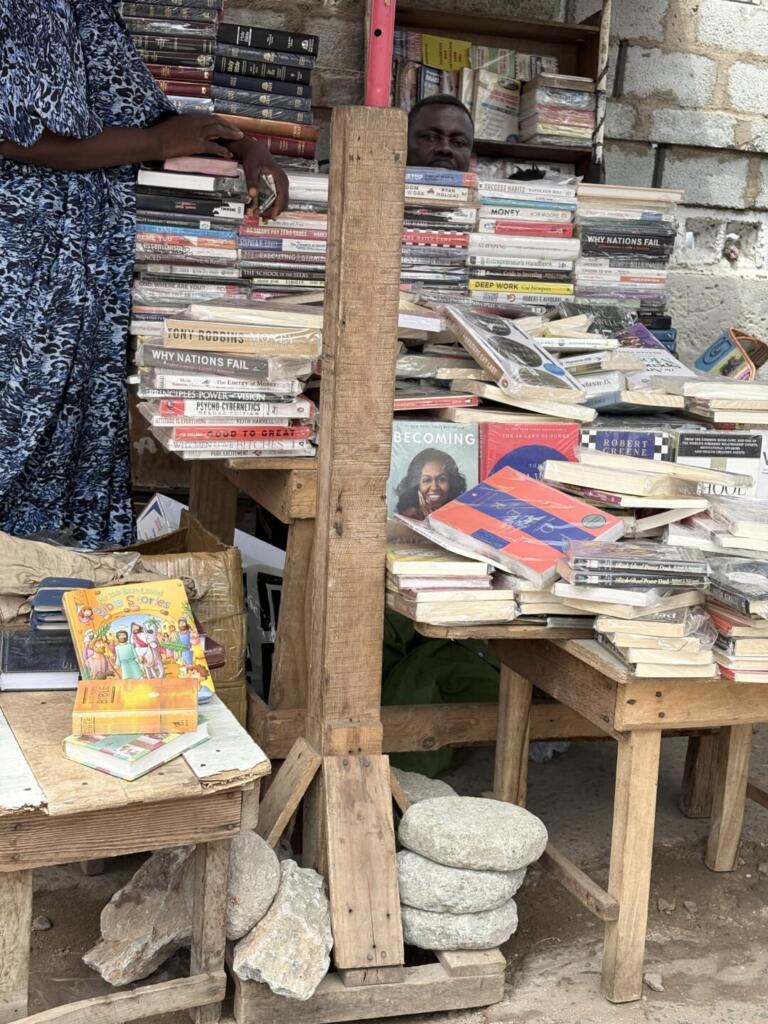
[Image: Bookseller in Accra. Makone Maja]
Of course, it doesn’t help that Africa competes for the attention of onlookers around the world when they are easily distracted by the wars taking place, and keeping our issues relevant and front-of-mind for outsiders makes it difficult to campaign. However, that the Africa Liberty Forum is a platform that provides for open, rigorous discussion of solutions by people who that are willing to place their lives on the line to defend ideas that could unlock the potential of this continent is an antidote to any flippant disregard of Africa, not least my own.
An established tradition at the Forum is that the previous year’s finalists for the Africa Liberty Award share best practices with attending organisations in Atlas’s orbit. As the IRR was the recipient of the 2025 Africa Liberty Award, the session facilitated a sharing of knowledge between us and organisations from other regions in Africa.
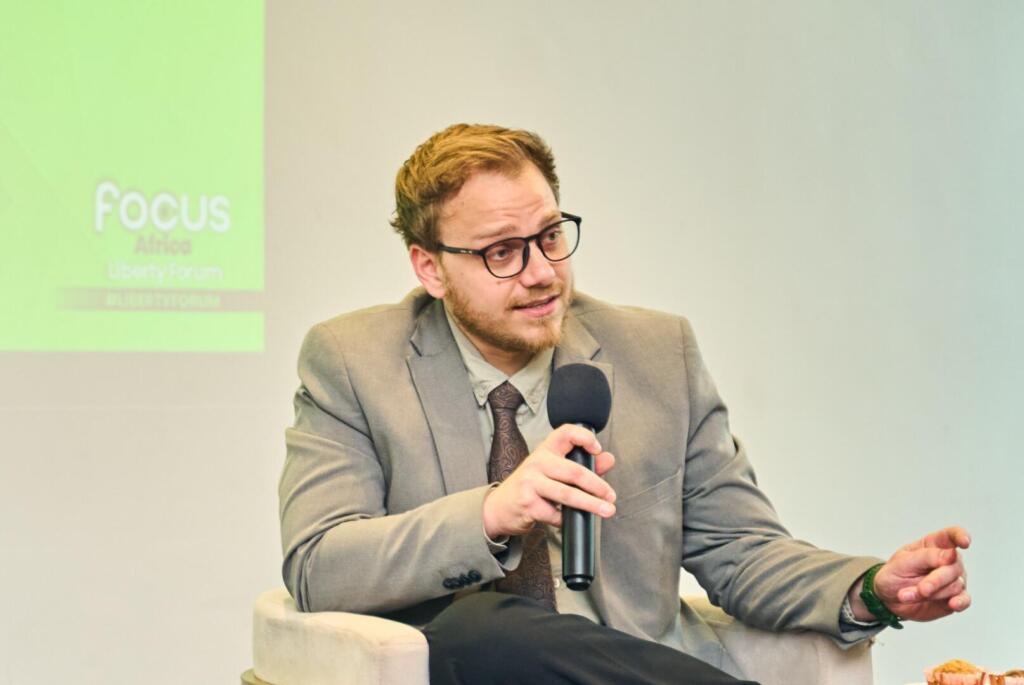
[Image: Hermann Pretorius presents the case study of the IRR’s Champions for Growth project. Atlas Network]
During the discussion on our case study, it became clear that among strategies required in expanding liberty in Africa were those designed to evade draconian laws implemented to quash peaceful anti-government initiatives.
Discussants asked questions about navigating censorious regimes such as Burundi’s, which jailed three teenage girls back in 2019 for defacing the portrait of their president.
Others wondered how they could overcome the weaponisation of financial institutions which the state used to maintain surveillance over activity it did not approve of. As recently as May this year, for example, the Ugandan government passed legislation targeting NGOs by clamping down on funds and donations made to them by foreign organisations. This law demonises anti-government movements by labelling them as “foreign agents”.
Participants discussed mechanisms of evading financial surveillance through Bitcoin. Some individuals had experiences similar to that of human rights activist Abdul Aziz Goma, an Irish citizen of Togolese heritage who was sentenced in Togo to eight years’ imprisonment in 2018 for sheltering student protesters.
The Ugandan government in particular takes a page out of the apartheid government’s book with the latter’s Affected Organisations Act of 1974. The Affected Organisations Act enabled the government to cut off foreign funding received by political and civil society groups to quash swelling internal anti-apartheid opposition. The IRR was among the groups that were targeted by this Act. While the African National Congress was already banned at this point, had it not been, it would typically have been among those who found themselves being “affected” by this law.
In this light, the ANC’s silence on Uganda, and the silence of other liberation parties – when they are not the ones abusing their citizens and withholding their freedoms – is simply contemptible.
The ANC turns a blind eye when African governments do to their citizens what the apartheid government did to them. It is especially notable since the party likes to pretend to care about peace and freedom to the rest of the world. And let’s not forget that weeks before Zimbabwean President Emmerson Mnangagwa extended his presidential term, he was seen enjoying the company of a seemingly jolly and amenable President Cyril Ramaphosa at his farm.
The ANC and other local freedom-fighting (or freedom-loving?) parties, past and present, should care about issues on the continent not only because they are an injustice, and amount to gross human rights violations against fellow Africans, but because these violations become a matter of our country’s national security. Large, unaccounted for waves of immigration are a destabilising force in South Africa. Low levels of economic growth constrain employment opportunities and reduce resources. Increasing intolerance of illegal immigration – and, in some extreme cases, immigration altogether – only adds fuel to the fire.
South Africa’s problems are many, but are modest compared to those being faced in other regions in Africa.
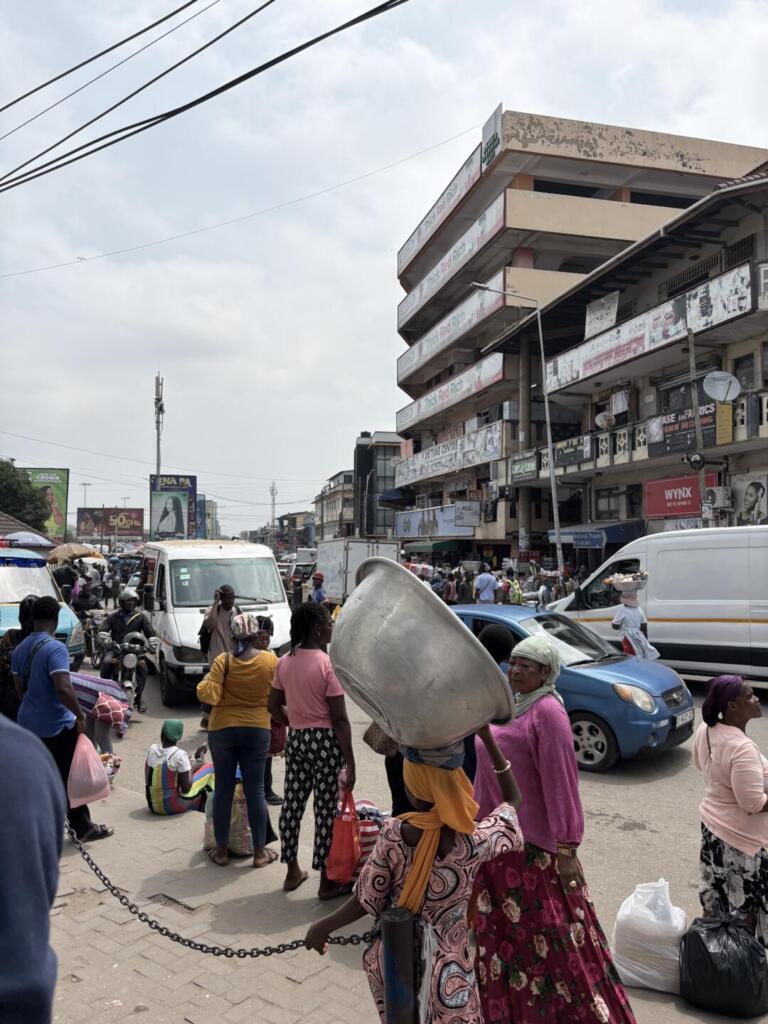
[Image: Downtown Accra. Makone Maja]
We are able to exercise the ultimate accountability mechanism of relatively free and fair elections. Our rule of law is not entirely useless. We have managed to convict a former president, our current president faces impeachment proceedings, and senior government officials in law enforcement institutions are currently being investigated – some have been arrested – for their alleged wrongdoings. The rule of law could be stronger in convicting senior government officials for fraud or theft or other crimes but despite this, we certainly enjoy the benefits of having a far more consolidated state with established and resilient governance institutions.
The courage of those who experience and confront tyranny across the continent challenges us to get over the comforting certainties of our own Africa fatigue … and remind ourselves what a privilege it is to be South African.
*Finally, as promised, here is the text of the Toast to Freedom speech I was honoured to be asked to deliver at the closing of the event in Accra.
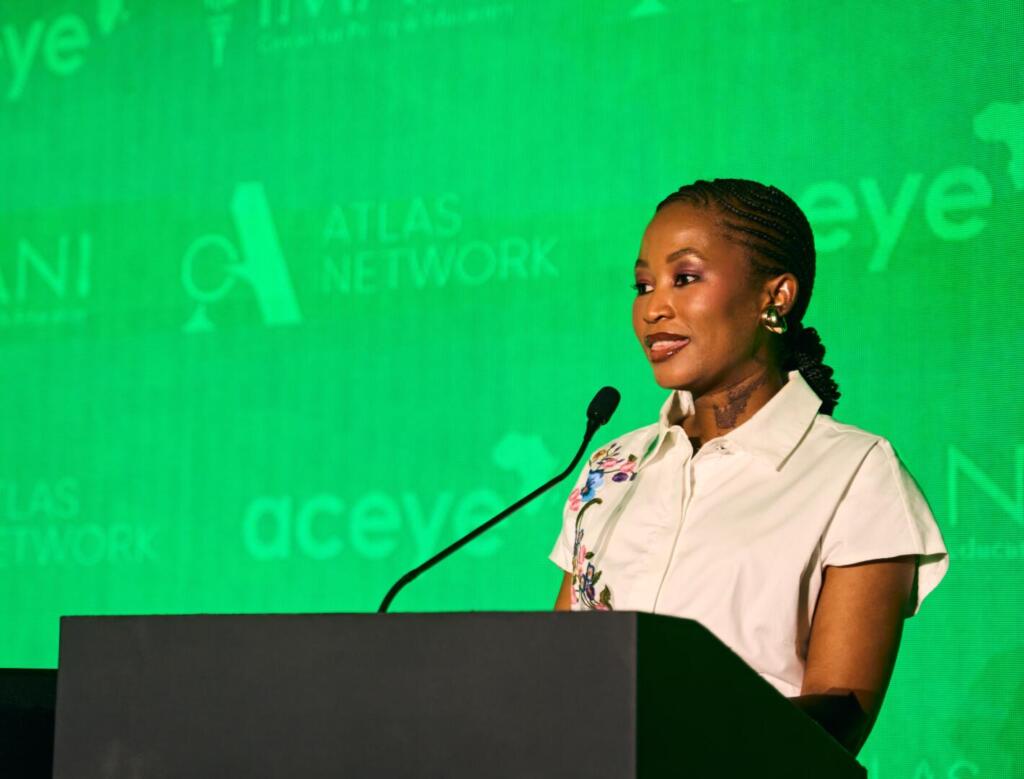
[Image: Makone Maja delivers the Toast to Freedom speech in Accra. Atlas Network]
Ladies and gentlemen, it is a privilege to deliver the Toast to Freedom at Atlas Network’s 2026 Africa Liberty Forum. The occasion of this toast to freedom is not only marked by all of you who are here tonight, who are bastions of freedom in your home countries, or the projects you have undertaken to advance the cause for liberty across Africa; it is also marked by the country we’re in – which itself was a catalyst to the cause of freedom in Africa – the great Republic of Ghana.
On my way here I couldn’t help but reflect on the remarks the founding father of Ghanaian independence, Kwame Nkrumah, made when he declared that “the independence of Ghana is meaningless unless it is tied to the total liberation of the entire African continent”, and the fact that nearly 70 years since his proclamation, Africa’s independence and freedom continues to hang in uncertainty.
For many of us the quest for basic civil liberties persists. In too many regions across Africa military rule replaced colonialism, patronage supplanted equal access to opportunity and self-enrichment disguised as community development runs rampant.
Attaining genuine economic freedom is thwarted by the undermining of property rights, perpetual political instability, censorship, and greater centralisation of power by governments motivated mainly by their own self-interest.
We may be tempted to roll our eyes as all these problems we are all too familiar with are listed, but the reality is that for some of you in this room, confronting these oppressive structures has come with a very real personal risk. Your courageous pursuit of realising both political and economic freedom in Africa is why I would like to leave you with these parting words as we bring this conference to a close. The words are Nkrumah’s call for courage.
He said: “Countrymen [I say fellow Africans] the ask ahead is great indeed and heavy is the responsibility and yet it is a noble and glorious challenge – a challenge which calls for the courage to dream, the courage to believe, the courage to dare, the courage to do, the courage to envision, the courage to fight, the courage to work, the courage to achieve – to achieve the highest excellence and the fullest greatness of man. Dare we ask for more in life.”
This gives me the perception that the vision for Ghana’s independence was not that it was some final destination, but a stepping stone to its liberty, and liberty on this continent. And having listened to all the presentations and insights you shared this week, I am confident that with you at the helm, his declaration of an independent Ghana and Africa is not dead because his call for courage is made manifest in you all.
It is made manifest in:
- Citizen Heaven Benimana in Burundi’s Centre for Development and Enterprises Great Lakes;
- John Mustapha in South Sudan’s Students’ Organization for Liberty and Entrepreneurship;
- Zain Babana in Mauritania’s Freedom and Citizenship Association;
- Juliette Sseguya in Tanzania’s Liberty Sparks; and
- John Mugabi (who allowed me to share in his absence) of having to flee persecution by the Ugandan state after being wrongfully targeted.
It is made manifest in every one of you.
To courage,
To freedom; and
To an Africa whose greatest victories are still ahead of her.
[I was privileged a year ago to receive on behalf of the IRR the prestigious Atlas Network 2025 Africa Liberty Award at a gala event in Nairobi. This award was given for our Champions for Growth project, which includes the publication of eight Blueprint for Growth policy papers that lay out concrete steps to lift the country’s growth rate. The award recognises “the region’s most outstanding policy accomplishments championing individual rights and economic freedom”. The IRR was one of three finalists, alongside Ghana’s Africa Centre for Entrepreneurship and Youth Empowerment (ACEYE) and Tanzania’s Liberty Sparks.]
[Image: Bookstall in downtown Accra. Makone Maja]
If you like what you have just read, support the Daily Friend