

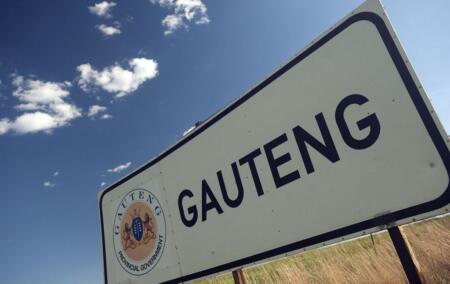
South Africa’s rural provinces are experiencing rapid out-migration – people moving elsewhere – as their local economies endure high unemployment, disinvestment, slowing growth, and infrastructure decay. Meanwhile, their urban counterparts, Gauteng and the Western Cape, are experiencing rapid in-migration, placing strain on their infrastructure networks.
Between 2021 and 2026, there were 494,103 people that left the Eastern Cape, compared to just 198,728 people moving into the province. This gives the Eastern Cape a negative net migration of -295,374 people. Limpopo had the second highest negative net migration, with -152,540, followed by the Free State at -13,383. The exodus from the Eastern Cape is so high that the province has fewer people living within its borders in 2026 (7,031,109 people) compared to 2004 (7,088,547), despite the national population growing by 36.4% between those years.
The scale of out-migration from rural provinces reflects the depth of their economic decline. In 2025, the Eastern Cape and Limpopo both had an expanded unemployment rate of nearly 50%, compared to an already high national average of 43%. This means that a great burden exists on those who have a job and remain in these provinces. For example, 30% of the Eastern Cape’s population are children aged 14 years and younger, while a further 10% are aged 65 years or older. That means that around 40% of the Eastern Cape’s population will either be too young to work or most likely retired. Its neighbour, the Western Cape, only has 28% of its population in these age groups, and therefore its workers will have fewer dependants.
The lack of opportunities in rural provinces trap them in a doom spiral. Weak economic growth and unemployment push skilled and ambitious residents out of these provinces. Their departure reduces the pool of professionals, artisans, entrepreneurs, graduates, and experienced workers available to grow the economy. That loss of capacity contributes to further economic stagnation, which drives even more people to leave. With a negative net migration of nearly 300,000, the Eastern Cape has become a net exporter of talent and skills.
Conversely, Gauteng and the Western Cape experienced high in-migration. In fact, the two provinces were the first and second choices for places to move to for residents in the seven other provinces. Between 2021 and 2026, 1,420,477 people moved to Gauteng against 625,456 people leaving the province. This gives Gauteng a positive net migration of 794,991 people. To put this in perspective, that is equivalent to Gauteng absorbing a city with the same population as the Buffalo City metropolitan area, in five years. The Western Cape also experienced a high positive net migration (319,053), with a little over half a million people (500,093) moving to the province, compared to 181,040 leaving its borders.
With expanded unemployment rates of 27% and 39%, the Western Cape and Gauteng perform better than the national average. Their stronger economies have attracted large numbers of people, with the national economy relying heavily on these two provinces over the last few decades. However, this might change, as Gauteng – the economic engine of the country – is stalling. In 2017, Gauteng’s labour force absorption rate, which measures the proportion of the working-age population that is employed, was 50.7%. Ten years on, in the second quarter of 2026, it had declined to 45.3%. Over the same period, the Western Cape’s labour absorption rate, which is the highest in the country, has remained at roughly the same level – 53.9% in 2017 and 53.5% in 2026.
The risk for the Western Cape is that it could become the only major economic-growth and employment-growth hub in South Africa. This is not sufficient to carry the national economy. Despite the City of Cape Town consistently adopting the largest capital investment budgets compared to other metros, high in-migration from other parts of the country could make it difficult for the city to ensure that its infrastructure network keeps up with population growth.
For Gauteng and its cities, including Johannesburg, the risk is not just a loss of skilled workers leaving for the Western Cape, but also growing social instability. According to the latest estimates, Gauteng had the highest number of immigrants in South Africa, with 1.58 million immigrants in the province, representing 51% of the total immigrant population in the country. This means that as economic conditions worsen and resources become limited in South Africa, tensions may rise between foreigners and South Africans, making Gauteng (with the largest immigrant population) the most vulnerable. On 30 June 2026, anti-immigration marches and protests took place across Gauteng, as groups enforced a self-defined deadline for undocumented migrants to leave South Africa. The most prominent of the groups, March and March, claims that illegal migrants contribute to South Africa’s high unemployment rate by competing for the same jobs, especially in agriculture, mining, retail, construction, and logistics.
However, the biggest contributor to South Africa’s economic malaise is the state itself. Government policies have brought down fixed investment as a proportion of GDP to below 15%, while the emerging market rate is around 30%. Corruption and cadre appointments have hollowed out state-owned entities mostly serving poorer households, and a dysfunctional education system produces young adults ill-equipped for an increasingly tertiary-sector -dominated economy. This does not mean that illegal migration is not a problem. South Africa’s borders are porous. But frustrations could have been tempered, had the government been fiercely committed to growth and to creating an investment-friendly environment.
Without such an environment, the gap between population growth and economic growth will widen, a further decline in GDP per capita will ensue, and mounting socio-economic stresses in places like Gauteng will make them prone to further unrest and violence. Businesses operating in the province should keep this in mind when implementing security measures.
[Image: Welcome to Gauteng]
If you like what you have just read, support the Daily Friend