

Recently, leading South African commentators including Professor William Gumede, the IRR’s Dr Anthea Jeffery and Moeletsi Mbeki have advocated the scrapping of BEE.
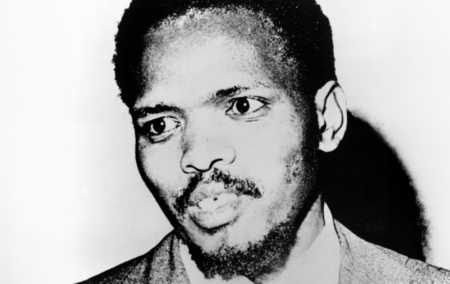
Would BEE’s opponents have also included Steve Biko were he still alive? It is my hypothesis that he would not have advocated BEE and the Employment Equity Act as they are currently proposed by the ANC. The psychological liberation, autonomy, dignity and productive participation, sought by Biko is not achieved through compulsory redistribution.
Next year, 2027, will be the 50th anniversary of the death of Steve Biko who died in police custody in 1977 after severe head injuries; Helen Zille’s reporting in the Rand Daily Mail helped expose the cover-up.
I had been fortunate over the period 1967 to 1969 to meet with Steve Biko at three annual conferences of the University Christian Movement (‘UCM”). Separately I was also active in the youth wing of the Progressive Party at the time, and I vividly recall one conversation that I had with Steve. I was speaking of the Prog’s vision for South Africa. Steve said it was important that white liberal opinion should speak up and oppose what was wrong, however, “black liberation can never be a handout from the whites”.
Let’s examine this principle that black liberation can never be a handout from the whites.
What did Biko mean by Black liberation. It’s related to Black consciousness which Steve described in his essay “Black Consciousness and the Quest for a True Humanity”. This was published by the UCM in a collection entitled Essays on Black Theology of which I was fortunate to obtain a copy before it was banned by the apartheid government. In the essay Biko describes black consciousness as:
“The philosophy of Black consciousness therefore expresses group pride and determination by black to rise and attain the envisaged self. Freedom is the ability to define one’s self with one’s possibilities held back not by the power of other people over you but one’s relationship to God and to natural surroundings. On his own, therefore, the Black Man wishes to explore his surroundings and to test his possibilities- in other words, to make real his freedom by whatever means he deems fit.”
Do South Africa’s current black economic empowerment strategies constitute a white handout to the blacks?
In many cases there is a handout of ownership but not always of leadership. As I wrote in my Daily Friend piece of 26 September, Alfred Marshall’s unrealised hope: cooperation and economic renewal in SA, South Africa needs intimate cooperation between the black and the white races to best realise its economic resources.
This must be done by what Francis Fukuyama refers to as spontaneous association. What drives the spontaneous association is that it is voluntary and based in the economic needs and the rewards from that association.
Everyone has skin in the game and skin based on contribution not colour. The metric of the quotas in BEE and the Employment Equity Act has become the objective.
It is an incorrect objective as it has not brought about any directly attributable economic growth and upliftment of living standards for poorer people in our society. Many commentators have observed that BEE has impaired foreign direct investment as BEE is seen as a tax on investment as well as many other unintended economically detrimental outcomes.
The correct objective to achieve a non-racial society should be the extent to we voluntarily cooperate through spontaneous association to achieve economic growth.
Placing a requirement that to obtain government tenders, there must be varying degrees of black ownership is akin to black job reservation as opposed to the white job reservation of the apartheid government. BEE and the employment equity act are a form of black job reservation. In his essay referred to previously Biko wrote:
“Racism not only implies exclusion of one race by another. It always presupposes that the exclusion is for the purposes of subjugation. Blacks have had enough experience as objects of racism not to wish to reverse the tables.”
From this I conclude that Biko, along with its other critics, would not have advocated for BEE and the Employment Equity Act. Just as black liberation can’t be achieved by a handout from the whites, nor can it be achieved by a handout from the state.
In my view Biko would have argued that BEE should not be assessed on whether it redistributes assets to black people but if it increases an individual’s ability identify, pursue and sustain his or her future with associates who share common values and goals in a colourless and non-exploitative egalitarian society.
It is widely recognised that BEE has enriched a small newly privileged elite. Unsurprisingly these beneficiaries argue for the maintenance and even the expansion of BEE. Regarding whites who, under apartheid, accepted and even relished their privileged position Biko wrote:
“However, tradition has it that whenever a group of people have tasted the lovely fruits of wealth, security and prestige, they begin to find it more comfortable to believe in the obvious lie and to accept it as a fact quite normal, that they alone are entitled to prevlidge. In order to believe this seriously, they need to convince themselves of all the arguments that support the lie.
There may well be parallels of this analysis applicable to those beneficiaries argue for the maintenance and even the expansion of BEE.
In addition to regulating the racial ownership of enterprises, the government also tries to achieve BEE by selectively funding black entrepreneurs. This is based on the false premise that the greatest limitation to establishing an enterprise is the lack of capital. Counter-intuitively, capital is not necessarily the limiting factor. Bill Gross, a venture capitalist in the US, analysed the factors that explain the commercial success of a new venture.
What applies in the US may not fully apply in South Africa as the US has a more proactive entrepreneurial financial sector which aggressively seeks investment opportunities.
Nevertheless, the research that Gross did is based on a statistically significant 200 start-ups (100 from Gross’ company Idealab and 100 from other venture capitalists) in the US is insightful.
Gross reported the contributions to the difference between success and failure across five overlapping factors (i.e. more than one factor could account to the success of the venture).
The attributes in order of importance are:
- The Timing (explains 42% of success): Is the idea too early? Is the world ready for it? Are there already too many competitors?
- The Team (explains 32% of success): What is their ability to execute? How adaptable are they?
- The Idea (explains 28% of success): What is the market truth that the team knows that is not widely known?
- Business Model (explains 24% of success): Is there a clear operating model to generating revenues?
- Funding (explains 14% of success): Many well-funded start-ups fail. If a business is under-funded but gaining traction then it will get intense funding. This may be more likely in the proactive funding culture in the US.
What stands out is the importance of the team. In South Africa’s case based on Alfred Marshall’s thinking this must be based on the spontaneous association of blacks and whites as to who works best together to achieve a business objective. Imagine if the Springbok team was selected based on quotas or being proportionally representative of the racial composition of our population.
What South Africa needs is the creation of value adding or wealth creating jobs in the economy. Economic growth, said Joseph Schumpeter, can only be created through innovation.
This view was supported most recently by the 2024 Economics Nobel Prize winners (Acemoglu, Johnson and Robinson) who endorsed the concept of innovation and the importance of institutions that create an environment for innovation. Their argument is that inclusive institutions with broad participation, an environment of secure rights and the rule of law are what are necessary to support long-run prosperity.
Innovation is achieved by entrepreneurs who have skin in the game and can assess, manage and mitigate the risk of a new undertaking. Entrepreneurs are nourished by better schooling, infrastructure, competition policy, access to finance, apprenticeships and small-business support, rather than racial ownership.
Deng Xiaoping, the Chinese leader closely associated with free market reforms that enabled the spectacular growth of the Chinese economy famously said, “It doesn’t matter whether a cat is black or white, as long as it catches mice.”
This expresses his economic pragmatism that policies should be judged by whether they work, not by their ideological label. To paraphrase Deng in a South African context, it doesn’t matter whether an entrepreneur is black or white as long as the enterprise creates productive jobs, expands opportunity and passes the test of the market.
BEE has an objective of creating a less unequal South African society. BEE is not achieving this and has typically benefited a relatively small, connected group while imposing compliance costs that discourage investment and employment.
There are better ways of reducing inequality such as the economic empowerment for the disadvantaged proposal put forward by the Institute of Race Relations. This seeks to combine redistribution to the poor with pro-growth incentives for business, rather than treating empowerment mainly as a matter of changing corporate ownership or meeting racial procurement targets.
Biko’s reform objective was not whether black South Africans received assets, contracts or positions from the state, but whether they acquired the power to act independently, build institutions and shape their own future.
By that standard, BEE in its present racial ratio compliance-driven rules is open to serious criticism. The alternative is not indifference to racial inequality, but policies that expand capability, competition and ownership for those excluded by apartheid—without reducing economic citizenship to race.
[Image: Steve Biko]
The views of the writer are not necessarily the views of the Daily Friend or the IRR.
If you like what you have just read, support the Daily Friend