

Animal-rights organisations demanded bans and boycotts. But who pays to feed the lions when the money disappears?
The High Court has delivered a message that animal-rights campaigners and policymakers can no longer afford to ignore: government cannot simply abandon its legal responsibilities because a politically controversial industry makes uncomfortable headlines.
When campaigns succeed in destroying the economic value of wildlife, it is often the animals themselves that bear the consequences.
On 29 October, the Gauteng Division of the High Court handed down its judgment in the case brought by the South African Predator Association (SAPA) and other applicants against the Minister of Forestry, Fisheries and the Environment (DFFE), the Ministry responsible for the regulation of the lion-bone trade.
The judgment is a significant victory for those demanding lawful, accountable decision-making in wildlife management. The court declared the minister’s failure to decide and establish annual export quotas for 2024 and 2025 unlawful and invalid. It ordered the minister to establish those quotas retrospectively and to continue doing so annually for as long as the statutory duty remains.
The court has not ordered the approval of a particular quota, nor has it granted an unrestricted licence to export lion derivatives. What it has done is affirm that government cannot simply evade a continuing legal obligation to make a decision.
That distinction matters. So does the question that has been conspicuously absent from much of the public debate: what happens to the lions when the income needed to care for them is deliberately strangled?
Certain animal-rights organisations have made the prohibition of the legal lion-bone trade a central objective. Their arguments are often framed around the welfare of individual lions, the alleged unacceptability of commercial use, and the moral imperative to end the industry.
They have every right to express their views, scrutinise practices and demand that animals be protected from cruelty. No legitimate conservation or sustainable-use advocate should object to proper welfare standards, effective enforcement or the prosecution of abuse.
Far more difficult question
But a far more difficult question must be asked of organisations that insist the trade must end, whatever the consequences.
If you remove a source of income that helps pay for the food, veterinary care and daily maintenance of captive lions, what replaces it?
Who pays the feed bill after the donors have moved on to the next emotionally compelling campaign? Who funds veterinary treatment when a lion becomes ill? Who pays the salaries of the people who must continue caring for the animals? Who takes responsibility for lions that cannot simply be released into the wild?
It is perfectly possible for an organisation to campaign sincerely for what it believes is the best outcome for animals. It is equally possible for a campaign to have consequences its promoters have failed to anticipate. Good intentions are not a substitute for an assessment of those consequences.
Where an organisation demands that a legal revenue stream be abolished, it should be prepared to explain how the resulting financial gap will be filled, how existing animals will be cared for, and who will be accountable if the promised alternative fails.
You cannot claim to put animal welfare first while treating the practical cost of animal welfare as somebody else’s problem.
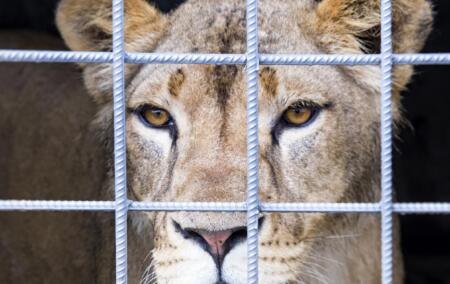
There is a reason emotionally powerful animal campaigns can be so effective. Most members of the public will never own or manage a captive lion. They are understandably moved by images of a magnificent animal confined behind a fence, and they may respond with outrage when told that its existence is connected to a commercial industry.
They do not see the daily feed costs, the infrastructure, the veterinary interventions, the labour, the land and the years of responsibility involved in maintaining these animals. What some either don’t know or don’t understand, and this applies to most wildlife endeavours in South Africa, is that a potential lion breeder doesn’t just wake up one morning and decide to become a lion owner and breeder.
Comprehensive business plan
Before the first brick is laid or the first fence pole planted a comprehensive business plan has to be submitted to and approved by the relevant provincial conservation authority. Among others and specifically from an animal welfare point of view the prospective lion breeder has to show how he or she proposes to manage the upkeep the animals in their care, whether for photographic tourism, hunting or lion-bone trade.
Once approved, the facilities need to comply with minimum requirements, from the size of the enclosures per animal to potable water. A recent report published by the animal rights advocacy group, Blood Lions shows two lion enclosures at the same facility (this is not indicated), one an enclosure that is deemed acceptable and a small enclosure deemed “totally unacceptable” because of its size.
I must point out that Blood Lions isn’t trying deliberately to deceive anyone in its report, but evidently isn’t aware that the small enclosure is intended for temporary use, literally less than an hour, when the lion’s main enclosure is cleaned. Maybe before animal rights activists jump to biased conclusions they should understand every lion breeding facility’s management plan, plans that are approved by the conservation experts in the various national and provincial conservation departments.
It’s no surprise the NSPCA’s statement about having “long voiced its concern about the severe welfare issues encountered at many captive lion facilities, including malnutrition, congenital deformities, accelerated breeding cycles, unhygienic enclosure (sic), and inadequate food and water provision, suggesting a complete disregard for welfare standards” has resulted in very few animal cruelty prosecutions. This is quite remarkable for an industry that has been under the microscope for many years. But the financial reality remains, animals require resources, and those resources must come from somewhere.
The animal-rights fundraising model and the wildlife-breeding model operate under very different incentives. An advocacy organisation may raise money by persuading donors that an industry is unacceptable. A breeder must find the money to keep animals alive, whether public opinion is favourable or hostile.
Foreseeable welfare consequences
The question is not whether animal-rights organisations should be permitted to campaign. Of course they should. The question is whether they are willing to accept responsibility for the foreseeable welfare consequences of the policies they promote.
If they believe a complete ban is necessary, let them set out a credible, independently costed plan for the animals affected. Let them identify the long-term funding, the facilities, the staffing, the veterinary capacity and the enforceable arrangements needed to make that plan work.
The late former Minister of Environmental Affairs, Edna Molewa, understood that wildlife policy could not be reduced to slogans.
In her opening address to the Lion Colloquium of August 2018, she warned of the potential consequences of imposing a moratorium on the legal sale of lion bones. Her warning deserves renewed attention in the light of what has followed.
The central issue was one of incentives. When a lawful market is abruptly removed, the underlying demand does not necessarily vanish. Instead, the legal supply chain is disrupted, and the economic incentives confronting those who manage wildlife may change. Whether that results in greater illegal activity depends on the species, the market, enforcement capacity and other circumstances. But it is a risk that responsible policymakers must assess rather than dismiss.
South Africa has already experienced a prolonged controversy over the legal trade in rhino horn. The moratorium on domestic rhino-horn sales was followed by the well-documented rhino-poaching crisis, though this cannot be attributed to a single cause.
The lesson is not that legal trade automatically prevents poaching. It is that prohibitions can have unintended consequences, and that those consequences must be examined honestly. Molewa’s warning about lion bones was a warning about precisely this kind of policy risk.
The introduction of a zero lion-bone export quota removed the lawful export opportunity for the relevant period. The High Court judgment now makes clear that the minister’s failure to decide and establish the required annual quotas was unlawful.
Reliable evidence
The judgment does not establish that the zero quota caused an increase in lion poaching. Nor does it establish that a future positive quota would, by itself, solve the problem. Those are empirical questions requiring reliable evidence.
Nevertheless, reports of increased lion poaching following the introduction of the zero quota should be taken seriously and investigated, not dismissed simply because they complicate the preferred narrative of those demanding a permanent ban.
If the warnings raised by Molewa are borne out by the evidence, the consequences will be particularly bitter: a policy promoted in the name of protecting lions may have helped create conditions that leave some lions more vulnerable. That is a question of conservation accountability. It deserves a proper answer.
Our colleagues in India have reported an escalation in tiger poaching since South Africa introduced a zero lion-bone export quota. Their reports raise an important question about the relationship between restrictions on one source of animal derivatives and the incentives operating in other parts of the market.
But it would be irresponsible to declare that South Africa’s zero quota caused an increase in Indian tiger poaching without robust evidence establishing that connection. Tiger-poaching trends are affected by multiple factors, including enforcement, trafficking networks, local demand, habitat pressures and the availability of other products.
If restrictions on legal lion-bone exports may have consequences for the illegal trade in tiger derivatives, then policymakers should commission the research, examine the trafficking evidence and publish the findings.
If there is no connection, establish that. If there is a connection, understand its scale and implications.
What is unacceptable is to treat a zero quota as inherently virtuous simply because it sounds uncompromising, while refusing to investigate whether it achieves the intended conservation outcome.
In the real world
Conservation policy must be judged by what happens to wildlife in the real world, not by how morally satisfying a prohibition appears in a press release.
The most important legal lesson from the SAPA judgment is that the executive cannot escape its statutory responsibilities by allowing an issue to become politically toxic.
The applicants challenged the minister’s failure to establish annual export quotas for lion bones, bone pieces, bone products, claws, skeletons and teeth derived from captive-bred lions. The court rejected the argument that the requested relief was moot merely because the relevant calendar years had passed.
It found that the duty to establish annual quotas remained a recurring obligation and that retrospective quotas could be established under the applicable CITES framework. The court also recognised that the minister must consult the scientific authority, which must consider the relevant factors and provide advice.
Importantly, the court did not direct the minister to approve a specific quantity or dictate the scientific assessment. Nor did it order the minister to give the applicants’ stockpile valuations decisive weight. Those matters remain subject to the applicable regulatory process.
The distinction is crucial because the scientific and regulatory assessment of wildlife use should not be replaced by political avoidance. Equally, it should not be replaced by the commercial interests of breeders. It must be conducted lawfully, transparently and based on relevant evidence.
The judgment also ordered the minister to pay the costs of the application, including the costs of the opposing parties. The court’s reasoning included the failure of the minister and predecessors to establish annual quotas and the manner in which the litigation had been conducted.
Government exists to make difficult decisions in accordance with the law. It does not have the luxury of simply refusing to decide because one side of a debate may be angered by the outcome.
If the evidence supports a positive quota, the decision must be considered within the law. If the evidence supports a zero quota, that decision must also be properly considered, scientifically justified and lawfully made.
Eliminating revenue
Many of the organisations opposing the trade invoke welfare as a central justification. Yet eliminating revenue is not, in itself, a welfare intervention.
A lion does not become healthier because the product derived from it can no longer be sold legally. A facility does not become financially sustainable because its business model has been prohibited. And an animal does not acquire a future merely because the public has been persuaded that its current circumstances are morally unacceptable.
If a commercial operation is to be closed, the animals must still be accounted for. If breeders are expected to continue maintaining them, a sustainable source of income must exist. If a new system is proposed, it must be properly funded and be capable of meeting the animals’ needs for the rest of their lives.
Those who argue that the industry should be abolished must explain the practical alternative. They must demonstrate that the proposed replacement can provide for the animals affected, rather than assuming that charitable donations will materialise indefinitely.
And those who breed lions must accept their own responsibilities: high welfare standards, transparent records, compliance with the law, sound financial planning and proper care for every animal under their control.
Neither side should be exempt from scrutiny.
But it is profoundly unfair to demand that breeders absorb the financial consequences of a prohibition while campaign organisations face no comparable obligation to fund the care of the animals whose circumstances they have helped change.
If animal welfare is genuinely the objective, it must be measured by outcomes. Are the animals fed? Are they healthy? Is veterinary care available? Are facilities properly maintained? Is there a credible long-term plan for every animal affected?
South Africa’s wildlife conservation system has long depended on a combination of public conservation, private landowners, tourism, sustainable use and substantial investment by people who must make wildlife economically viable.
That model is not beyond criticism. It requires effective regulation, credible science, responsible management and a willingness to confront genuine abuses. Commercial interests must never be allowed to override conservation requirements or lawful animal-welfare obligations.
But neither should ideological opposition to commercial use be allowed to override evidence.
Economic value
The proposition that wildlife should have economic value is not an argument that every use is acceptable. It is an argument that the incentives governing land and animal management matter.
When wildlife generates a legitimate return, people have a reason to invest in habitat, infrastructure, staff and long-term management. When a revenue stream is removed, those incentives may change. The result depends on the alternatives available, but it is folly to pretend that economics has no bearing on conservation.
The same principle applies to captive lions. The legal trade cannot be defended merely by pointing to the existence of captive animals or the income it generates. Its future must depend on the applicable law, the scientific assessment, the conservation implications and enforceable welfare standards.
But the opposite proposition is equally flawed: that ending a trade automatically produces a better outcome for the animals involved.
There is a disturbing temptation in modern wildlife politics to confuse the appearance of compassion with the achievement of conservation.
What happens to the animals? What happens to the people responsible for them? What happens to the financial incentives that sustain their care? What happens to illegal markets when legal supply is removed? What evidence exists that the chosen policy will achieve its stated objective?
They require evidence, accountability and a willingness to examine unintended consequences, even when those consequences undermine the campaigner’s preferred position.
The SAPA judgment offers an opportunity to return to a more responsible approach: one in which government fulfils its legal duties, scientific authorities assess the evidence, commercial operators meet their obligations, and campaign organisations are challenged to demonstrate that their proposed solutions will actually improve outcomes for animals.
No industry should be above the law. No animal should be denied proper care. No government should be permitted to evade a statutory responsibility. And no organisation should be allowed to claim a conservation victory merely because it has succeeded in making a legal activity economically impossible.
The SAPA judgment does not settle every controversy surrounding captive-lion breeding or the trade in lion derivatives. It does something more immediate: it requires government to fulfil its legal obligation to make annual quota decisions.
Courage
If the minister’s scientific and regulatory process ultimately supports a positive quota, will the government have the courage to make that decision in accordance with the law and the evidence?
If it supports a zero quota, will the reasons be transparent, scientifically defensible and accompanied by an honest assessment of the consequences?
And to the animal-rights organisations that have demanded bans and boycotts, there are two questions that can no longer be avoided: When the income disappears, who pays to keep the lions alive?
If the answer is that breeders must somehow find the money themselves, then the campaign has not solved the welfare problem. It has merely transferred the financial burden to the people who remain responsible for the animals.
If the answer is that donors will pay, then let the organisations demonstrate that the funding is sufficient, dependable and sustainable for the lifetime of the animals concerned.
You cannot claim to save lions while refusing to confront the cost of keeping them alive.
Compassion without accountability is sentiment. Conservation without evidence is ideology. And a prohibition without a credible plan for the animals affected is not a complete welfare policy.
The lions deserve better than to become casualties of a political contest in which their welfare is invoked by everyone but its practical cost is accepted by too few.
The High Court has reminded government that legal obligations cannot simply be ignored. It is now time for everyone involved, government, breeders, scientists and animal-rights organisations to accept the responsibilities that come with their positions.
And the second question is this: who is going to be held accountable for the reputations dragged through the mud in the name of this campaign?
Animal-rights organisations and certain investigative journalists did not confine themselves to arguing about lion welfare or challenging government policy. They took aim at the Democratic Alliance, at former Agriculture Minister John Steenhuisen, and, most shamefully, at the former Minister of Forestry, Fisheries and the Environment, Willie Aucamp.
Far beyond disagreement
Aucamp was subjected to accusations that went far beyond disagreement over policy, including the charge that he had been “captured” by the South African wildlife industry. Accusations of that gravity demand proof, not insinuation dressed up as investigative journalism. Where is the substantiated evidence of wrongdoing? Where is the finding that justifies treating a man’s reputation as expendable?
The bitter irony is that Aucamp inherited a legislative and administrative mess left by his predecessors, Barbara Creecy and Dion George. In my view, both allowed the controversy surrounding animal rights, perceived conflicts, cruelty and allegedly illegal activity to overshadow the basic duty to understand and administer the legislation entrusted to them. It was Aucamp who was left to face the consequences. Yet some of the loudest voices appeared more interested in crucifying the man confronting that mess than in asking who created it.
As I have written before, thank God neither Creecy nor George was Minister of Agriculture. If the same absolutist arguments advanced by some animal-rights campaigners were allowed to dictate agricultural policy, where would that leave South Africa’s livestock industry? There are people who believe it is morally wrong to eat meat or eggs or drink milk. They are entitled to those beliefs. They are not entitled to impose them as law by outrage, intimidation or political pressure in place of evidence and proper statutory process.
Those who accused Aucamp of corruption or capture should now have the courage to produce their proof, correct the record, or apologise.
And perhaps in years to come, we will appreciate the conservation value of South Africa’s captive-lion breeding industry. As wild numbers continue to plummet, a fact the animal rights industry constantly reminds us of, we may rely on these lions’ descendants to repopulate habitats across Africa.
[Image: by perutskyy]
The views of the writer are not necessarily the views of the Daily Friend or the IRR.
If you like what you have just read, support the Daily Friend