

I sometimes have to pinch myself and remember that in 2026 there are still South Africans who have somehow missed that state race regulation remains a living part of our public life. The persistence of this denialism speaks to the difficulty of meaningful reform, as we are not even able to perceive the same objective reality.
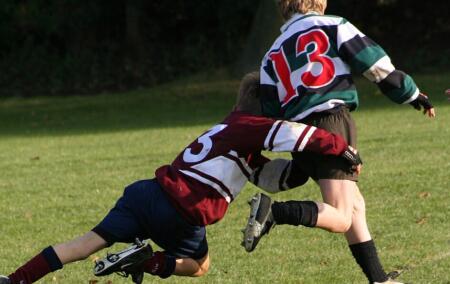
Sindile Vabaza’s recent article on the civil rights group AfriForum supposedly being “wrong about school rugby” is a case in point.
At its core, his article is a polemic about the resilience and success of school sports, partly utilising his own personal experience and observations from his youth. It is difficult to disagree with much of the substance he wrote.
Its fundamental problem, however, is framing: AfriForum is essentially cast as an opponent of the successful “cultural transition” that has taken place in South African school rugby.
AfriForum or the state?
In the familiar shorthand of what passes for public “discourse” in this country, AfriForum is thereby positioned as an enemy of “transformation” – implied as positive change – when in fact it is simply an opponent of Transformationism: the state-regimented social engineering of voluntary society.
Vabaza writes of “a false choice between merit and diversity”, when the only ones guilty of advancing this false binary are the political elite and its cheerleaders among the press.
It is the state that remains unwilling to accept that respecting merit will also, and necessarily, produce diversity in a multi-racial society. And it is AfriForum that has positioned itself on the side of both merit and diversity, by consistently opposing political interference in school sports and in many other domains of social and economic life, and defending the right of diverse groups to decide for themselves how to interface with sports.
Vabaza himself concedes that “government has foolishly mandated racial quotas”. Why he then assumes AfriForum would stand anywhere else than on his side of this particular argument is difficult to explain. Vibes, one suspects, play an outsized role.
The only references to AfriForum in Vabaza’s article appear in the title and the opening paragraph. The remainder of the piece does not engage AfriForum’s actual positions on school rugby or on race regulation in sports more broadly; instead, the organisation’s mere mention is seemingly utilised as click bait.
This is hardly the first time an otherwise sensible commentator has reached for AfriForum as a convenient foil, and it will not be the last.
Of course, AfriForum has not objected to diversity in school rugby or any other sports teams. This claim is a figment of many an imagination that seek to conceive of AfriForum as essentially racist. Because the organisation takes its Afrikaner heritage seriously and does not meekly apologise by default for Afrikaners’ existence, it must – it is thought – be a collection of racial bigots.
That notion is entirely false, but endlessly trying to convince those with a perhaps subconscious hate for Afrikanerdom is a fool’s errand. That is why I have taken to encouraging Afrikaner organisations to simply chuckle through the noise and focus on their constituency.
The reality is that AfriForum has consistently objected to political interference in sports, not diversity in sports, and it has not, to my knowledge, claimed that the excellence of school rugby in South Africa has deteriorated due to said diversity.
A partial record
The record of concrete political interference in (especially school) sports is illustrative.
When South African Schools Athletics proposed in 2019 that at least 40 percent of athletes in district, provincial, and national school teams should be selected not exclusively on merit but from “previously disadvantaged” (a legally recognised euphemism for inborn race) areas, AfriForum wrote to the body indicating its intention to challenge the plan in court.
After a public outcry from parents, coaches, and school governing bodies, the athletics body reversed course, cancelled the relevant circulars, and aligned its criteria with those of Athletics South Africa.
In netball, also in 2019, AfriForum obtained selectors’ score sheets showing that 56 white schoolgirls – born between 2001 and 2007 – had been excluded from Gauteng under-12 to under-18 teams despite higher merit rankings.
Formal complaints were lodged with Netball South Africa, South African Schools Netball, and Gauteng Schools Netball, on behalf of the parents of twelve of those girls. The complaints demanded the abolition of racial quotas, written confirmation that the exclusions had been race-based, and an explanation of the criteria used to classify children by race without parental knowledge. AfriForum further indicated that it would escalate the matter to the International Netball Federation and, if necessary, the Court of Arbitration for Sport.
A more recent netball episode from 2020 illustrates that the logic of racial engineering does not always run in only one direction.
The Sunbirds team was disqualified from the Telkom Netball League final for fielding too few white players. The Solidarity trade union, which like AfriForum is part of the broader Solidarity Movement, described the quota regime as morally appalling, unconstitutional, and contrary to international norms, and promised intervention.
The organisation remained consistent even when the players disadvantaged by the academic and dehumanising numbers game were not Afrikaners. Solidarity and AfriForum, in the vein of American “civil rights” groups, could easily have celebrated that there was an attempt to engineer teams with more whites, but instead they stood on principle against racial engineering per se.
In school hockey, in 2023 four white girls from the Boland team were selected, trained with the squad, and then removed because the provincial association had not met its racial quotas. The Democratic Alliance (DA) condemned the episode as an attack on fairness and meritocracy, as reported by the Solidarity newspaper Maroela Media.
These are real-world events that actually happened, and not coincidentally. Each was an attempt to comply with a carefully constructed policy architecture that continues to classify South Africans – including now-traumatised small children – according to the melanin content they were born with.
Richard Wilkinson has also painstakingly investigated and written about the phenomenon of School Capture in general, whereby racial engineering has infiltrated and compromised South African schools.
These events show that AfriForum has simply responded to discrete administrative and political decisions in which race was allowed to, or threatened to, override performance.
The same happened in schoolboy rugby itself.
When the Western Province under-16 side was barred from the final of the Grant Khomo Week in 2023 after injuries forced the team off its racial quota, AfriForum wrote to the South African Rugby Union (SARU) objecting to the disqualification of a team of minors on purely racial grounds. The organisation pointed out that the decision sat uneasily with SARU’s own publicised (and ostensible) “zero tolerance” policy towards discrimination.
Like with the hockey fiasco, the DA was also involved in condemning the Grant Khomo debacle. But the ire is only saved for the green and orange vibes of AfriForum. Puzzling!
Bokkieweek
Vabaza later clarified on Facebook that he primarily had Bokkieweek in mind when writing the piece, rather than AfriForum’s broader (uncited) record. That clarification is useful.
The political and sporting establishment’s reaction to a private cultural sports gathering of Afrikaner and Afrikaans-speaking schoolchildren speaks volumes on its own.
National federations distanced themselves from a perfectly friendly, voluntary, uplifting event rather than recognising its legitimacy and – dare I say – celebrating the role that sports plays in heritage and community-building among South Africa’s various diverse communities.
Politicians condemned the event, to the point that Parliament called for an investigation.
AfriForum – which sponsored and partnered with Bokkieweek – for its part, has supported the right of the Afrikaner community to organise our own voluntary sporting events, just as other communities do without comparable outrage. The organisation has also noted that such events create opportunities for young people who find themselves systematically disadvantaged by race-based or -influenced selection in official provincial school tournaments.
Many supposed liberals at best omitted to defend Bokkieweek’s right to exist and at worst joined in the chorus against it. Freedom of association and cultural liberty are core values of liberalism, and liberals disgrace themselves and our shared philosophical heritage by joining in the hysterics against peaceful and voluntary cultural association.
If your liberalism is fair-weather only, then it is useless in society with South Africa’s high political temperature. If you cannot tolerate individuals and communities exercising their liberty in a way you might personally find distasteful, you do no good for the cause.
Race politics alive and well
To claim in 2026 that race politics by the South African state does not taint school sports, and that selection from top to bottom is simply a matter of merit, is bewildering.
If that description were accurate, one would have to wonder why organisations such as the Institute of Race Relations or AfriForum continue to exist, or why their staff, supporters, and networks devote time and resources to documenting and challenging race regulation. The more realistic explanation is that race regulation obviously persists, that it reaches into school sports, and that it produces predictable injustices (again, one must emphasise: targeting children).
AfriForum is not “wrong about school rugby”.
It is right to treat state-imposed racial criteria as unjustifiably discriminatory rather than as an instrument of progress. It is right to insist that schools and sports bodies should be free to select on merit. And it is right to reject the false dichotomy that forces a choice between excellence and demographic openness. It is the political elite that thrives on that dichotomy, not AfriForum.
[Image: https://commons.wikimedia.org/wiki/File:Schoolkids_doing_a_rugby_tackle.jpg]
The views of the writer are not necessarily the views of the Daily Friend or the IRR.
If you like what you have just read, support the Daily Friend