

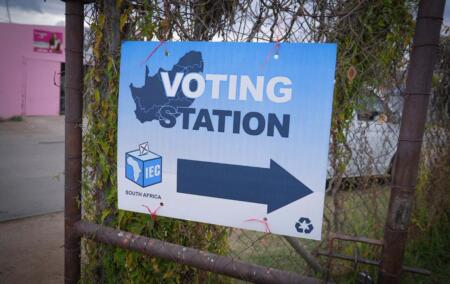
Voting Day is no longer some distant, abstract event. It’s right around the corner. Have you thought about what will motivate you to stand in the queue and make your mark next week?
I have voted in every election since I became eligible to vote. It wasn’t a decision I thought about very hard, or even at all — it was something my family, friends, and everyone around me did, so I did too. It was just a fact of life. I did also have some sense of duty, having learned about the fight for democracy at school.
Now that I’ve voted a few times and especially since I started running the #PledgeToVote campaign in 2023, I’ve thought more deeply about why I vote. A sense of civic duty still lies at the heart of my voting habit, but now it’s padded with the belief that democracy, though not perfect, is the best system of government we have. It’s messy, but it allows for accountability and self-correction. I believe that even though my individual vote is just one among millions, democracy only works if many of us do our part. And I will do my part.
#PledgeToVote, an initiative of the Institute of Race Relations (IRR) supported by the Konrad Adenauer Foundation (KAS), aims to encourage other South Africans to do their part as well. It does this through a Voter Pledge: a commitment to vote in the 2026 Local Government Elections. One of the ways in which we reinforce signatories’ commitment is to ask them, via an email survey, “Why will you vote?”.
“It’s the right thing to do”
Many respondents share my sense of civic duty, describing voting as a “responsibility”, “right”, “obligation”, or “privilege”. One said simply, “I have never not voted”. Another respondent highlighted that not everyone in the world has the right to vote, saying: “I am a woman and not every woman in every country has the right to vote for what she thinks is fair and just.” A few decades ago, not everyone in this country could vote either. It is a right that people fought and died for, and it can be taken away if we are not vigilant.
For some, the right to vote comes with the right to complain. “If you do not vote, you cannot complain” has become a bit of a cliché, but it accurately points out the relationship between these two things. Complaining, like voting, means you pay attention to and care about the state of the country. It’s how you get your hands dirty — literally, with an indelible ink mark on your thumbnail — and involved in what’s going on around you.
“Better service delivery”
Some respondents tied their vote to a specific issue about which they feel passionate. Because this is a local government election, issues like service delivery, water, electricity, and roads came up. One respondent said they will vote for the basics: “a constant supply of water and electricity”.
However, the conversations and campaigns surrounding local government elections are rarely limited to local government issues. This is partly because not all voters understand the difference. And can we really expect them to? Yes, local governments are responsible mainly for service delivery. They can’t change national policies on immigration, race laws, or labour laws. But these policies still influence local governance, so of course voters will want to make their voices heard on these issues that they care about.
Furthermore, when competing for voters’ attention, parties will go for the issues that get them the most airtime. Often, these are issues that need to be fixed on a national government level, rather than a local level. One respondent said, “I want stronger action against rape and violence against women and children.” Another said, “Get rid of B-BBEE.” Yet another intends to vote for “responsible governance that puts it citizens first, not foreigners.” Corruption, unemployment, immigration, and gender-based violence naturally demand more attention and fervour than the everyday mundanities like water, electricity, and refuse removal. Voters, therefore, will vote on these issues regardless of whether their local governments have the power to effect meaningful change in these areas.
“We need change”
Many respondents approach their vote with hope, saying “I want to see change”. Others approach their vote with desperation, saying that voting is “the only hope Johannesburg has” and that they will vote “to save South Africa from disaster”. Several answers showed a clear dissatisfaction with the current government, hoping their vote will “get a new party in who really cares for SA and its people”. Some named their preferred party, but far more named the party they want to “get rid of”.
In these responses lie the hope that things can change, and the belief that voting is the way to bring about that change. One respondent said they will vote “because I want to build a better future for South Africans”. They believe that they have real agency when it comes to the future of our country, and that voting will make a real difference in how that future plays out.
There is something else in this answer that struck me: the idea that voting is something you do for others as well as yourself. This respondent was not the only one who recognised that. Another said that they will vote for “a better life for all”, whereas others said their vote “will pave justice for future generations”, or that they vote “so that the youth can be given the opportunity to improve the country’s economy”. Voting goes beyond the individual, and it goes beyond the present.
These are some of the reasons why people vote. If you intend to vote, like I do, I invite you to click here and make your #PledgeToVote.
[Image: IEC]
The views of the writer are not necessarily the views of the Daily Friend or the IRR.
If you like what you have just read, support the Daily Friend