

Earlier this year, University of Cape Town (UCT) Campus Protection Services officer Grant De Monk faced a panel of four legal practitioners alone, for about two hours.
He was there as a co-operative witness, not an accused.
The panel was part of an investigation into a purported 34 complaints that UCT’s Ombud, Nashira Abrahams, said her office had received against Vice-Chancellor (VC) Prof Mosa Moshabela.
The lawyers were recording the interview. So was De Monk, on his phone. When they noticed, they took his phone and deleted his recording.
It wasn’t the only thing that left him feeling “treated as a suspect”.
Lawyers are expected to test evidence carefully and treat witnesses with respect. Their Code of Conduct demands “the highest standards of honesty and integrity”, and “integrity, fairness and respect” towards the public.
At UCT, sworn accounts by De Monk and UCT academic Dr Zamambo Mkhize of their questioning about what came to be called the Forest Hill “incident” raise serious concerns about how the lawyers treated witnesses.
Both accounts are affidavits in the review Moshabela launched in the Western Cape High Court on August 5, 2026, against UCT, its Council, Council Chair Adv Norman Arendse, SC and others. Both are respondents in Moshabela’s application to set aside four Council resolutions against him. No relief is sought against them, and they do not oppose it.
On the panel were Adv Alec Freund, SC and Adv Tanya Golden, SC, the “independent investigators” UCT Council appointed to run the investigation, and Adela Petersen and Jessica-Robyn Jaftha of Fairbridges, UCT’s law firm, assisting.
Appointing UCT’s own law firm to assist an investigation billed as “independent” is not unlike asking the university to mark its own homework.
The investigators’ final report shows that of the 20 alleged complainants Freund and Golden were able to trace, 18 denied complaining. They put only one complaint to Moshabela and dismissed even that one.
Four resolutions
On May 30, Council accepted the investigators’ recommendation that no disciplinary action be taken against him. It nonetheless adopted four resolutions that he is challenging, including the recommendation that he undergo “executive coaching” and a 360-degree review.
Another resolution, passed on Arendse’s casting vote after a 9–9 tie, ordered “further investigation” into the so-called Forest Hill “incident”.
In their affidavits, De Monk and the academic, Mkhize, plainly say there was no incident or “break-in”. It was a simple wellness check.
Their accounts dovetail.
On November 13, 2025, Mkhize’s mother, unable to reach her daughter for hours, asked Moshabela, who was out of town, to have someone check on her. He instructed De Monk, his driver and protection officer, to find her and be discreet to protect her privacy.
De Monk traced her apartment and a master key. Marco Swart, UCT’s staff housing manager, offered to accompany him – as a witness, De Monk assumed. At the apartment door, Swart refused to enter and told De Monk not to switch on the lights.
De Monk found that odd but went in alone, using his phone as a torch, calling out to her. From the bedroom doorway, he saw a form curled up on the bed.
His first fear, he said, was that she was dead.
She woke when he called out again and said she’d been ill and her phone was charging in another room. He did not enter her bedroom, and offered three times to call an ambulance, which she declined, saying she had a doctor’s appointment the next day. She thanked him for the wellness check.
True to his word
He left his number and promised to return the next day, which he did. De Monk is that sort of man, by all accounts, kind, caring, true to his word.
Late on March 2, Jaftha asked De Monk to meet the lawyers that day. He said he was busy. Sixteen minutes later, Petersen called. According to De Monk, she said that the VC was away, he “had nothing to do” and “had to go meet with them”.
Petersen disputes this account. She says that she called to ask “whether he would meet with the investigators about the events of November 13, 2025”, and that “participation was voluntary”.
After several more calls, De Monk agreed to meet the next day. The venue was shared by location pin, 21 minutes before the meeting.
The lawyers told De Monk that they had “stumbled” upon the matter in a report, the interview was “fact-finding”, and there were no allegations against him. They took him through his entry into the apartment three or four times. His account never wavered.
They asked whether the VC had told him to do anything illegal, and who he thought his boss was. They also said that Swart claimed De Monk had taken a brown envelope from the apartment.
De Monk said the VC had not instructed him to do anything illegal and he had not taken anything.
Mkhize was interviewed the next day, also alone, as Petersen had assured her a representative “was not necessary”.
She gave her account three times. Asked for proof, she sent Petersen screenshots showing her mother’s attempts to reach her. She told the panel she had not lodged any complaint against Moshabela.
Golden’s demeanour, she said, “became visibly more agitated each time I repeated my account and declined to characterise the events differently”.
Would not say
Despite her asking, the lawyers would not say how the Forest Hill matter reached the panel.
They asked whether anything was missing from her apartment. She said no, and asked who had suggested theft. The lawyers wouldn’t say despite putting Swart’s allegation to De Monk the previous day.
Mkhize said that her mother had authorised the entry, and she was grateful for the wellness check.
On June 2, Fairbridges sent Moshabela a letter signed by Petersen. It spoke volumes, though perhaps not as Fairbridges intended.
It claimed that De Monk had “admitted” entering the staff accommodation of “a female employee… without her prior permission” on the VC’s instruction.
That’s an odd choice of words. So is calling Mkhize “a female employee” and naming her without her permission.
The letter doesn’t mention her evidence or that she was interviewed.
De Monk said the letter misrepresented his interview. “I could not ask her permission: that she could not be reached was the reason I was there,” he said.
By then, the investigators had interviewed both De Monk and Mkhize and held her screenshots.
Fairbridges says its June 2 letter, drafted before De Monk’s second interview, was written on its “client’s instructions in the course of the investigation”, and is now part of the court record. Its content reflected the information “available to the investigators at that time”, all witnesses’ accounts were “recorded in full”, and the Court “will consider them if appropriate”.
On June 10, the lawyers recalled De Monk. They repeated Swart’s claim that he had stolen an envelope and that it was white. De Monk reminded them that they first said it was brown, and that he had not taken any envelope of any colour.
Attributed to the Ombud
Freund read him a statement attributed to the Ombud, saying that De Monk had called her twice, said he had done something illegal and that Moshabela had instructed him to steal from the academic’s flat.
De Monk said he had not phoned the Ombud and opened his phone’s call log to show no such calls. That was when the lawyers noticed his phone was recording.
Golden, De Monk said, told Jaftha to delete it. Jaftha obliged.
The lawyers, De Monk said, had also said that Mkhize had laid a sexual harassment complaint against Moshabela, that there was “a case against the Vice-Chancellor at the Ombud”, that he had “broken into her flat”, and that he should have questioned the VC’s instruction.
De Monk denied this vehemently, telling them: “That is not on.”
Petersen emailed Mkhize, requesting a second meeting. She declined, saying, “Honestly, this is starting to feel like harassment.”
In March, Council had extended Freund and Golden’s mandate to cover the Ombud’s conduct, including whether she had given Council “false information” about complaints.
That decision raised further questions of independence and governance.
The investigators had relied on the Ombud’s material from the outset. Getting them and UCT’s lawyers to judge her conduct compromised any appearance of impartiality. New investigators could simply have called Freund and Golden as witnesses.
Council was due to hand over the full record behind its resolutions to Moshabela by August 28. It only did so in early November, heavily redacted. All 73 pages dealing with the Ombud are blacked out, along with everything involving Forest Hill.
Challenging the redactions
Moshabela is challenging the redactions. More than five months on, Council has still not considered the investigators’ findings on the Ombud.
On November 2, Council sensibly rescinded the Forest Hill resolutions and resolved that the investigation “will not proceed”. The next day, its affidavit told the court that the investigation was “incomplete”.
Both cannot be true.
The court has yet to test these accounts. The lawyers named may have reasonable answers. They have a great deal to explain.
How the Forest Hill “affair” reached Freund and Golden and why they made so much of it remains shrouded in mystery.
Council’s May 30 minutes record one member’s view that “the Ombud had involved the Forest Hill complaint to direct attention away from the Ombud”.
News24 reports that the investigation has cost UCT almost R8-million. That’s public money, partly paid by students. It’s a hefty sum for an investigation in which 18 of 20 complainants traced say they never complained.
Mkhize says the process has denied her “agency”, “dignity” and “privacy”.
De Monk, a father of three, married for 22 years, and an ordained evangelist who ministers to some 5,000 church members, says he has suffered “a very serious attack on my integrity and my reputation”.
Media reports, and the lawyers, made the wellness check sound sinister, he says. “People have asked me whether I am a criminal.”
Both witnesses now have to defend themselves against a story they never told.
Replying to emailed requests for a response, Freund and Golden say it is “not appropriate” for them to comment.
Fairbridges says the investigation was conducted “on a confidential basis” on UCT Council’s instructions, it covers matters now before the court, and its duties of confidentiality and client privilege mean it “cannot debate the evidence in the media”.
Interviews
It does not accept certain assertions in my enquiry about what was said in interviews as “accurate in all respects”. It will deal with them “if necessary, in the proper forum”.
UCT says that as the matter between the university’s Vice-Chancellor and Council is before the courts, it “would not be appropriate … to comment on the details or merits of the case at this stage”.
Lawyers are entitled to act on clients’ instructions but not to misrepresent or distort evidence. Whether that happened here requires proper scrutiny and no one is above it.
All the lawyers involved owe explanations as to how a wellness check mushroomed into something sinister.
Wellness checks are, after all, common and an act of care. Sometimes they come too late, as the family of a 19-year-old Stellenbosch University student can attest. He was found dead in his residence bed in August 2025 after concerns were raised. The university later confirmed he had died of meningitis.
In the meantime, the truth can hurt and nothing soothes that pain quite like ignoring uncomfortable facts.
UCT’s lawyers, of all people, should understand the perils of that balm.
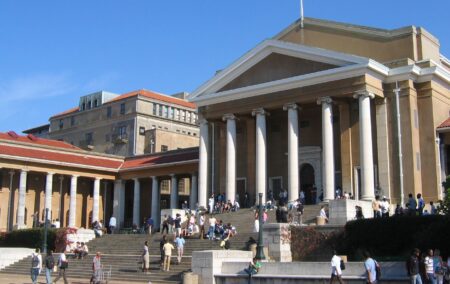
[Image: Adrian Frith, https://commons.wikimedia.org/w/index.php?curid=846564]
The views of the writer are not necessarily the views of the Daily Friend or the IRR.
If you like what you have just read, support the Daily Friend