

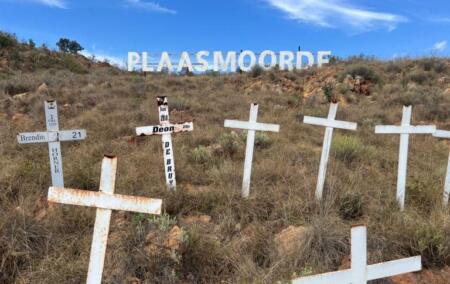
Ivo Vegter has written three pieces about me, my colleagues at the Free Market Foundation (FMF), and the perfectly innocuous and highly liberal-coded White Cross Project in the United States that we participated in. How one goes about responding succinctly to this much spilled ink has been a dilemma.
Vegter’s unfortunate attempts to bring this debate into the realm of personality conflict is not bait I wish to take.
What disgruntled former employees of the FMF have or might have claimed is not a level of discussion we should be prepared to stoop down to. My response will not include any “Person X was right about Ivo when they accused him of all sorts of nastiness”, unlike what he does regarding the FMF. We are told that we must stick to the battle of ideas, after all, and that is what I intend to do.
Ideas around strategy and tactics are perfectly appropriate to debate. But getting into the gutter of whether the FMF was “better” when we sat around waiting for extremist politicians to arrive so that they can pretend to listen to us, or “worse” when we acted proactively in trying to defend freedom tangibly, is discourse best reserved for a meeting over tea.
What I am prepared to say is that the FMF was founded as, and will always remain, a classical liberal think tank and advocacy organisation, but it will not allow itself to get stuck in failed tactical models. Even though a beautiful 3D-like vista might be painted onto a closed door, that does not mean the door is in fact open with the beautiful ideal waiting on the other side.
Updating the model of libertarian think-tanking means acknowledging when a door is closed, locked, and bolted shut, without interpreting that hiccup as the end of a think tank’s mandate. As my colleague Ayanda Zulu observes, policy advocacy can take many forms which the circumstances at hand must dictate. Simply having “access” (premised on being nice) to the African National Congress (ANC) has yielded little for anyone in this space.
Having settled that, I am going to respond to the general themes that Vegter has deployed against me and the FMF rather than attempting to scrutinise every claim or allegation.
This is necessarily going to be a long response, and will be a difficult read without a basic familiarity with Vegter’s three preceding articles – so I recommend reading them first.
I should also note upfront that this is a (very fundamental) divergence on the matter of discourse, strategy, and positioning, not about public policy. Vegter and I agree, with virtually no exception, about legal and state policy questions. This does not diminish, however, the deep, also-principled nature of the present disagreement.
“United in our diversity”
Max du Preez recently attempted a sleight of hand by positioning the very concept of Afrikaner organising against the principle of “diversity”. We are “united in our diversity”, the argument goes, so it should be frowned upon to… embrace the differences between us?
I see much of the same sentiment – of eagerly embracing the vibes of multiculturalism, but viciously rejecting its practice – in the present debate. This cannot, of course, be a true defence of diversity.
The Solidarity Movement and all the other signatories to the Afrikaner Declaration of 2024 very explicitly and eagerly commit themselves to the notion of unity in diversity. Afrikaners:
- “… want to engage and work with other communities in South Africa in a spirit of mutual recognition and respect to find solutions to the multiple crises that are threatening our common future”.
- “… believe that there are more things that unite the country’s communities than divide us. Even if we do not always share the same views, we share core interests such as a functioning country and a healthy society in which everyone has the opportunity to build a better future”.
- “… subscribe to the equal worth of all communities as the basis for the participation of all of us in the bigger reality. We view ourselves as equal to others, and not superior or inferior to other communities”.
Afrikaners (as Afrikaners per se) must, after all, be part of the diversity that gives us strength, rather than having all their customs, gatherings, or institutions delegitimised and prepared for assimilation into a homogenised “South African” mass.
To portray the work, advocacy, and liaisons of the Solidarity Movement, AfriForum, and allied groups like Lex Libertas (henceforth: “Afrikaner organisations”) as somehow rejecting the notion of “unity in diversity” is either malicious attribution, or an inadequate understanding. These groups are practicing and vindicating diversity and multiculturalism.
For the FMF’s part, as a classical liberal institution, we endorse voluntary and harmonious multiculturalism but reject the statist nation-building and faux-liberal desire for an (unstated) totalising Secular, Cosmopolitan, Anglicised Monoculture (SCAM). This is an “identity” just as any other, but it is increasingly assumed by some liberals to be the neutral default identity towards which everyone does and must converge. Deviations from SCAM, then, are ironically labelled “identity politics”.
There is nothing inherently wrong with secularism, cosmopolitanism, or a preference for Anglo-Americanism; it is the presumptuous monoculturalism that is problematic.
Atomistic individualism
You must simply be an individual is central planning writ large. Liberal individualism is not and was never meant to be an enterprise of compelling the socially minded to subjectively self-identify primarily as individuals. I had already addressed this misapprehension of liberalism – as compelling a society of “atoms” – elsewhere, years ago.
There is no such thing as a mere individual. The individual – every individual – has group bonds as a matter of course. As a legal-political ideology, liberalism mandates two conditions: (1) exit from the group by a subgroup or by individuals must be allowed; and (2) no group may impose itself on any other group (acting defensively obviously excepted).
Liberalism is not dedicated to analysing reality through the lens – the lie – that everyone is or must be free-floating, bondless individuals. Any ideology that utilises such a lens generates a false understanding of reality. It is only in the realm of the obligations surrounding the coercive apparatus of the state, where liberalism necessitates individualist treatment.
For Afrikaners, a largely cultural and language community – with exit always allowed and the group not imposing itself on anyone – to be maligned by some liberals because they hold a sporting event for their children (Bokkieweek); move away from controversy into a small town to be at peace (Orania); or try to draw attention to issues facing their community (outreach to the United States), is therefore worrisome.
This maligning attitude might be more or less prominent among liberals, but it has nothing to do with liberalism.
“Identity politics” and self-determination
These liberals should be slow to casually deploy the term “identity politics” with the same conceptual disregard that the left deploys “misinformation” or “racism” and the right deploys “woke” or “[immigrant] invasion”.
The identity politics that we all condemned together – liberals and Afrikaner organisations alike – quite recently, was the sort that demanded people’s individual liberties be violated on the basis of their inborn group characteristics, usually their pigmentation or genitalia. But it certainly never occurred to me that this condemnation was apparently meant to include peaceful people – even when they organise on a group basis – trying to safeguard their classic liberties.
The problematic part of “identity politics”, after all, is not the “identity” but the “politics”, if politics is understood as the “science”, theory, and practice that concerns itself with coercive public authority.
It is now implied that “self-determination” is apparently no longer something that liberals should believe in. Perhaps, the thinking goes, self-determination is not an individual liberty but a principle of political organisation. There is a kernel of truth to this, but framing it as being in necessary tension with liberalism is both aconceptual and ahistorical.
The protection of individual liberty is the what of liberalism. The law,* constitutionalism, democracy,* and, of course, decentralisation, are among other things the how of liberalism.
Unfortunately, a number of liberals nowadays believe that making a good argument in favour of freedom is all that may rightly be done. This neutered conception of the battle of ideas is presented as the outer limit of what may be done in the fight for freedom.
To these liberals, the notion of defending liberty practically against deprivation is unfathomable. Much of this is due to their institutionalism: the formally true, though substantively false belief that liberalism underlies all our modern political institutions and we must therefore only work within them if we wish to retain that architecture.
And much of it is also due to concerns about how pro-liberty action might be “perceived” or how others might “react” to it.
This latter worry is one that liberals are allowed to harbour, of course. But liberalism itself spares no blushes in this regard: the substance of constitutional liberalism is that institutions are built not to convince people of how important freedom is, but to protect freedom against the unconvinced: to force people to respect freedom. This is what liberalism requires liberals to strive for.
Self-determination is a core part of that philosophy.
Individuals have liberty, and together with others, they may self-determine as a group – provided the two aforementioned conditions are met. This is an imperative, not an optional nicety that Parliament may deliberate about but ultimately conclude with “go to Hell” to those groups wishing to exercise that entitlement.
Even international law – one of the great attempts at practical liberalism that in recent decades has largely been shown to be a failure – recognises (group) self-determination as a fundamental principle.
With this in mind, liberals must surely agree – and Vegter appears to agree, at points – that groups should be allowed to stateproof themselves against the harm that other groups might wish to do them? Groups with grievances against other groups should not, generally, be allowed sovereignty over those groups, if we really care about freedom (not to mention peace).
As Donald Horowitz lamented in 1991, “Federalism generally remains only the wisdom of hindsight in Africa”. Decentralisation lowers the temperature of politics, even if getting there might temporarily heighten it – and this applied to all the liberal revolutions and reformations of history.
Regionality over identity
Some liberals might reply to this with the averment that decentralisation must, as a matter of principle, only be region-based, rather than “identity”-based.
This would be an arbitrary principle to assign to the philosophy of freedom that also makes a mockery of liberal history. Liberalism was itself at the forefront of the struggle for national self-determination throughout Europe and the world, calling for decentralisation along communal and, yes, often identitarian lines.
There is not a devolved government in Scotland because Scotland is a region that arose randomly – it is because there is a Scottish people. The same is to be said in respect of Wales and Northern Ireland.
And (southern) Ireland is not a state independent from the United Kingdom by happenstance. It came about as an identitarian reaction against what was perceived as British tyranny, and a vindication of the liberty of the Irish.
Estonia does not exist today as some convenient and coincidental region that was carved out of the Soviet Union in 1991. It is a historical and identity-based polity. And it now protects the liberty of the Estonian people much better than would have been the case if it had remained a part of the “Union State” simply because some Russian liberals objected to “sowing division” or “exclusion”.
Liberalism is not arbitrarily preoccupied with randomly-generated geographic lines. It will follow reality and the spontaneous order that Friedrich von Hayek noted that this produces.
If that means a religious community in Northern Ireland does not want to become part of the south, then liberalism will require it to be politically protected against that assimilation. If it means the Kurish want to be separated from the Syrians, Turkish, or Iraqis, then liberalism must countenance that if the agenda is one of liberty.
Lex Libertas has advocated for reconsidering the constitutional dispensation in South Africa. It has not called for separatism per se, but that might well be a conclusion it arrives at eventually – and nothing about that alone would be illiberal.
Political naïvety
Liberals used to be significantly more politically sophisticated than our movement appears today.
There was a time when liberals were some of the foremost defenders of the qualified franchise, because they understood that naïve optimism about the reasonableness of the voter was dangerous. Even John Stuart Mill, who did much harm to liberalism, had serious reservations about so-called “universal” franchise.
Nowadays, liberals’ preoccupation with “perceptions” has led to the naïve belief that simply ignoring group identities and pretending elections are purely individual contests is sufficient to change reality. This informs much of the reaction against extra-electoral reform missions.
This broken model, in turn, has led to the suppression of individual freedoms all over the world, because tyrants have been given a pass to claim that they are simply following the mandate of the “majority of individuals”. Reality, of course, is that the game was stacked against freedom from the go by the now-invisible identitarian voting that is actually happening.
Liberalism does not invite us to be this politically innocent and wide-eyed. Our forebears are cringing in their graves.
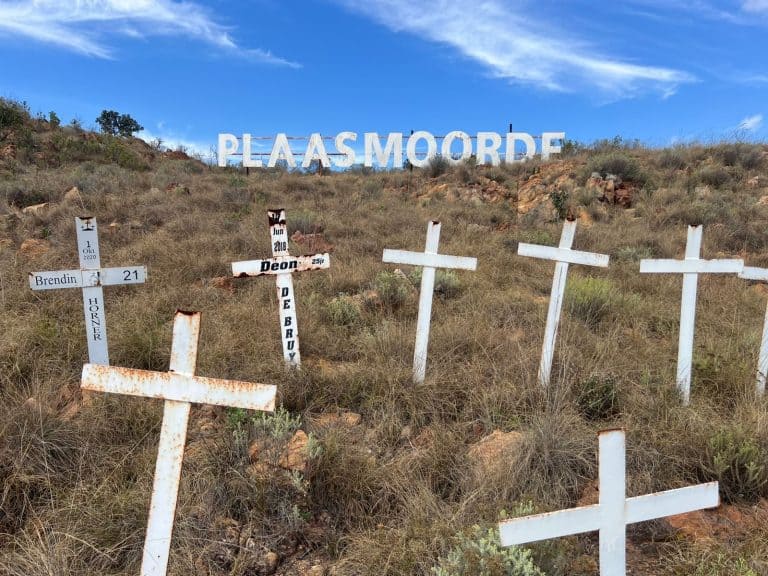
Identity politics – which was the problem with Apartheid, and is the problem with modern transformania and wokeness – is problematic when organising coercive politics around inborn characteristics. In this sense, the Lex Libertas’s White Cross Project was a conference against identity politics. AfriForum and Solidarity, after thoroughly shedding the leftist statism of the Mine Workers’ Union, have dedicated their entire existence to fighting precisely this identity politics.
But mere organising along national or religious or even gender lines, is normal. It is ordinary. It is banal. It is how the world works.
Vegter himself obviously engages in identitarian organising. He certainly does so with classical liberalism, being a member and councillor alongside me of the Institute of Race Relations (IRR).
Being a “member” of the Afrikaner nation is slightly different, but not categorically so.
You can be presumptively born as an Afrikaner, but remaining an Afrikaner is a choice. And those not born as Afrikaners can decide, through deliberate conduct, to become Afrikaners. Afrikanerdom is a voluntary club, though the entry process is different from a classical liberal club.
Individual rights and “minority rights”
Where we need to be conceptually careful around the use of “identity politics”, we must also know what we are dealing with when talking about “minority rights”.
Liberals believe in individual liberty. When a person’s individual rights are being undermined because of their membership of a minority demographic – which means many more than one individual’s liberty is at stake – we speak of “minority rights” being threatened.
Classical minority rights and concern for minorities – the sense in which Afrikaner organisations, the FMF, and even the IRR have historically used the term – is a contraction of “the individual rights of minorities”. That the left has re-defined minority rights as entitlement-rentseeking by minorities against demographic majorities is a modern contrivance, and is not at issue here.
It is also noteworthy that responding to threats against cultural and associative rights will obviously be a form of identity politics. There is no way around this.
If the state tells an Afrikaner that “you are not allowed to be an Afrikaner per se”, and the Afrikaner responds with, “I want to be allowed to be an Afrikaner”, how is it that the latter is engaged in an unacceptable and illiberal form of identity politics?
Misconstruing the response to the state’s identity-based authoritarianism as itself impermissible “identity politics” is tantamount to victim-blaming.
Liberalism was never meant to be a mechanism of homogenising all people into some global super-identity of a “Collective of Individuals”. If liberals respond with “that’s identity politics!” whenever community-minded people (especially the disfavoured community) want their free association respected, something has gone horribly awry.
None of the named Afrikaner organisations have ever pleaded for special privileges for Afrikaners. Everything they ask for, they would allow for anyone else.
They have insisted on equal respect for the individual rights of their members to live out their culture and identities. This includes the freedom to associate and to disassociate that every human being must by right have.
Calling for a special American envoy to the Afrikaners, as Lex Libertas is doing, does not diminish anyone else’s individual rights, just like the rule that the ceremonial King of Malaysia must be a Muslim does not by itself implicate anyone’s individual rights in that country. As I argued in a 2024 book chapter stating and then defending liberal universalism:
“There are circumstances outside of its core directive wherein the State may conceivably discriminate based on citizenship or nationality. The United Kingdom having a ceremonial monarchy, for example, does not in itself contravene that state’s core directive to protect the self-ownership of individuals. For that state, then, to have a rule that the British monarch must be a British national, or even that they must be a member of a specific family, does not offend libertarian sensibilities. The same applies to rules around the world limiting the franchise to citizens. As the individual’s self-ownership does not, and cannot, extend to voting (because voting is not an exercise of freedom of action or property where one determines for oneself, but a political exercise involving determining for others), the State may have exclusive franchise laws.”
The state may not curb a person’s liberty on account of an inborn characteristic. And the Americans forming a relationship with a particular foreign community, like the Afrikaners, does not amount to that any more than it would be untoward for the South African government to have a liaison office – as it, no doubt, does have – with the Zulu monarchy.
This shows that having conceptual clarity about what liberalism is, is important. If liberalism is just “inclusivity”, then I would want nothing to do with it. But liberalism is “liberty”.
The refugee programme is an interesting – and admittedly difficult – case. I agree that it should be open to anyone that is being persecuted. But this concession cannot be twisted – like some do – into the notion that South African minorities therefore should not have access or, worse, that the minorities are “not really refugees”.
Minority persecution in South Africa is an open secret that the state establishment – including the judiciary – happily, though unthinkingly, admits to on a regular basis. They dress it up in the garb of “redress” or “that’s just the price of post-Apartheid reconstruction”, but that neat self-justificatory sentiment does not eliminate the presence of race-based victimisation.
Ideally, everyone and anyone else being persecuted should have similar recognition, like they did while Afrikaners and other racial minorities in South Africa were totally out in the cold.
Minority rights have long and rightly been a liberal issue, not because liberals want special privileges for minorities, but because they recognise political reality: the occasion, sometimes, is one of minorities being targeted, and they must therefore be defended as minorities (not euphemistically or in a roundabout way) and their individual rights restored.
This is only now contentious, because Afrikaners are the subject of the dispute.
Vegter comes close enough to admitting this, noting that Afrikaners have a “fraught history in South Africa”, and therefore he does not approach the concerns of that minority in the same way he might approach those of the Jewish or LGBT communities.
That is a problem. Liberalism cannot and does not pick and choose which minorities may validly stand in line to have their liberty respected – but liberals routinely do so.
Liberalism, nationalism, patriotism
While he is more usually on principle than not, here Vegter is primarily advancing a patriotic agenda, not a liberal one. And patriotism is no less collectivist than nationalism, though about something else.
Patriotism concerns where you are born (from Latin patria meaning “fatherland”), versus (usually) the people you are born to of nationalism (from Latin natio meaning “tribe”). But both are at least initially inborn, even though some nations do not require special blood to assimilate into.
Patriotism is a “South African” agenda, as opposed to the (we are told) “sectarian” pleading in favour of Afrikaners. We must not be divisive or threaten reconciliation, goes the thinking.
These are not liberal imperatives, but concepts right out of the 1990s nation-building lexicon of the ANC.
Had the agenda here been a liberal one, it would have been far more concerned with the Thabo Mbeki Foundation and Minister Ronald Lamola indirectly inciting and threatening violence against dissenting South Africans.
Instead, Vegter seems most concerned with the dissenting South Africans – the FMF and Afrikaner organisations – for apparently provoking this response by doing nothing other than openly talking about what the ANC’s misconduct. This accepts the collectivist nation-building premise alongside the supportive note about the ostensible “legitimacy” of “South Africa’s democratic government”.
“Ethnic mobilisation”
Unfortunately, much of the writing about the Afrikaner organisations is simply based on falsehoods.
The fact that Afrikaner organisations routinely act in the general public interest and vindicate the basic rights of all South Africans without distinction as to nation, community, or colour, is handwaved as a convenient and dishonest disguise for their supposedly “real” agenda of Afrikaner self-determination (there is that swearword again).
One wonders how AfriForum managing to get drivers licence extensions for all South Africans or taking on private prosecutions on behalf of people outside its supposed “ethnic” base advances their nationalist cause? Never mind that AfriForum has openly distanced itself from white nationalism.
If examples had been provided of where the Afrikaner organisations were threatening individual rights – other than their mere existence or association with them – one could respond more substantively. If, for example, there was a line in the ankerdorpe strategy that involves removing non-Afrikaners from those concentration towns, I would happily concede (and condemn) its illiberalism.
This would be how an American libertarian organisation might tarnish libertarianism by associating with white supremacist groups like the National Alliance, Stormfront, or the Ku Klux Klan. Those groups all mean to do harm – as defined according to classical liberalism – but none of that is apparent or even latent here.
All recent broadsides against the Afrikaner organisations have been remarkably lacking in specificity. No matter how much I plead with some of my fellow liberals to point to exactly what authoritarian conduct these groups are apparently engaged in, I get little more than vibes alongside a heavy dose of hypocrisy.
Vegter’s objection appears simply to be to “AfriSol”, because it is an organisation of Afrikaners per se, whereas that would be absent (as it should be) with organised Jews or LGBT. This is, of course, the actual “collectivism” taking place here.
It is cynical to submit without evidence that the Afrikaner organisations support private property rights, free markets, and limited government, all as a mere “expedient façade”.
If the Scottish devolutionist movement openly declared, and in practice (in court, and so on) vindicated its support for free enterprise and individual rights, one would likely not, unprovoked, declare that they are simply using those as some kind of “expedient façade”.
Has the same standard been applied to the Economic Freedom Fighters (EFF)’s Marxism-Leninism as an “expedient façade” to achieve its “real goal” of black supremacy and a white-free South Africa?
Has the same charge been levelled at the Jewish Board of Deputies – that it only pretends to care about such things as the rule of law as an “expedient façade” in service of their real goal, being protection particularly against antisemitism?
Of course not; because the Scottish devolutionists, EFF, and Jewish Board of Deputies do not involve Afrikaners per se.
A Scottish devolutionist can believe in free enterprise while also believing in devolution for Scots. The EFF can believe in socialism while also believing in black supremacy. The Jewish Board of Deputies can believe in the rule of law while also believing in protection for Jews per se.
But uniquely, we are meant to believe, the Afrikaner organisations cannot truly believe in individual rights and in the self-determination of Afrikaners. It is only an “expedient façade” for ethnic mobilisation.
The Afrikaner exception
It should not be surprising that a movement created to fight discrimination against a specific group mostly consists of, and advocates for, members of that group. It is baffling that this is contentious.
Back in the late 1990s and early 2000s, the founders of the Afrikaner organisations were mostly people who were happy to give the “new South Africa” a shot.
From the moment Afrikaners lost political power on the strength of the promise of non-racialism, however, minorities were constantly reminded – not merely rhetorically, but tangibly – that the colour of their skin directly determines how the state will treat them and their children.
Them standing together and saying, “Let’s please rather not”, is now, we are told, problematic ethnic identity-based mobilisation.
The formation and existence of the National Association for the Advancement of Colored People (NAACP) in the United States makes perfect and justifiable sense to me insofar as they do not advocate rentseeking. The existence of Jewish community groups all around the world makes sense and is justifiable. In fact, unorganised Jewry makes little sense in the post-7 October 2023 world.
Imagine brown immigrants, who believe they have been discriminatorily affected by Donald Trump’s immigration policies, form a Migrant Forum in the United States that organises primarily around that charge – “we” as brown people are being targeted – and advocates on their own behalf. I expect Vegter would not merely tolerate it, but he might even support it.
This is all not merely justifiable according to the realpolitik of the world we live in, but is also perfectly compatible – in fact, often a vindication – of classical liberal free association and the imperative that groups seek first to protect their own interests rather than make that a state responsibility.
Vegter either rejects the notion of group-based organisation per se (as we have seen, an unsustainable position), or he quietly nods along when the NAACP, Jewish groups, or racially disfavoured immigrants are mentioned, but shakes his head when it comes to Afrikaner organisations. The former are not Afrikaners, so for them to “mobilise ethnically” against racial prejudice would be consistent with liberal principle.
The Afrikaner exception, as we can see.
“Perceptions”
In his second article, Vegter essentially seems to agree with the core message and ideas communicated at the engagements of the White Cross Project or at least concede that they might well be right. His criticism comes down, essentially, to “perceptions”.
This is too convenient, and quite a bit self-serving.
Much – arguably most – of what Vegter himself writes in favour of as a columnist and activist, is similarly badly perceived.
If liberals had to care about perceptions to the degree being advocated, they would be horrible liberals indeed. This has been the case all throughout history and all over the world.
Liberals rightly defend the rights of prostitutes, drug users, and immigrants. Often, we share a stage with prostitutes, drug users, and immigrants. This more often than not puts us squarely in the domain of being badly perceived. An occupational hazard!
We might try some things to mitigate against the perception, but our opponents are not all certifiable idiots, and will – and do – see through the spin.
Precisely the people Vegter seems concerned will be lost to market liberalism because of a toxic association with Afrikaner organisations, had already believed that the FMF and IRR are defenders of “white privilege” and “right-wing politics”. This was not merely the case before the FMF’s involvement in the White Cross Project or the IRR’s “anti-transformation” opposition to expropriation without compensation or black economic empowerment. It has been the case since before I was born in 1994.
This concept – of “preserving white privilege” – is left-coded in the extreme, and liberals should be slow to give it any discursive legitimacy, lest classical liberalism begin to concern itself with things that will lead to slideaway.
So, while special pleading is offered about the “sectarian conflict” supposedly making Afrikaners toxic to liberalism, others might point to how especially unpopular homosexuals are in Africa and therefore also how toxic pleading their case is to liberalism. You could special plead for any unpopular group to fall off of liberalism’s radar depending on what your personal mission is.
The American Civil Liberties Union (ACLU), back in its liberal days (past tense), defended neo-Nazis as a matter of principle.
None of the named Afrikaner organisations, naturally, are neo-Nazis. Their opponents in the ANC and EFF are qualitatively closer to that kind of racial chauvinism. But the ACLU, and its true spiritual successor today in the Foundation for Individual Rights and Expression (FIRE), shows that liberals should always be willing to defend and associate with the unpopular when it is for the cause of freedom.
If someone had accused the ACLU or FIRE of undermining free speech by defending neo-Nazis the way Vegter is accusing me of undermining the classical liberal project, their response would be, and my response is: No, we are doing exactly what the cause requires in this moment.
If we were gun-shy about association, we would be failing at our job.
South African realities
Afrikaners in particular and minorities in general are politically stigmatised and targeted groups in South Africa. This is public record.
If Julius Malema chanted “kill the journalists”, he would have been gagged long ago. But because it is predominantly against Afrikaners – and during the July 2021 pogrom, against Indians – it is fine.
If Judge Mandlenkosi Motha had condemned a black lawyer for representing a white client, he would have been without a job today. But because he condemned white lawyers for representing black clients, it is fine.
If the Constitutional Court had told the Zulu community that it should not use the Constitution’s protection for culture to defend their heritage, those justices would have been forced by public sentiment to resign. But because it said that to the Afrikaner community (Tshwane v AfriForum, 2016), it is fine.
This is all happening. New cases arise virtually by the week.
Some liberals would want us to pretend that it is not happening, so we can uphold the comfortable fiction that every individual is indistinctly a victim of state abuse.
To be clear, black South Africans suffer greatly for a variety of statist reasons. But they are not targeted as such for the colour of their skins or their particular national heritage. This does not make whites or Afrikaners “more victimised”, but it does make them “differently victimised”. We can, and should, call out both as a matter of liberal imperative.
AfriForum has often taken up the cause of black communities struggling to achieve security of tenure. This is a unique problem facing black groups with historical entitlements to land. The FMF does the same in respect of the mostly urban black population through its Khaya Lam Project.
Nobody has condemned AfriForum or the FMF for engaging in this “identity politics”.
In fact, it would seem that many liberals would celebrate if AfriForum only took on the group-based causes of people other than Afrikaners. After all, we are constantly told: “don’t make it about the Afrikaners”. Always someone else – never the Afrikaners.
Slideaway
One’s liberalism is foundationally deficient if it resists standing with those ostensibly unpopular, on the side of liberty and truth.
South African liberals have always been at particular risk of slideaway given the immense public relations-cum-“perceptions” advantage our foes have in the realm of racial grievance discourse. We have always had to psychologically fortify ourselves (as individuals and as a movement) against trying to go along to get along, and seem like we are “not racists”. We must never defend this sentiment, and insist that us not being racists is a given, regardless of pressure.
The Afrikaner exception is the modern threat that stands to delegitimise our movement for liberty. The time for psychological fortification is upon us again.
[Image: https://www.artikels.afriforum.co.za/wp-content/uploads/2026/08/Witkruismonument-3-768×576.jpeg]
The views of the writer are not necessarily the views of the Daily Friend or the IRR.
If you like what you have just read, support the Daily Friend